Beurre manié, which translates from French as “kneaded butter,” is one of the simplest yet most effective thickening techniques in French cooking. Unlike roux, which cooks flour in butter before adding liquid, beurre manié combines equal parts soft butter and flour into a smooth paste that cooks directly inside a hot liquid.
Chefs use it to thicken soups, stews, sauces, and braises at the final stage of cooking. It acts as a quick adjustment tool, correcting thin textures without starting from scratch.
Although modest in appearance, beurre manié reflects the practicality and refinement that define classical French kitchens.
How Beurre Manié Works
The science behind lies in starch and fat. Flour contains starch granules that thicken liquid when heated. However, adding dry flour directly to a hot sauce creates lumps.
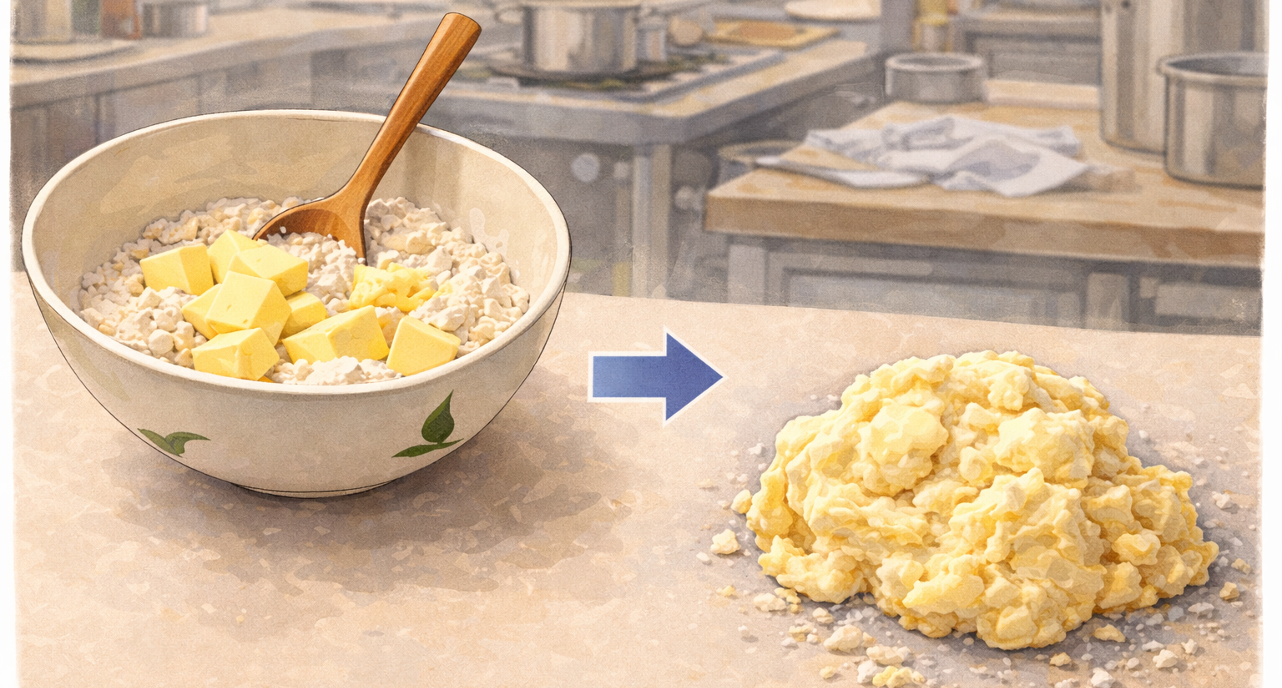
By kneading flour into butter first, cooks coat each starch particle in fat. This coating prevents immediate clumping when the paste enters liquid. As the mixture heats, the butter melts and releases the flour gradually. The starch then absorbs liquid evenly and thickens the sauce smoothly.
This clever method allows for controlled thickening with minimal risk of lumps.
Beurre Manié vs Roux
Although both techniques use butter and flour, they differ significantly in preparation and timing.
Roux cooks butter and flour together before adding liquid. It builds flavour early in a recipe and often forms the foundation of sauces like béchamel or velouté.
By contrast, it enters at the end of cooking. It does not require pre-cooking in a pan. Instead, cooks whisk it directly into simmering liquid to adjust consistency.
In French cooking, roux builds structure from the beginning, while beurre manié fine-tunes texture at the end.
When to Use Beurre Manié
It is especially useful when a sauce or stew remains thinner than expected. Rather than reducing the liquid for a long time or preparing a separate roux, cooks can knead a small amount of butter and flour and whisk it in.
It works well in:
- Beef bourguignon
- Chicken fricassée
- Stews and braises
- Pan sauces
- Hearty soups
Because it thickens gradually, it allows precise control. Cooks can add small portions until they reach the desired consistency.
Texture and Finish
When properly incorporated, beurre manié creates a smooth, glossy finish. The sauce should coat the back of a spoon without tasting floury.
However, it requires gentle simmering after addition to cook out raw flour flavour. A few minutes of simmering usually suffice.
The final texture should feel refined rather than heavy.
Technique: How to Prepare Beurre Manié
Preparing beurre manié takes only a minute. Combine equal parts soft butter and flour in a small bowl. Use your fingers or a spoon to knead them together until a smooth paste forms.
Divide the paste into small pieces for easier incorporation. Whisk one piece at a time into simmering liquid. Allow it to dissolve fully before adding more.
The key lies in moderation. Adding too much at once can over-thicken the sauce.
Flavour Considerations
Unlike brown roux, beurre manié does not contribute toasted flavour. Its purpose focuses purely on texture.
Because it contains butter, it adds subtle richness. However, it should never dominate the dish.
French cooking values balance, so beurre manié should enhance structure without altering the flavour profile significantly.
Common Mistakes to Avoid
One common mistake involves adding beurre manié to boiling liquid. Vigorous boiling can cause uneven thickening. Maintain a gentle simmer instead.
Another mistake involves skipping the final simmer. Without allowing the sauce to cook briefly after addition, the flour may taste raw.
Over-thickening also presents a risk. Always add small portions gradually and assess texture carefully.
Beurre Manié in Modern Kitchens
While classical French cooking popularised beurre manié, modern chefs still rely on it. In restaurant kitchens, it serves as a quick corrective tool during service.
Home cooks benefit equally. Instead of reaching for packaged thickeners, they can prepare beurre manié instantly with ingredients already in the kitchen.
Its simplicity makes it accessible, while its effectiveness keeps it relevant.
Why Beurre Manié Still Matters
Beurre manié may not appear glamorous, yet it represents a core strength of French cooking: practical technique rooted in understanding.
It teaches cooks how starch interacts with fat and liquid. It encourages careful control rather than guesswork.
More importantly, it demonstrates that refinement often comes from small adjustments. A thin stew transforms into a silky, cohesive dish with just a spoonful of kneaded butter and flour.
In a culinary world filled with complex methods, beurre manié stands as a reminder that sometimes the simplest techniques offer the most reliable results.
Basic Beurre Manié Recipe
Ingredients
- 1 tablespoon soft unsalted butter
- 1 tablespoon plain flour
Method
- Place the butter and flour in a small bowl.
- Knead together with fingers or a spoon until smooth and paste-like.
- Add small pieces to a gently simmering sauce or stew.
- Whisk continuously until fully incorporated.
- Simmer for 2–3 minutes to cook out the raw flour flavour.
The sauce should become slightly thicker, smooth, and glossy — a subtle but powerful example of the elegance of French cooking technique.