Beurre blanc, which translates to “white butter,” is one of the most elegant butter sauces in French cooking. Unlike heavy cream-based sauces or roux-thickened preparations, beurre blanc relies on a delicate emulsion of butter and a sharp reduction of vinegar and wine.
Light in appearance yet rich in flavour, this sauce feels smooth, glossy, and slightly tangy. It pairs beautifully with fish, shellfish, and delicate vegetables. Though it looks refined and complex, beurre blanc depends on just a few ingredients and careful technique.
In French cooking, it represents precision, balance, and restraint.
The Origins of Beurre Blanc
Beurre blanc originated in the Loire Valley of France, a region famous for freshwater fish and crisp white wines. According to culinary legend, a chef accidentally forgot to add egg yolks while preparing a Béarnaise-style sauce. Instead of discarding the mixture, she whisked in butter — and beurre blanc was born.
While the story may or may not be entirely accurate, the sauce quickly became associated with Loire cuisine. Its bright acidity complements the region’s wines and fish perfectly.
Over time, chefs across France adopted it as a refined accompaniment for seafood.
The Core Ingredients
Traditional beurre blanc uses only a handful of ingredients:
- Dry white wine
- White wine vinegar
- Finely chopped shallots
- Cold unsalted butter
- Salt and white pepper
The sauce begins with a reduction of wine, vinegar, and shallots. This reduction forms the flavour base. Cold butter then enters gradually, creating a smooth emulsion.
Unlike Hollandaise, beurre blanc does not rely on egg yolks. Butter alone provides richness and texture.
The Importance of Reduction
The first step in preparing beurre blanc involves reducing the wine, vinegar, and shallots. Cooks simmer this mixture gently until most of the liquid evaporates, leaving only a few tablespoons of concentrated reduction.
This reduction intensifies flavour and balances acidity. It should taste sharp but not overpowering.
In French cooking, reduction concentrates character. Without this step, beurre blanc would lack depth and structure.
The Emulsion Technique
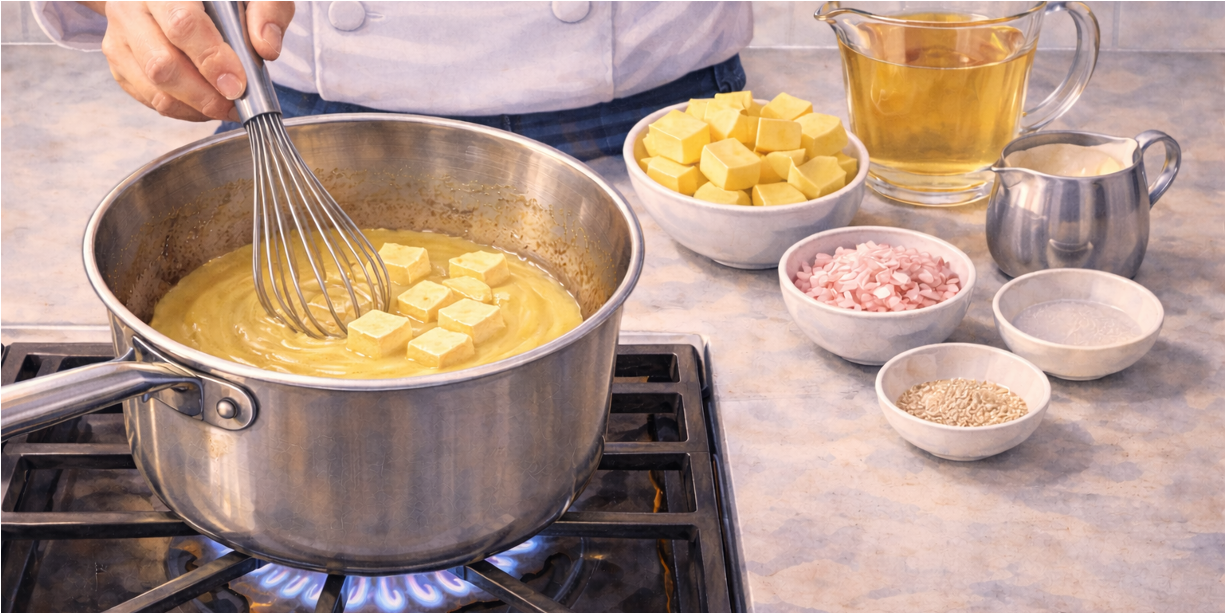
Once the reduction cools slightly, cold butter is added piece by piece while whisking continuously. The butter melts slowly and blends into the reduction, forming a creamy emulsion.
Temperature control is critical. If the heat becomes too high, the butter separates and the sauce breaks. Gentle warmth allows the butterfat and liquid to combine smoothly.
The finished sauce should appear pale, glossy, and thick enough to coat the back of a spoon.
Texture and Balance
Beurre blanc differs from cream sauces in both flavour and texture. It feels lighter because it contains no flour or cream. At the same time, its high butter content delivers luxurious richness.
The acidity from vinegar and wine prevents the sauce from becoming heavy. This balance defines French cooking — richness moderated by brightness.
When prepared correctly, beurre blanc tastes smooth, tangy, and refined rather than greasy.
Classic Pairings
Beurre blanc shines alongside delicate proteins.
It pairs particularly well with poached or grilled fish such as salmon, sea bass, or sole. Shellfish like scallops and lobster benefit from its silky texture. Steamed asparagus or tender green beans also complement the sauce beautifully.
In each case, beurre blanc enhances rather than dominates. It supports the ingredient’s natural flavour while adding depth.
Variations and Creative Twists
Although traditional beurre blanc remains simple, chefs often create variations.
Adding fresh herbs such as chives or tarragon introduces a subtle fragrance. Incorporating citrus zest brightens the flavour further. Some cooks blend in a spoonful of cream at the end to stabilise the sauce and reduce the risk of separation.
Red wine versions, known as beurre rouge, follow the same technique but offer deeper colour and flavour.
These adaptations demonstrate the flexibility of classical French techniques.
Common Mistakes and Solutions
Beurre blanc can intimidate cooks because it lacks stabilising agents like flour or egg.
If the sauce overheats, it may separate. To prevent this, keep the heat low and whisk constantly.
If separation occurs, remove the pan from heat and whisk in a small cube of cold butter. This often restores the emulsion.
Avoid preparing the sauce too far in advance, as it holds best when served immediately.
Why Beurre Blanc Still Matters
In modern kitchens filled with shortcuts and ready-made sauces, beurre blanc reminds cooks of the power of simple ingredients handled carefully.
It demonstrates that elegance does not require complexity. With wine, vinegar, shallots, and butter, French cooking creates a sauce that feels both luxurious and balanced.
Mastering beurre blanc teaches control, patience, and sensitivity to heat — skills that define strong culinary technique.
More than just a sauce, beurre blanc represents the artistry of French cuisine. It celebrates flavour through reduction, texture through emulsification, and harmony through balance.
Basic Beurre Blanc Recipe
Ingredients
- 60 ml dry white wine
- 1 tablespoon white wine vinegar
- 1 small shallot, finely chopped
- 125 g cold unsalted butter, cut into cubes
- Salt to taste
- White pepper to taste
Method
- Combine the white wine, vinegar, and shallot in a small saucepan.
- Simmer gently until the liquid reduces to about 2–3 tablespoons.
- Lower the heat. Add cold butter one cube at a time, whisking constantly.
- Continue adding butter gradually, ensuring each piece melts before adding the next.
- Remove from heat once the sauce becomes smooth and glossy.
- Season with salt and white pepper.
Serve immediately over fish or vegetables. The sauce should appear pale, velvety, and lightly tangy — a true expression of the refinement of French cooking.