Arroz negro may look dramatic on the plate, but its roots are simple and deeply tied to coastal cooking. This striking black rice dish comes from Spain, especially the regions around Valencia and Catalonia, where rice and seafood have shaped everyday meals for centuries. Despite its bold colour, arroz negro is not heavy or complicated. It is comforting, savoury, and surprisingly gentle in flavour.
At its heart, this dish shows how a few thoughtful ingredients can create something memorable.
Arroz Negro and Its Coastal Origins
Arroz negro grew out of fishing communities where nothing was wasted. Fishermen used squid or cuttlefish they couldn’t sell, along with the ink, to flavour rice cooked in seafood stock.
The ink gives the rice its deep black colour and a subtle briny taste, similar to the sea air itself. Rather than overpowering the dish, it adds depth and richness. Over time, what began as practical cooking became a regional speciality served in homes and restaurants alike.
The Black Rice Dish Gets Its Colour Naturally
The dramatic colour of this black rice dish comes entirely from squid or cuttlefish ink. The ink is stirred into the cooking liquid, colouring every grain evenly as the rice simmers.
Many people expect the flavour to be strong or fishy, but it is actually quite mild. The taste is savoury, slightly salty, and deeply comforting. Think of it as similar to a well-made seafood broth rather than something sharp or intense.
Why Arroz Negro Is About Balance, Not Boldness
Although it looks intense, arroz negro is a balanced dish. The rice absorbs flavour from stock, garlic, onions, and often tomatoes, while the seafood adds texture rather than dominance.
The rice is usually cooked until tender but not mushy. That gentle firmness keeps the dish satisfying without feeling heavy. This balance is what makes it appealing even to people trying it for the first time.
Spanish Black Rice Is Cooked Like Paella
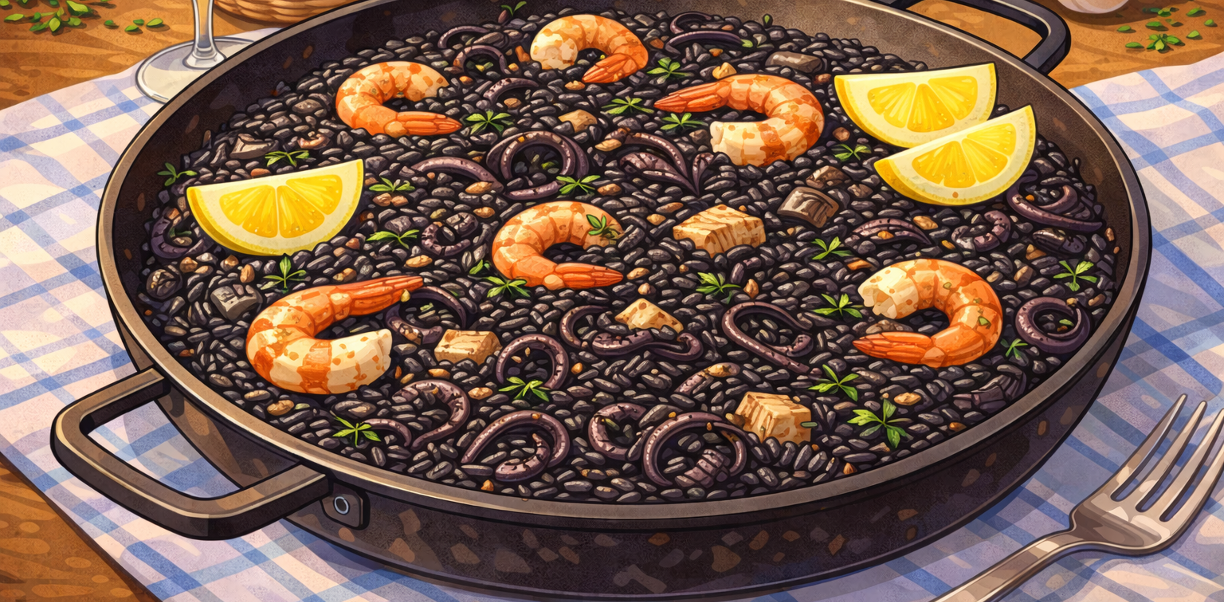
Spanish black rice is traditionally cooked in a wide, shallow pan, similar to paella. This allows the rice to cook evenly and develop flavour without constant stirring.
Unlike risotto, the rice is left alone once the liquid is added. This creates a soft top layer and, if cooked well, a lightly toasted base. That contrast in texture adds interest without complicating the dish.
How Arroz Negro Is Usually Served
Arroz negro is often served with a spoonful of allioli, a garlic mayonnaise common in Spanish cooking. The creamy, garlicky sauce softens the savoury depth of the rice and adds freshness.
This pairing shows how simple additions can change the eating experience. Without altering the rice itself, the dish feels lighter and more rounded.
Why This Dish Feels Comforting Despite Its Look
The colour may be bold, but the experience is comforting. Arroz negro is warm, savoury, and filling without being heavy. It feels like slow food meant to be enjoyed calmly.
That comfort comes from its simplicity. There are no unnecessary ingredients, just rice, stock, ink, and seafood working together.
Learning From Arroz Negro at Home
You don’t need to live by the sea to appreciate this dish. Its lesson is about confidence in simple cooking. Using one strong ingredient thoughtfully can transform an ordinary base like rice into something special.
Even if you never cook it yourself, understanding arroz negro helps you see how traditional cuisines value balance over decoration.