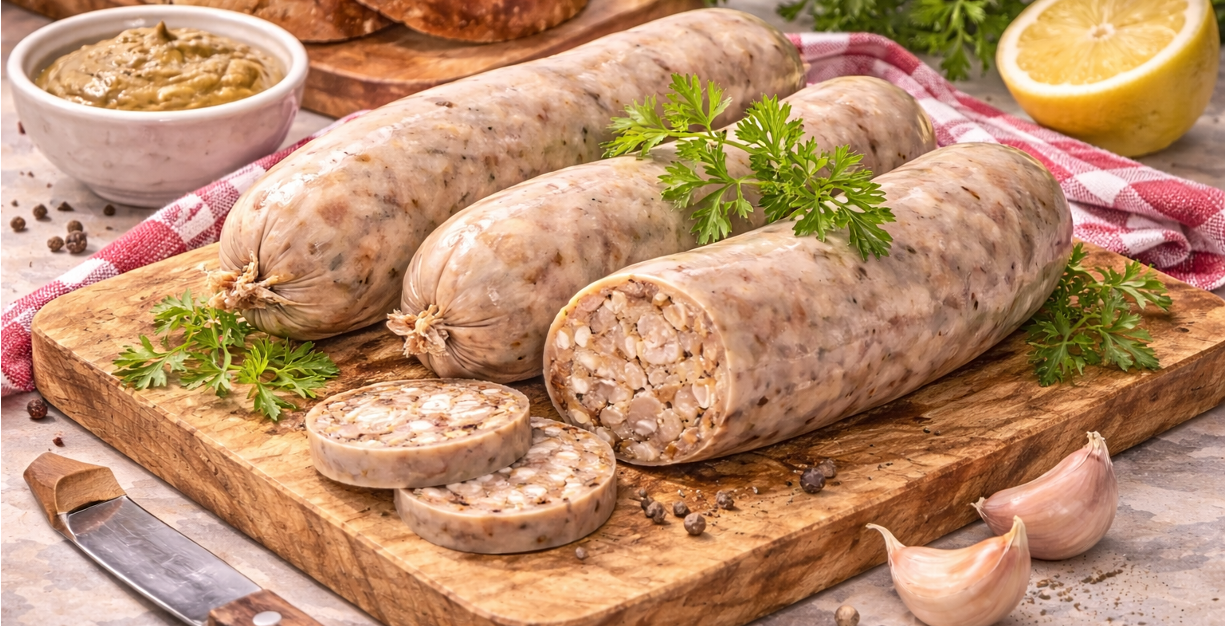
Andouillette is one of the most distinctive sausages in French regional cooking. Unlike smooth, finely minced sausages, andouillette is known for its coarse texture and strong character. Traditionally made from pork chitterlings, it reflects a style of cooking that values authenticity and resourcefulness.
Although its aroma can surprise first-time tasters, andouillette has loyal admirers across France. When prepared correctly, it offers deep flavour, firm texture, and a rich connection to French culinary heritage.
Andouillette and Its Place in French Sausage Traditions
Andouillette holds a unique position among French sausage varieties. While many sausages rely on finely ground meat, this preparation keeps visible strips of pork intestine, creating a rustic appearance and bold taste.
Historically, French sausage traditions developed from the need to use every part of the animal. In regions such as Troyes and Lyon, local methods shaped the identity of andouillette. Each area adjusted seasoning and preparation slightly, yet the essential character remained intact.
Because of this strong regional identity, andouillette became more than food. It became a marker of place and tradition.
Understanding Traditional French Tripes Sausage
This traditional French tripes sausage differs from typical pork sausages in both flavour and texture. The chitterlings are cleaned thoroughly, cut into strips, and seasoned before being stuffed into natural casings.
The texture remains coarse rather than smooth. That structure allows the sausage to hold its shape during cooking while keeping a firm bite.
Seasoning usually includes salt, pepper, wine, and sometimes mustard. The goal is to complement the meat rather than mask its natural flavour.
How Andouillette Is Cooked and Served
Andouillette is usually grilled or pan-fried slowly. Gentle heat helps crisp the outside without drying the inside. Cooking it too quickly may cause splitting.
It is commonly served with Dijon mustard and mashed potatoes or fried potatoes. The sharpness of mustard balances the richness of the sausage. In some regions, cooks serve it with a simple green salad dressed lightly in vinaigrette.
These simple pairings allow the flavour of andouillette to remain central.
Traditional Andouillette Recipe
Preparing andouillette at home requires patience and careful cleaning of the chitterlings.
Ingredients:
- 1 kg pork chitterlings, thoroughly cleaned
- 1 onion, finely chopped
- 2 cloves garlic, minced
- 100 ml dry white wine
- 1 teaspoon salt
- ½ teaspoon black pepper
- 1 tablespoon Dijon mustard
- Natural sausage casings
Method:
- Rinse the chitterlings carefully under cold running water.
- Cut them into thin strips.
- In a bowl, combine the strips with onion, garlic, wine, salt, pepper, and mustard. Mix gently.
- Stuff the mixture loosely into natural casings and tie securely.
- Simmer the sausages gently in water for about 45 minutes. Do not allow the water to boil.
- Remove and allow to cool slightly before grilling or pan-frying until golden.
Serve hot with mustard and potatoes.
Regional Variations of French Sausage Craft
Different regions prepare andouillette in their own way. In Troyes, it follows strict guidelines regarding ingredients and preparation. In Lyon, additional wine or seasoning may appear.
Some versions are milder, while others embrace a stronger aroma. These variations reflect local tastes and traditions.
Despite differences, the core identity of andouillette remains consistent across France.
Why Andouillette Still Matters Today
Andouillette continues to divide opinion, yet it remains respected. Chefs value it for its authenticity and connection to heritage cooking.
In a modern world focused on refined textures and subtle flavours, andouillette stands out for its honesty. It does not attempt to hide its origins. Instead, it celebrates them.
That boldness ensures its survival in both traditional bistros and contemporary kitchens.