Alioli (garlic emulsion) is one of the simplest yet most powerful sauces in Mediterranean cooking. Made from just garlic, olive oil, and salt, it proves that flavour does not need complexity. In Spanish kitchens, alioli is not treated as a side note. It plays a central role, adding richness, bite, and depth to everyday food.
Despite its strong reputation, alioli is not meant to overpower. When prepared well, it feels balanced, smooth, and surprisingly gentle.
Alioli (Garlic Emulsion) and Its Mediterranean Origins
Alioli (garlic emulsion) comes from the eastern Mediterranean coast of Spain, especially Catalonia and Valencia. The name itself explains the recipe: all (garlic) and oli (oil).
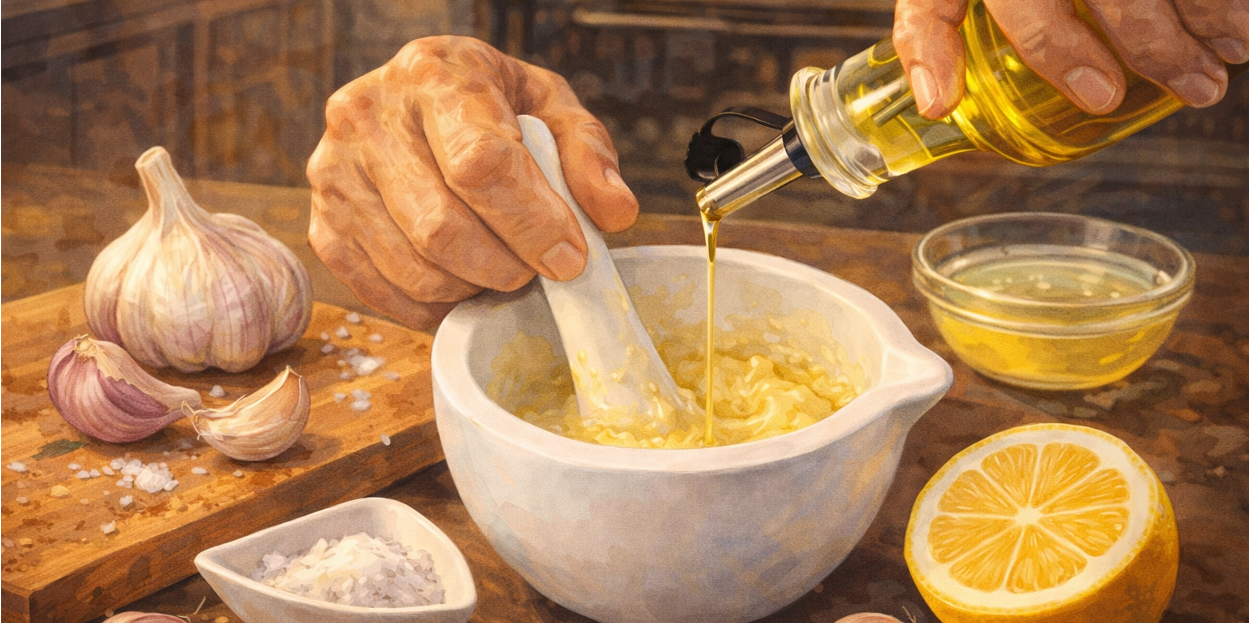
Before blenders and shortcuts, cooks made alioli by hand using a mortar and pestle. This slow method required patience and attention, allowing the garlic to release flavour gradually while the oil bound everything together.
The sauce grew out of necessity, using ingredients that were always available in rural kitchens.
The Garlic Emulsion Is Built on Technique, Not Ingredients
A garlic emulsion relies more on technique than on ingredients. The goal is to bind oil and garlic into a stable, creamy mixture.
Cooks crush garlic with salt until it forms a smooth paste. Then they add olive oil slowly, drop by drop at first, while stirring constantly. This movement forces the garlic to trap the oil, creating an emulsion rather than separation.
Rushing this process breaks the sauce. Control creates success.
Why Alioli (Garlic Emulsion) Tastes Strong but Balanced
Alioli (garlic emulsion) has a reputation for being intense, yet well-made alioli feels rounded rather than harsh. The oil softens the sharpness of raw garlic, spreading its flavour evenly.
Instead of a single punch, the sauce delivers warmth that lingers gently. That balance explains why people eat it with plain foods like potatoes or bread. The sauce adds interest without requiring complicated dishes.
Strength comes from harmony, not force.
Garlic Emulsion and Texture Matter as Much as Flavour
Texture defines a good garlic emulsion. Proper alioli feels thick, glossy, and smooth, never oily or grainy.
When the emulsion holds, it coats food lightly instead of dripping. Potatoes pick up flavour evenly. Grilled vegetables feel richer without becoming heavy. Texture controls how the sauce behaves, not just how it tastes.
This is why traditional cooks value patience so highly.
Classic Traditional Alioli Recipe (Mortar and Pestle)
This is the most traditional way to make alioli and the method that best reflects its origins.
Start with one or two garlic cloves, depending on how strong you prefer the flavour. Peel them and place them in a mortar with a good pinch of salt. Crush the garlic until it becomes a smooth, creamy paste with no lumps.
Once the paste is ready, begin adding olive oil very slowly, starting with just a few drops at a time. Stir continuously in the same direction. At first, the mixture will look loose, but as the oil binds with the garlic, it will naturally thicken.
When the emulsion stabilises, you can add the oil in a thin stream. Continue until the alioli reaches a thick, glossy consistency. Taste and adjust the salt if needed.
This version is bold and intense, best served with boiled potatoes, grilled vegetables, or simple bread.
A Lighter Garlic Emulsion for Everyday Cooking
For everyday meals, many cooks prefer a softer version of garlic emulsion.
Begin by crushing one garlic clove with salt until smooth, either in a mortar or using the flat of a knife. Transfer the paste to a bowl. Slowly whisk in olive oil, adding it gradually while stirring constantly.
Once the mixture thickens, add a small splash of water or lemon juice. This helps lighten the texture and soften the garlic’s sharpness. Continue whisking until the sauce feels smooth and spreadable.
This lighter version works well with fried fish, roasted vegetables, grilled chicken, or sandwiches. It keeps the character of alioli while feeling more flexible.
How Alioli Is Used in Everyday Cooking
Alioli appears across Spanish cooking in many forms. It accompanies boiled potatoes, grilled meats, fried fish, and vegetables. Sometimes it sits proudly on the plate. Other times it hides underneath food, quietly supporting it.
In some regions, cooks thin it slightly with water or lemon to make it easier to spread. In others, they keep it dense and bold. The core idea remains the same: garlic and oil working together.
Its flexibility keeps it relevant across generations.
Why Alioli (Garlic Emulsion) Feels Rich but Not Heavy
Despite being oil-based, alioli (garlic emulsion) does not feel greasy when made correctly. The emulsion controls how fat hits the palate.
Instead of coating the mouth, it melts slowly. This makes the sauce feel comforting rather than overwhelming. Because it is eaten in small amounts, it enhances food instead of dominating it.
Moderation is built into the sauce itself.
What Alioli Teaches About Traditional Cooking
Alioli shows how traditional cooking values restraint, technique, and patience. With just a few ingredients, cooks create something powerful through care rather than excess.
It reminds us that flavour often comes from how food is handled, not how much is added.