
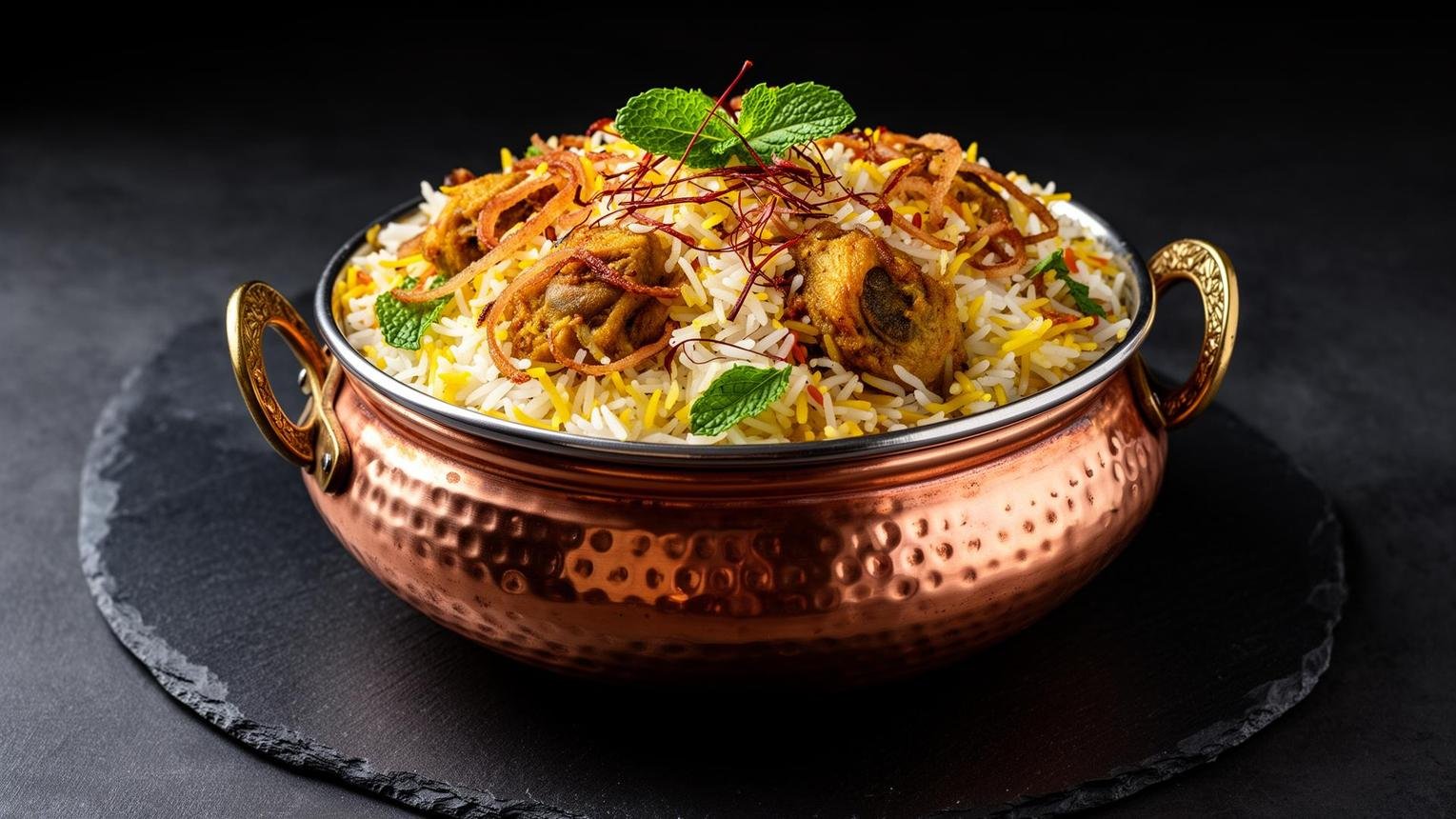
What if one of India’s most beloved dishes was never invented by a single person?
Biryani has inspired royal feasts, family traditions, heated arguments, and countless regional variations. From the fragrant kitchens of Hyderabad to the bustling streets of Kolkata, every region seems to have its own story about where biryani came from. Some credit the Mughals, others point to Persian travellers, and a popular legend even links the dish to Mumtaz Mahal, the woman for whom the Taj Mahal was built. But when we look beyond these familiar stories, the history of biryani becomes far more interesting.
The real question is not simply who invented biryani. It is how a combination of rice, meat, spices, and cooking techniques developed into one of South Asia’s most celebrated culinary traditions.
Where Did Biryani Originally Come From?
The origins of biryani are closely connected to the long history of cultural exchange between Persia, Central Asia, and the Indian subcontinent. Merchants, soldiers, migrants, and royal households carried ingredients and cooking techniques across these regions for centuries. Rice dishes prepared with meat, aromatic seasonings, and fat were already familiar in several culinary traditions before the modern forms of biryani emerged.
The word biryani is commonly associated with Persian linguistic roots. One proposed connection is the Persian word biryan, meaning fried or roasted, while another explanation connects the name to birinj, meaning rice. These linguistic associations are frequently discussed, but the precise development of the modern dish’s name remains uncertain.
Persian culinary traditions influenced many aspects of South Asian courtly cooking, particularly through the use of fragrant rice, dried fruits, nuts, saffron, and aromatic spices. However, this influence does not prove that modern biryani was invented in Persia and then brought to India as a finished recipe. The dish most likely developed through a gradual exchange of culinary practices, shaped by the ingredients and preferences of different communities.
Did the Mughals Invent Biryani?
The Mughal Empire played an important role in shaping the culinary traditions of northern India. Mughal court kitchens brought together Persianate cooking practices, Central Asian influences, and ingredients available in the Indian subcontinent. Rice dishes, meat preparations, rich gravies, and elaborate cooking methods became important parts of elite food culture.
This historical setting makes the Mughals central to discussions about biryani. Yet there is an important difference between helping a dish develop and inventing it. Although Mughal cooking contributed to the wider culinary environment from which several biryani traditions emerged, there is no conclusive historical evidence identifying a particular Mughal emperor or royal chef as its inventor.
The sixteenth-century Ain-i-Akbari, written by Abu’l-Fazl, provides valuable information about the food culture of Emperor Akbar’s court. It describes rice and meat preparations, including dishes associated with the broader family of pilaf-style cooking. These accounts demonstrate the importance of sophisticated rice dishes in Mughal kitchens, but they should not automatically be treated as recipes for modern biryani.
Biryani developed within a much larger culinary world. Its history includes royal kitchens, regional courts, military communities, merchants, and ordinary households whose contributions are not always preserved in written records.
The Legend of Mumtaz Mahal and Biryani
One of the most popular stories about biryani connects its invention to Mumtaz Mahal, the wife of Mughal emperor Shah Jahan. According to the legend, Mumtaz once visited a military camp and noticed that the soldiers appeared weak and undernourished. She supposedly instructed the royal cooks to prepare a nutritious meal combining rice, meat, and spices, resulting in the creation of biryani.
It is an appealing story because it gives the dish a memorable royal origin. However, historians have not established reliable contemporary evidence proving that Mumtaz Mahal invented biryani. The tale is better understood as a popular culinary legend than a documented historical event.
Such stories are common in food history. Famous dishes are frequently connected to kings, queens, and celebrated historical figures because these associations make their origins easier to remember. In reality, culinary traditions usually develop over generations, and the names of the cooks responsible for important innovations often remain unknown.
What Is the Difference Between Biryani and Pulao?
The relationship between biryani and pulao is one of the most interesting parts of the dish’s history. Both belong to a broad family of rice preparations that developed across Asia, but they are not always made in the same way.
Pulao is commonly prepared by cooking rice with stock, spices, vegetables, or meat, allowing the ingredients to develop flavour together. Many biryani preparations, particularly those associated with layered cooking, involve partially cooked rice and separately seasoned meat or vegetables that are combined before a final period of gentle cooking.
However, this distinction is not universal. Regional biryani recipes use different techniques, and some overlap considerably with pulao. The boundary between the two dishes has changed across places and periods, making it difficult to define either using a single rule.
The important difference often lies in culinary tradition, seasoning, texture, and preparation method rather than one ingredient or cooking step. Understanding this relationship also helps explain why historians are cautious about identifying the first biryani. Older descriptions of rice and meat dishes do not always provide enough information to classify them according to modern expectations.
How Hyderabad Became Famous for Biryani
Hyderabadi biryani is among the best-known regional versions of the dish. Its development is closely associated with the culinary culture of Hyderabad, particularly the courts of the Nizams, who ruled the region during the eighteenth, nineteenth, and early twentieth centuries.
Hyderabadi cuisine emerged through interactions among Deccani, Persianate, Mughal, and local culinary traditions. The resulting food culture developed a distinctive preference for aromatic spices, carefully prepared meat, rice, and slow-cooking methods.
One famous form is kacchi biryani, in which marinated raw meat is layered with partially cooked rice and cooked together in a sealed vessel. Another is pakki biryani, which uses meat that has been cooked before the final layering process. Both techniques require careful control of moisture, temperature, and cooking time.
Hyderabadi biryani is especially associated with dum cooking, where the pot is sealed to retain steam and aromas. As the dish cooks gently, moisture from the meat and other ingredients helps finish the rice, while the spices contribute their distinctive fragrance.
The popularity of Hyderabadi biryani grew far beyond the Deccan. Today, it is one of the most recognizable expressions of Indian biryani culture, although recipes vary considerably among households and restaurants.
Why Does Kolkata Biryani Contain Potatoes?
Kolkata biryani is famous for an ingredient that surprises many people: the potato. Alongside fragrant rice and meat, a large, carefully cooked potato is often one of the dish’s defining features.
The development of Kolkata’s biryani tradition is commonly connected to Nawab Wajid Ali Shah, the last ruler of Awadh, who was deposed by the British in 1856 and subsequently settled in the Calcutta area. His household and the wider community associated with his court contributed to the growth of Awadhi culinary traditions in Bengal.
A popular explanation suggests that potatoes were introduced into biryani because they were cheaper than meat. According to this account, cooks used potatoes to make the dish more economical while preserving its richness and flavour. Although widely repeated, this explanation is not firmly established by contemporary evidence.
Potatoes had already become part of Indian food culture through earlier exchanges, and their inclusion may have reflected local preferences, culinary experimentation, or changing household practices. Whatever the original reason, the potato eventually became an essential part of Kolkata biryani’s identity.
Unlike some intensely spiced regional versions, Kolkata biryani is often celebrated for its comparatively delicate seasoning, fragrant rice, tender meat, and the distinctive richness of its potato.
Lucknowi Biryani and the Influence of Awadhi Cuisine
Lucknowi biryani is closely associated with the culinary traditions of Awadh, a historical region in northern India known for its elaborate courtly cooking. The nawabs of Awadh supported skilled cooks who developed sophisticated techniques for preparing meat, rice, breads, and desserts.
A prominent characteristic of many Awadhi biryani preparations is the careful treatment of rice and meat before they are combined. In pakki preparations, the meat is cooked separately, while the rice is partially cooked and later layered with the other ingredients for a final period of gentle heating.
Lucknowi biryani is often described as more restrained in its use of strong spices than certain other regional styles. Rather than relying on intense heat, it emphasizes fragrance, balanced seasoning, and the natural flavours of the ingredients.
Saffron, cardamom, cloves, and other aromatics may contribute to the dish’s flavour, although recipes differ between families and professional kitchens. The result is a biryani tradition that reflects the refinement associated with Awadhi cooking.
The Many Regional Varieties of Biryani in India
As biryani spread across the Indian subcontinent, it adapted to regional ingredients, agricultural practices, and food preferences. This process produced numerous varieties, each with its own identity.
Malabar biryani, particularly associated with northern Kerala, reflects the region’s long history of maritime trade and cultural exchange. Many versions use short-grain aromatic rice, such as kaima or jeerakasala, rather than the long-grain basmati rice commonly associated with northern Indian biryanis. The dish often includes distinctive spice combinations and garnishes that reflect Kerala’s culinary traditions.
Ambur biryani, associated with Tamil Nadu, is known for its use of seeraga samba rice in many traditional preparations. This small-grained aromatic rice absorbs flavour differently from basmati, contributing to the dish’s characteristic texture and taste.
Dindigul biryani is another celebrated Tamil Nadu variety. It is often prepared with seeraga samba rice and a seasoning profile that can include pronounced tangy notes. Its popularity demonstrates how regional preferences can shape a dish while preserving its broader identity.
These varieties show that biryani is not one fixed recipe. It is a family of dishes connected by shared culinary ideas and shaped by centuries of regional innovation.
Why Is Basmati Rice Popular in Biryani?
Basmati rice is strongly associated with many famous biryani preparations because of its fragrance, slender grains, and cooking characteristics. When prepared carefully, aged basmati can produce long, separate grains that complement the texture of meat and other ingredients.
Its aroma comes partly from naturally occurring compounds, including 2-acetyl-1-pyrroline, which is also responsible for characteristic aromas in several other foods. The concentration of aromatic compounds varies depending on the rice variety and growing conditions.
Aged basmati is often preferred for certain biryani styles because changes during storage can influence cooking behaviour and grain texture. However, basmati is not essential to every biryani. Regional varieties such as kaima and seeraga samba demonstrate that other aromatic rice types can produce equally distinctive dishes.
The choice of rice is therefore closely tied to the history and geography of a particular biryani tradition.
What Makes Biryani So Aromatic?
Biryani’s distinctive fragrance comes from a combination of rice, spices, herbs, fat, and cooking techniques. Whole spices such as cardamom, cloves, cinnamon, and bay leaves release aromatic compounds when heated, while ingredients such as saffron, mint, and coriander can contribute additional layers of flavour.
The cooking process is equally important. When rice and seasoned meat are layered together, heat and moisture help transfer aromas throughout the dish. Fat carries many flavour compounds, while steam helps distribute moisture and volatile aromas within the cooking vessel.
The Maillard reaction also contributes to flavour development when meat, onions, or other ingredients are browned. These reactions produce a wide range of compounds associated with roasted and savoury flavours.
This combination of chemistry and technique helps explain why biryani tastes different from simply mixing cooked rice with a curry. Its flavour develops through the interaction of ingredients during preparation and cooking.
How Biryani Became One of India’s Most Loved Foods
Biryani’s popularity extends across social, cultural, and regional boundaries. It appears at weddings, festivals, family celebrations, restaurants, and everyday meals. Its ability to serve both as a special-occasion dish and as convenient takeaway food has contributed to its lasting appeal.
Urbanization, restaurant culture, migration, and food delivery services have helped regional biryani styles reach new audiences. A dish once associated with particular cities or communities can now be enjoyed in places far from its traditional home.
Biryani also offers considerable flexibility. Although many historically prominent versions feature meat, contemporary preparations include vegetables, paneer, eggs, seafood, and numerous regional combinations. These adaptations reflect the continuing evolution of the dish rather than a single unchanging culinary formula.
Perhaps the most important reason for biryani’s success is its ability to carry cultural meaning. For many families, a particular biryani recipe represents memories, celebrations, and a connection to home.
Frequently Asked Questions About Biryani
Who invented biryani first?
There is no conclusive historical evidence identifying a single inventor of biryani. The dish developed through culinary exchanges involving Persianate, Central Asian, and South Asian traditions, with important contributions from regional courts and local communities.
Is biryani originally Indian or Persian?
Biryani has strong connections to Persianate culinary traditions, but its modern regional forms developed extensively in the Indian subcontinent. Describing it as exclusively Indian or Persian oversimplifies its complex history.
Did Mumtaz Mahal invent biryani?
The story that Mumtaz Mahal invented biryani for Mughal soldiers is a popular legend. Reliable contemporary evidence establishing this claim has not been identified.
Which is the oldest biryani in India?
There is no universally established oldest variety of biryani in India. Several regional traditions have long histories, but their precise dates of origin are difficult to determine.
What is the difference between Hyderabadi and Lucknowi biryani?
Hyderabadi biryani is often associated with robust seasoning and both kacchi and pakki cooking methods. Lucknowi biryani is commonly associated with Awadhi techniques, aromatic rice, and comparatively delicate seasoning. Individual recipes can vary substantially.
So, Who Really Invented Biryani?
The history of biryani is more complicated than the popular stories surrounding it. Persianate culinary influences, Mughal and regional court kitchens, local ingredients, and generations of skilled cooks all contributed to the dish’s development. No single person can be confidently credited with its invention.
What makes biryani remarkable is the way it has evolved while remaining recognizable. Hyderabad developed its celebrated dum-cooked preparations, Lucknow refined its fragrant Awadhi versions, Kolkata embraced the potato, and southern India created distinctive traditions using locally preferred rice varieties.
Each version tells a different story, but all belong to a shared culinary history shaped by movement, adaptation, and creativity.
The next time you lift the lid from a steaming pot of biryani, remember that its fragrance carries more than the aroma of rice and spices. It carries centuries of culinary exchange and the work of countless cooks whose names history may never record.
Sources and Further Reading
- K. T. Achaya, Indian Food: A Historical Companion. A reference for the history of Indian ingredients, cooking practices, and culinary development.
- Colleen Taylor Sen, Feasts and Fasts: A History of Food in India. Explores Indian food traditions and the cultural influences that shaped them.
- Abu’l-Fazl, Ain-i-Akbari. A primary historical source documenting aspects of Mughal administration and courtly food culture.
- Lizzie Collingham, Curry: A Tale of Cooks and Conquerors. Examines the relationship between food, empire, migration, and cultural exchange in South Asia.
- Oxford English Dictionary. Useful for investigating the historical development and linguistic associations of the word biryani.
Editorial note: Several famous biryani origin stories lack definitive documentary evidence. They are presented here as traditions or legends rather than established historical facts.


