
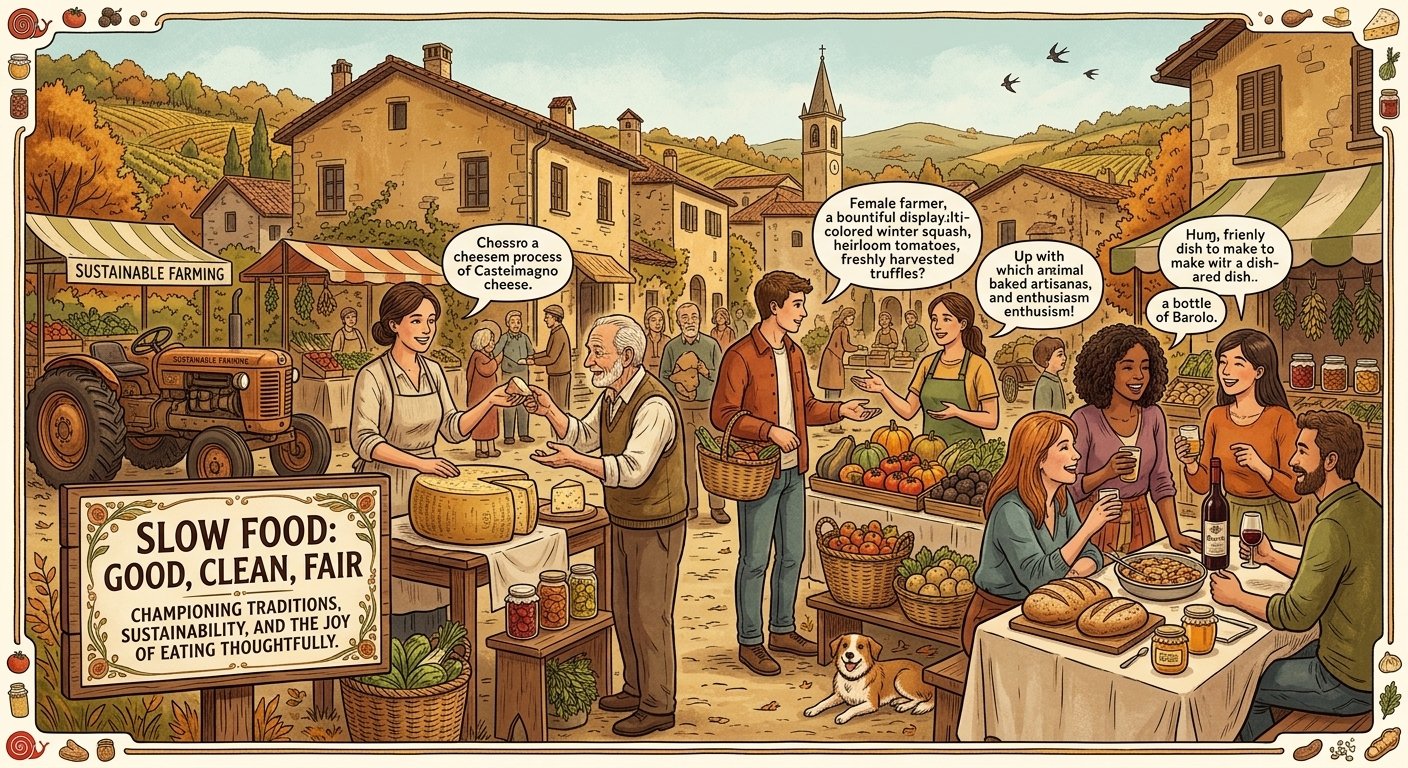
Discover the history, philosophy, and global impact of Slow Food, the Italian movement that champions local traditions, sustainable farming, and the joy of eating thoughtfully.
The first time I visited a farmers’ market in Piedmont, I noticed something different. Shoppers weren’t rushing from stall to stall with shopping lists in hand. Instead, they paused to chat with cheesemakers, tasted freshly baked bread, asked farmers about the season’s harvest, and discussed recipes with one another. Meals weren’t treated as tasks to finish quickly but as opportunities to celebrate local ingredients and spend time together.
That experience captured the spirit of Slow Food. More than a way of eating, it is a philosophy that encourages us to appreciate where our food comes from, how it is produced, and the communities that make it possible.
What Is Slow Food?
Slow Food is an international food movement founded in Italy that promotes good, clean, and fair food. It encourages people to value traditional recipes, local ingredients, biodiversity, sustainable agriculture, and shared meals instead of prioritizing convenience and mass-produced food.
Rather than opposing modern life, Slow Food advocates making thoughtful choices that respect farmers, producers, the environment, and cultural traditions.
Today, the movement operates in more than 150 countries while remaining deeply rooted in its Italian origins.
The Birth of Slow Food
The story of Slow Food began in 1986 in the town of Bra, located in Italy’s Piedmont region.
Italian journalist and food writer Carlo Petrini led a campaign opposing the opening of a fast-food restaurant near Rome’s historic Spanish Steps. Rather than simply protesting one restaurant, Petrini argued for protecting Italy’s culinary traditions, local food producers, and the pleasure of enjoying meals without haste.
Three years later, in 1989, representatives from several countries signed the Slow Food Manifesto in Paris, officially launching the international movement.
What began as a local initiative soon became one of the world’s most influential food organizations.
The Philosophy of Slow Food
The movement centers on three guiding principles.
Good
Food should be:
- Delicious
- Fresh
- Seasonal
- Nutritious
- Culturally meaningful
Clean
Food production should:
- Protect natural resources
- Preserve biodiversity
- Respect animal welfare
- Reduce environmental impact
Fair
Food systems should:
- Support farmers
- Provide fair wages
- Encourage ethical trade
- Remain accessible to communities
These principles continue to guide Slow Food projects around the world.
Why Italy Needed Slow Food
During the late 20th century, globalization and industrial food production changed eating habits across Europe.
Convenience foods became increasingly common, while many regional recipes, traditional farming methods, and local food varieties began disappearing.
Slow Food emerged as a response to these changes, encouraging Italians to preserve their culinary heritage before it was lost.
Rather than rejecting innovation, the movement promotes progress that respects tradition, sustainability, and local identity.
Protecting Biodiversity
One of Slow Food’s most important goals is preserving food biodiversity.
The organization works to protect:
- Heritage vegetables
- Traditional fruits
- Indigenous livestock breeds
- Artisan cheeses
- Ancient grains
- Local fishing traditions
Many of these foods might otherwise disappear because of industrial agriculture and changing consumer habits.
The Ark of Taste
Among Slow Food’s best-known initiatives is the Ark of Taste.
This international catalog identifies traditional foods that face the risk of extinction.
Examples include:
- Rare cheeses
- Heritage beans
- Ancient wheat varieties
- Regional fruits
- Traditional cured meats
By documenting and promoting these foods, Slow Food helps preserve unique culinary traditions for future generations.
Slow Food and Italian Cuisine
The values of Slow Food naturally align with many longstanding Italian culinary traditions.
Italian cooking already emphasizes:
- Seasonal ingredients
- Regional recipes
- Family meals
- Local markets
- Artisan production
- Respect for agricultural heritage
For this reason, the movement has become closely associated with Italy’s national food identity.
Beyond the Plate
Slow Food extends far beyond restaurants and home kitchens.
The movement supports:
- Sustainable farming
- Food education
- School gardens
- Small-scale fisheries
- Local food festivals
- Community food networks
These initiatives encourage people to understand not only what they eat but also how food shapes society and the environment.
Slow Food Around the World
Although founded in Italy, Slow Food now operates on every continent.
Local chapters organize:
- Farmers’ markets
- Educational workshops
- Cooking demonstrations
- Food festivals
- Producer partnerships
These activities adapt the movement’s principles to local cultures while maintaining the shared goal of protecting food heritage.
Whenever I visit a local market, I try to ask producers about their ingredients instead of simply making a purchase. Those short conversations often teach me more about seasonal food and regional traditions than any cookbook ever could, which is exactly the kind of connection Slow Food encourages.
Slow Food in the Modern World
Today, Slow Food continues to influence chefs, farmers, educators, and consumers worldwide.
Many restaurants proudly source ingredients from nearby farms, highlight seasonal menus, and celebrate regional specialties inspired by the movement’s values. Young chefs increasingly combine traditional knowledge with sustainable practices, ensuring that local food cultures remain relevant for future generations.
As concerns about climate change, food waste, and biodiversity grow, Slow Food has become more important than ever.
Why Slow Food Matters Today
The story of Slow Food reminds us that food is much more than fuel. Every meal reflects the people who grow ingredients, the traditions passed through generations, and the landscapes that shape local cuisines.
By encouraging thoughtful eating, supporting small producers, and preserving culinary heritage, Slow Food offers an inspiring alternative to fast living without rejecting modern progress.
Whether enjoying a family meal, shopping at a local market, or cooking with seasonal produce, embracing the values of Slow Food allows us to experience food with greater appreciation, responsibility, and joy.
Seasonal Vegetable Risotto Inspired by Slow Food
Ingredients
- 320 g Carnaroli rice
- 2 tablespoons extra virgin olive oil
- 1 small onion, finely chopped
- 1 zucchini, diced
- 150 g fresh peas
- 1 small asparagus bunch, cut into pieces
- 100 ml dry white wine
- 1 litre hot vegetable stock
- 60 g freshly grated Parmigiano Reggiano
- 2 tablespoons unsalted butter
- Fresh basil or parsley
- Salt and freshly ground black pepper
Instructions
- Heat the olive oil in a heavy saucepan.
- Cook the onion until softened.
- Add the zucchini, peas, and asparagus, then cook for about 5 minutes.
- Stir in the rice and toast it for 2 minutes.
- Pour in the white wine and allow it to evaporate.
- Add the hot stock gradually while stirring regularly.
- Continue cooking until the rice becomes creamy and al dente.
- Remove the pan from the heat and stir in the butter and Parmigiano Reggiano.
- Garnish with fresh herbs before serving.
Serving Suggestions
Serve this seasonal risotto with a crisp green salad, artisan bread, and locally produced cheese. Pair it with a glass of regional Italian white wine and finish with fresh seasonal fruit to reflect the principles of the Slow Food movement.
Preparation Time: 15 minutes
Cooking Time: 30 minutes
Servings: 4


