Discover the history, production, culinary uses, and authentic recipe featuring Mortadella, Bologna’s iconic cured sausage that has been delighting food lovers for centuries.
The first time I ordered a Mortadella sandwich in Bologna, I expected something similar to the deli meats I had eaten growing up. Instead, I was handed a warm, crusty roll filled with thick slices of silky pink sausage studded with creamy white cubes of pork fat. One bite was enough to understand why locals treasure it. The texture was incredibly smooth, the flavor was delicate and aromatic, and the richness melted gently with every mouthful.
That simple sandwich reminded me that Italian cuisine often transforms humble ingredients into extraordinary foods through craftsmanship rather than complexity. Mortadella is one of the finest examples of that tradition.
What Is Mortadella?
Mortadella is a traditional Italian cooked cured sausage made primarily from finely ground pork, cubes of pork fat, and a carefully balanced blend of spices. It is best known for its smooth pink interior dotted with distinctive white pieces of fat that become soft and creamy when eaten.
The most famous variety is Mortadella Bologna IGP (Indicazione Geografica Protetta), produced in and around Bologna in the Emilia-Romagna region. Protected Geographical Indication (IGP) status ensures that authentic Mortadella Bologna follows strict production standards.
Unlike many cured meats, Mortadella is gently cooked rather than air-dried, giving it its tender texture and mild flavor.
The History of Mortadella
Mortadella has one of the oldest histories among Italian sausages.
Its origins can be traced back to ancient Roman times, when finely ground pork was seasoned with spices and preserved using traditional techniques. Some historians believe the name may come from the Latin word mortarium, referring to the mortar used to grind the meat, while others associate it with myrtatum, a sausage once flavored with myrtle berries.
By the Middle Ages, Bologna had become renowned for producing high-quality Mortadella. In the 17th century, local authorities even introduced regulations to protect its production methods, making it one of Italy’s earliest officially regulated food products.
Today, Mortadella Bologna remains one of Italy’s most famous delicatessen meats and is enjoyed throughout the world.
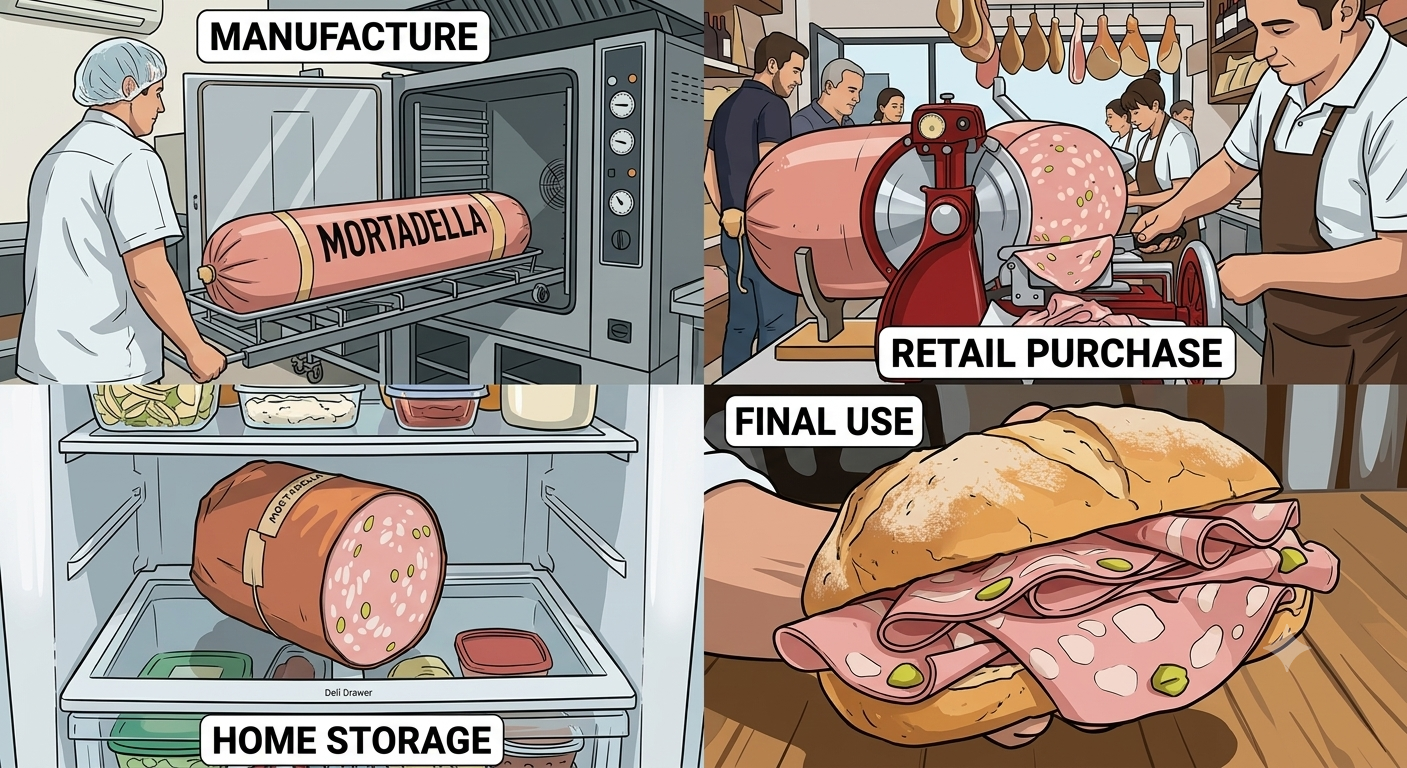
How Mortadella Is Made
Authentic Mortadella follows a carefully controlled process.
The main steps include:
- Selecting high-quality pork
- Finely grinding the lean meat
- Mixing it with cubes of pork fat
- Adding salt, black pepper, and aromatic spices
- Sometimes incorporating pistachios or myrtle berries
- Stuffing the mixture into large natural or synthetic casings
- Slowly cooking it in specially controlled ovens
- Cooling before slicing
The slow cooking process gives Mortadella its smooth texture while preserving its delicate flavor.
What Makes Mortadella Unique?
Several qualities distinguish Mortadella from other cooked sausages.
Silky Texture
The finely emulsified pork creates a remarkably smooth consistency unlike most sliced meats.
Delicate Flavor
Mortadella has a mild, buttery taste enhanced by subtle spices rather than strong seasoning.
Signature Fat Cubes
Small cubes of pork fat remain visible throughout the sausage, adding richness and tenderness.
Traditional Craftsmanship
Authentic Mortadella Bologna is produced under strict IGP regulations that preserve its historic quality.
Mortadella vs. Bologna Sausage
Outside Italy, Mortadella is often compared to bologna sausage, but they are not the same.
Traditional Mortadella uses premium pork, visible cubes of pork fat, and carefully selected spices before being slowly cooked. Bologna sausage, inspired by Mortadella, is usually made with a finer texture, different seasonings, and often lacks the distinctive fat cubes.
As a result, authentic Mortadella offers a richer texture and a more refined flavor.
Culinary Uses
Mortadella is incredibly versatile.
It is commonly enjoyed in:
- Sandwiches
- Panini
- Antipasto platters
- Pizza
- Focaccia
- Pasta fillings
- Salads
- Charcuterie boards
- Stuffed pastries
- Aperitivo platters
Thin slices are often served at room temperature to allow their delicate aroma and creamy texture to develop fully.
Nutritional Benefits
Mortadella provides several important nutrients.
It contains:
- High-quality protein
- Vitamin B12
- Iron
- Zinc
- Phosphorus
Like many cured meats, it also contains sodium and saturated fat, making it best enjoyed in moderation as part of a balanced diet.
Whenever I prepare an Italian-style picnic, Mortadella is always among the first ingredients I pack. Layered inside fresh focaccia with creamy Burrata, pistachios, and arugula, it creates a sandwich that feels both comforting and effortlessly elegant.
Modern Italian Cuisine
Today’s chefs continue to celebrate Mortadella in creative ways.
It appears in gourmet burgers, handmade tortellini fillings, artisan pizzas, creamy pasta dishes, and contemporary appetizers. Many restaurants also pair it with pistachios, balsamic glaze, or fresh cheeses, highlighting its naturally delicate flavor.
Despite these modern interpretations, Mortadella remains deeply connected to Bologna’s rich culinary heritage.
Why it Continues to Be a Culinary Icon
What makes Mortadella so remarkable is its balance of simplicity and craftsmanship.
Using premium pork, carefully selected spices, and generations of expertise, Italian producers have created a sausage that is refined rather than overpowering. Its silky texture and gentle flavor continue to delight food lovers around the world.
Whether served in a classic panino, enjoyed on a charcuterie board, or incorporated into modern recipes, Mortadella remains one of the finest ambassadors of Emilia-Romagna’s celebrated food culture.
Classic it and Burrata Panino Recipe
Ingredients
- 4 ciabatta rolls or focaccia sandwiches
- 200 g thinly sliced Mortadella Bologna
- 200 g Burrata cheese
- A handful of fresh arugula
- 2 tablespoons pistachios, roughly chopped
- 2 tablespoons extra virgin olive oil
- Freshly ground black pepper
Instructions
- Slice the ciabatta or focaccia in half.
- Lightly drizzle the bread with extra virgin olive oil.
- Spread pieces of Burrata over the bottom half.
- Layer the Mortadella slices generously.
- Add the arugula and chopped pistachios.
- Finish with freshly ground black pepper.
- Close the sandwich and serve immediately.
Serving Suggestions
Serve the panino with marinated olives, roasted vegetables, potato chips, or a simple green salad. It also pairs beautifully with sparkling water, Italian lemonade, or a light sparkling wine for a traditional Emilia-Romagna-inspired lunch.
Preparation Time: 10 minutes
Cooking Time: None
Servings: 4