Discover how Persian culture transformed Indian cuisine through royal traditions, aromatic spices, elegant cooking techniques, and timeless recipes.
When people think of Indian cuisine, they often picture a single style of cooking. Yet anyone who has traveled across the country knows that India is not one kitchen—it’s a remarkable collection of regional traditions shaped by centuries of trade, migration, and cultural exchange. Among the many influences that helped define Indian food, the Persian influence stands out as one of the most profound.
The first time I learned about the connection between Persian and Indian cuisine, I began looking at familiar dishes differently. A fragrant biryani, a rich korma, or even a bowl of aromatic pulao suddenly became more than delicious meals—they became stories of travelers, emperors, royal chefs, and cultures meeting over shared tables. It reminded me that food often preserves history more faithfully than books.
A Journey from Persia to India
The relationship between Persia (modern-day Iran) and the Indian subcontinent dates back more than a thousand years. Traders, scholars, artists, and travelers regularly crossed the mountains and deserts connecting Central Asia with northern India.
However, Persian culinary traditions became especially influential during the Delhi Sultanate and later under the Mughal Empire. Many Mughal rulers had strong Persian cultural ties, and Persian became the language of administration, literature, and royal courts.
Along with architecture, poetry, and art, Persian food traditions found a welcoming home in India’s royal kitchens.
Rather than replacing local cooking, Persian techniques blended beautifully with Indian ingredients and regional traditions. This fusion created an entirely new culinary identity that continues to influence Indian cuisine today.
The Birth of Royal Kitchens
Persian influence is perhaps most visible in the grand royal kitchens that flourished under the Mughal emperors.
Known for their sophistication, these kitchens employed highly skilled chefs who carefully balanced flavors, textures, colors, and aromas. Every dish was prepared with precision, often requiring hours of slow cooking and meticulous attention to detail.
Meals were designed not merely to satisfy hunger but to create memorable dining experiences. Presentation became just as important as taste, with food often garnished using nuts, edible silver leaf, saffron, and fragrant herbs.
This refined approach later inspired the royal cuisines of Delhi, Lucknow, Hyderabad, Kashmir, and several princely states.
Signature Ingredients Introduced Through Persian Traditions
Persian culinary culture introduced or popularized several ingredients that remain central to many Indian recipes.
Some of the most recognizable include:
- Saffron
- Dried fruits
- Almonds
- Pistachios
- Walnuts
- Rose water
- Kewra water
- Yogurt-based marinades
- Pomegranate
- Fresh herbs such as mint and coriander
These ingredients were not always used to make food spicy. Instead, they created layers of fragrance, sweetness, richness, and balance.
Even today, many festive Indian dishes rely on these ingredients to achieve their distinctive flavor.
The Art of Slow Cooking
One of Persia’s greatest culinary contributions was its emphasis on patience.
Instead of cooking quickly over high heat, many royal dishes were prepared slowly, allowing spices and ingredients to blend naturally.
This philosophy later evolved into techniques such as dum cooking, where food is sealed inside heavy pots and cooked in its own steam.
The result is exceptionally tender meat, fluffy rice, and deeply developed flavors.
Even modern chefs continue to rely on this slow-cooking tradition when preparing biryani, korma, and pulao.
Famous Dishes with Persian Roots
Many dishes considered classics of Indian cuisine have strong Persian influences.
Biryani
Although biryani has evolved into many regional variations, its layered rice-and-meat preparation reflects Persian cooking traditions. Indian cooks enriched the original concept by incorporating local spices, herbs, and regional ingredients.
Pulao
Pulao arrived through Persian and Central Asian culinary traditions long before biryani became popular. Its delicate seasoning and fragrant rice continue to make it a favorite across India.
Korma
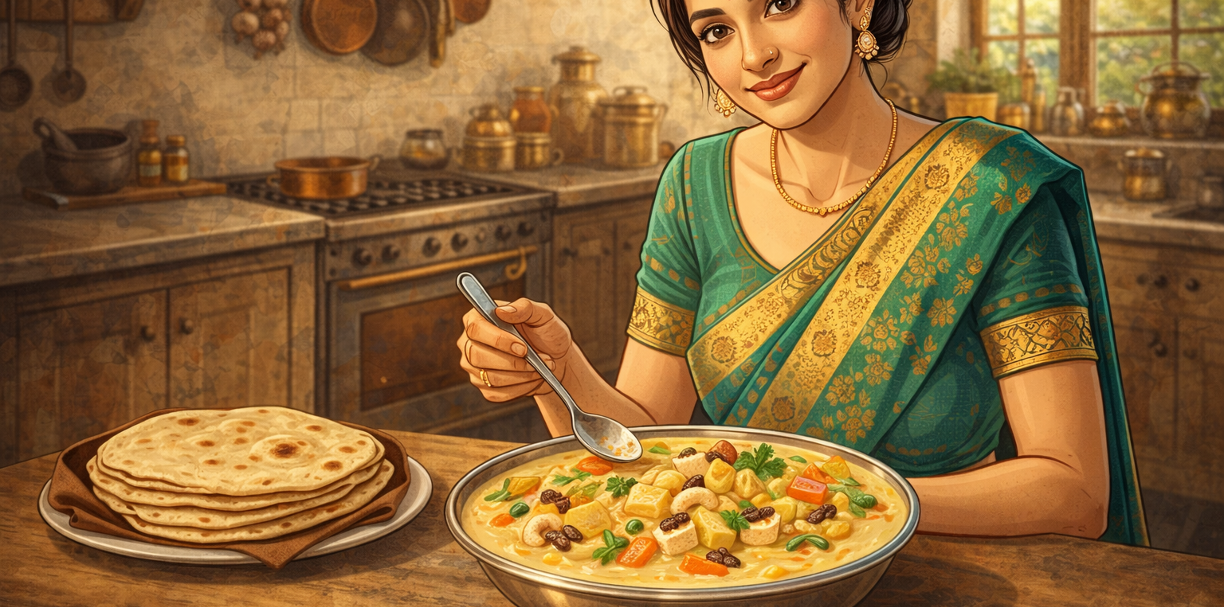
Korma is another excellent example of Persian influence. Traditionally prepared by gently braising meat or vegetables in yogurt, nuts, and aromatic spices, it emphasizes richness without excessive heat.
Kofta
Soft meatballs simmered in flavorful gravies also trace their origins to Persian cuisine. Indian versions have expanded to include vegetarian alternatives made with paneer, potatoes, and vegetables.
Sheer Khurma
This luxurious dessert prepared with milk, vermicelli, dates, and dry fruits reflects Persian culinary traditions and remains an important part of Eid celebrations across India.
The Persian Love for Aromatic Spices
One of the most fascinating aspects of Persian cooking is its careful use of spices.
Unlike many people assume, Persian-inspired dishes are rarely defined by intense heat. Instead, they celebrate fragrance and harmony.
Cardamom, cinnamon, cloves, nutmeg, mace, cumin, and black pepper are blended thoughtfully so that no single spice dominates the dish.
This balanced seasoning continues to distinguish many North Indian and Mughlai recipes from spicier regional cuisines.
Desserts Fit for Royalty
Persian influence also transformed Indian sweets.
Rich desserts featuring milk, saffron, nuts, dried fruits, and fragrant floral waters became popular in royal courts.
Recipes such as phirni, shahi tukda, sheer khurma, and several varieties of halwa showcase this elegant culinary heritage.
These desserts focus on luxurious textures rather than overwhelming sweetness, making them popular during festivals and celebrations.
Beyond Food: A Culture of Hospitality
Persian influence extended beyond recipes to dining customs as well.
Large communal meals became symbols of generosity and celebration. Beautiful serving platters, decorative table settings, and carefully planned courses reflected the belief that sharing food strengthened relationships.
Even today, many Indian families continue these traditions during weddings, religious festivals, and family gatherings.
Meals are often prepared with extraordinary care, emphasizing hospitality as much as flavor.
A Lasting Legacy Across India
Although Persian influence is most visible in Mughlai and Awadhi cuisine, its legacy extends far beyond royal recipes.
Hyderabadi biryani, Kashmiri wazwan, Delhi’s Mughlai dishes, Lucknow’s refined cooking, and countless festive desserts all reflect Persian culinary traditions in different ways.
At the same time, local communities adapted these ideas using regional ingredients, creating distinctive identities rather than simple copies.
This ability to absorb outside influences while preserving local traditions is one of the defining strengths of Indian cuisine.
Why This Culinary Heritage Still Matters
Today, Persian influence continues to inspire chefs, historians, and food lovers around the world.
Modern restaurants reinterpret centuries-old recipes, while home cooks preserve family traditions that have been handed down for generations.
Whenever I prepare a fragrant pulao or enjoy a bowl of creamy korma, I’m reminded that every recipe carries a journey. The spices may come from one region, the cooking technique from another, and the ingredients from yet another. Together, they create something uniquely Indian while honoring the cultures that helped shape it.
Perhaps that’s the greatest lesson Persian influence offers us. Food is never static. It travels, adapts, and evolves with the people who prepare it. India’s culinary heritage is rich not because it remained unchanged, but because it welcomed new ideas while preserving its own traditions.
Understanding Persian influence on Indian cuisine allows us to appreciate not only the origins of many beloved dishes but also the remarkable story of cultural exchange that continues to flavor every plate.