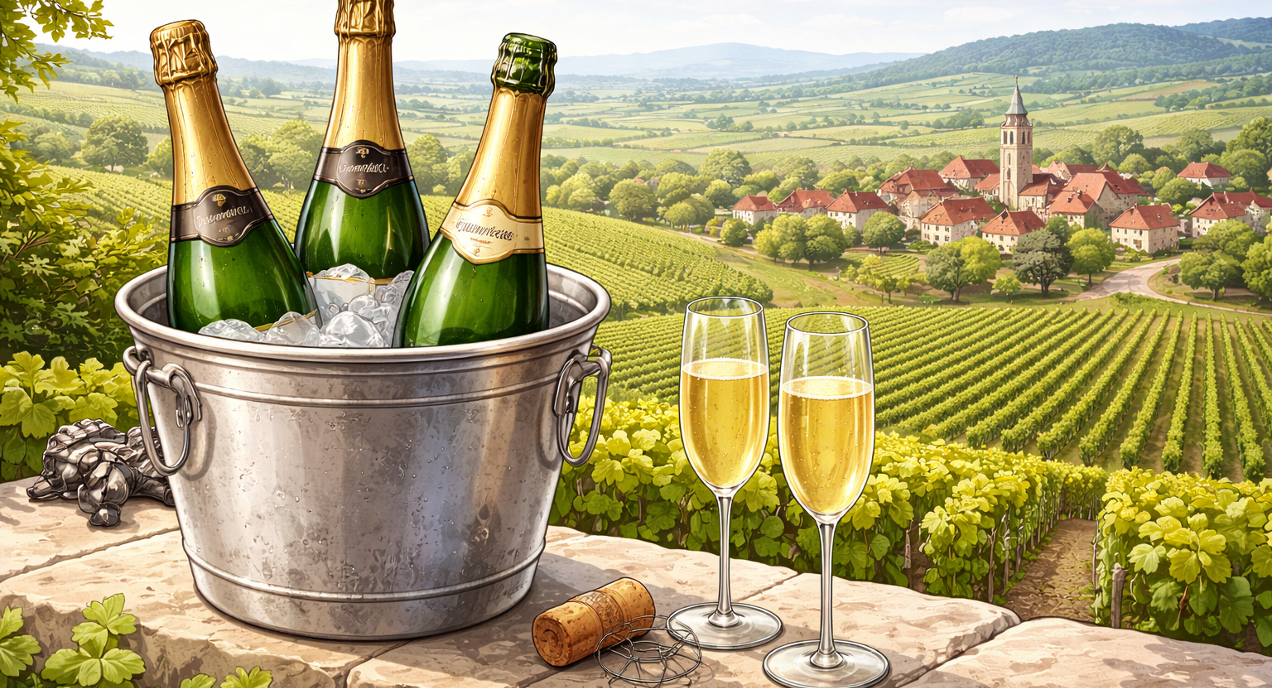
Champagne — understanding celebration through method
Champagne is often treated as a drink for special moments, yet its importance comes from technique rather than occasion. What makes Champagne distinct is not only the grape or the region, but the way the bubbles are created. The character of the wine grows from process, and that process explains why it tastes the way it does.
True Champagne comes from the Champagne region in northern France, a cool area where grapes ripen slowly. The main varieties are Chardonnay, Pinot Noir, and Pinot Meunier. Each contributes differently: Chardonnay brings freshness, Pinot Noir gives structure, and Pinot Meunier adds fruit and approachability. The aim is balance before bubbles even appear.
The traditional method
Champagne is made using the méthode traditionnelle. First, a still base wine is produced. Then a mixture of sugar and yeast, called the liqueur de tirage, is added before bottling. Inside the sealed bottle, a second fermentation begins. Carbon dioxide cannot escape, so it dissolves into the wine and forms bubbles.
The wine then rests on dead yeast cells known as lees. This stage, called autolysis, creates aromas of bread, nuts, and pastry rather than simple fruit. The longer the ageing, the more these savoury notes appear.
After ageing, bottles are gradually turned in a process called riddling to collect sediment near the neck. The frozen plug is removed during disgorgement, and a final adjustment liquid, the dosage, determines the sweetness level.
Styles and sweetness
Champagne labels describe sugar levels rather than flavour intensity. Brut Nature contains almost no added sugar. Brut is dry but balanced. Demi-Sec and sweeter styles suit desserts.
Another distinction is blending. A non-vintage Champagne mixes wines from multiple years to maintain a consistent house style. A vintage Champagne comes from a single harvest, showing the character of that year. Some producers bottle Blanc de Blancs (only Chardonnay) or Blanc de Noirs (only dark grapes), highlighting structure differences.
Texture, not just bubbles
The bubbles themselves matter less than their texture. Slow secondary fermentation and long ageing create fine, persistent mousse rather than large fizzy carbonation. This texture carries aroma upward and spreads flavour across the palate.
Because of this structure, Champagne works widely at the table. Acidity refreshes fried food, salt sharpens fruit notes, and the gentle bitterness from ageing balances richness. It behaves more like a light wine with lift than a simple sparkling drink.
Why Champagne matters
Champagne teaches that flavour can come from transformation rather than ingredients alone. Yeast, time, pressure, and patience shape the final character as much as grapes do.
Understanding Champagne changes how you taste sparkling wines everywhere. Instead of focusing only on bubbles, you begin to notice texture, ageing, and structure.
Champagne is therefore less about celebration than about controlled change — a wine defined by what happens after it is finished.