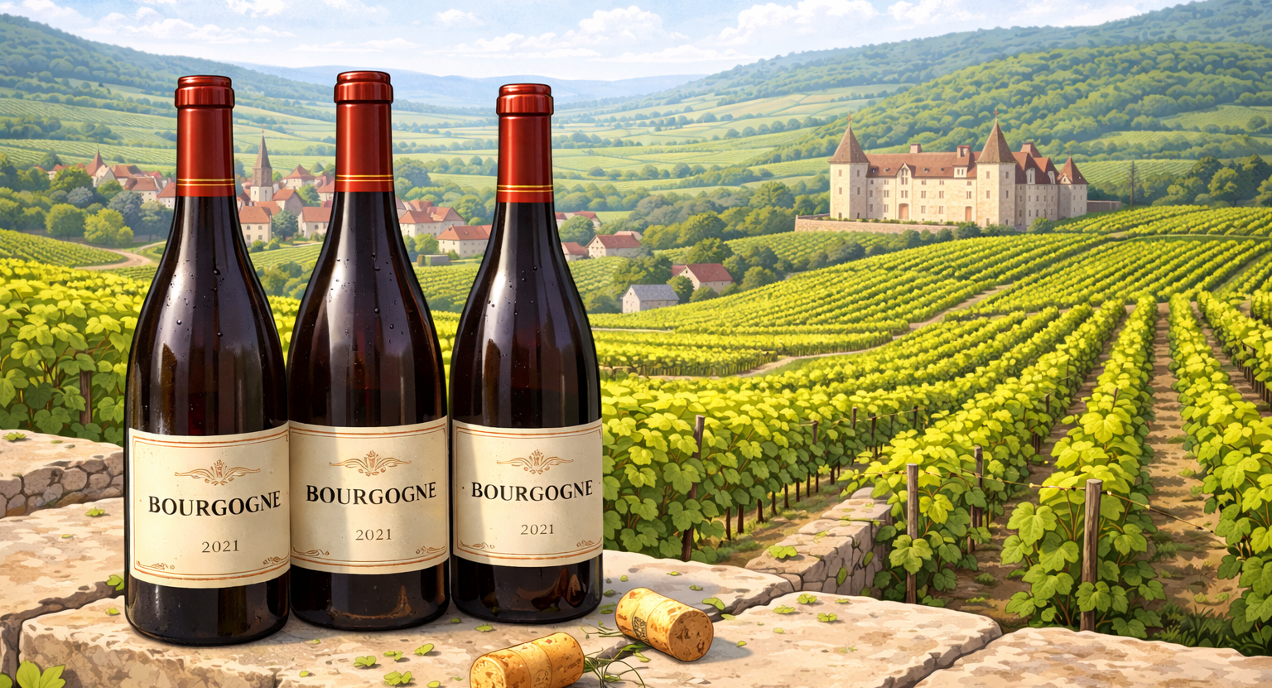
Burgundy is often described as complex, but the idea behind it is simple: the flavour of wine comes from where it grows. Not just the country or region, but the exact slope, soil, and exposure to sun. Burgundy builds its identity around this belief, called terroir.
Instead of blending many grapes to achieve consistency, Burgundy does the opposite. It reduces variables so differences become visible. Most red wines are made from Pinot Noir, and most whites from Chardonnay. Because the grape stays constant, the land becomes easier to taste.
A map made of vineyards
Burgundy stretches from Chablis in the north down through the Côte d’Or, which itself divides into the Côte de Nuits and Côte de Beaune, then further south to the Côte Chalonnaise and Mâconnais. Each area is cooler or warmer, stonier or richer, and the wines reflect that shift gradually rather than dramatically.
Within these areas, vineyards are classified into levels. At the top are Grand Cru sites — small, historically recognised plots producing the most distinctive wines. Below them are Premier Cru vineyards, still specific but slightly broader. Then come village wines like Gevrey-Chambertin, Vosne-Romanée, or Meursault, followed by wider regional bottlings simply labelled Bourgogne.
The hierarchy does not describe quality alone. It describes precision. The smaller the place named on the label, the more exact the origin of flavour.
Soil, climate, and expression
Burgundy sits on layers of limestone and clay formed from ancient seabeds. Limestone drains water and gives tension to wine; clay retains moisture and brings weight. A vineyard with more limestone produces leaner, sharper wines, while more clay produces rounder ones.
Climate matters equally. Burgundy lies in a continental climate with cold winters, warm summers, and unpredictable weather. Small variations — a slightly warmer slope, morning sun, protection from wind — can change ripening speed. Because Pinot Noir is sensitive and thin-skinned, it records these differences clearly.
The result is that neighbouring vineyards can taste noticeably different even when separated by a path.
Winemaking philosophy
Winemaking here aims to interfere as little as possible. Fermentation, oak ageing, and maturation exist to reveal the vineyard rather than reshape it. New oak is used carefully so texture supports the aroma instead of masking it. Age allows flavours to move from fruit toward earth, mushroom, and spice.
White Burgundy follows the same idea. Chablis tends toward mineral and sharp because of cooler conditions and fossil-rich soils, while Puligny-Montrachet or Meursault become broader and nutty as ripeness increases.
Why Burgundy matters
Burgundy teaches a wider lesson in food and drink: ingredients carry location inside them. Two wines made from the same grape can differ more than two wines made from different grapes if they come from different ground.
Understanding Burgundy, therefore, changes how you taste everything — wine, cheese, vegetables, even bread. Instead of asking only what something is, you begin asking where it comes from.
Burgundy is less a style than a way of observing flavour.