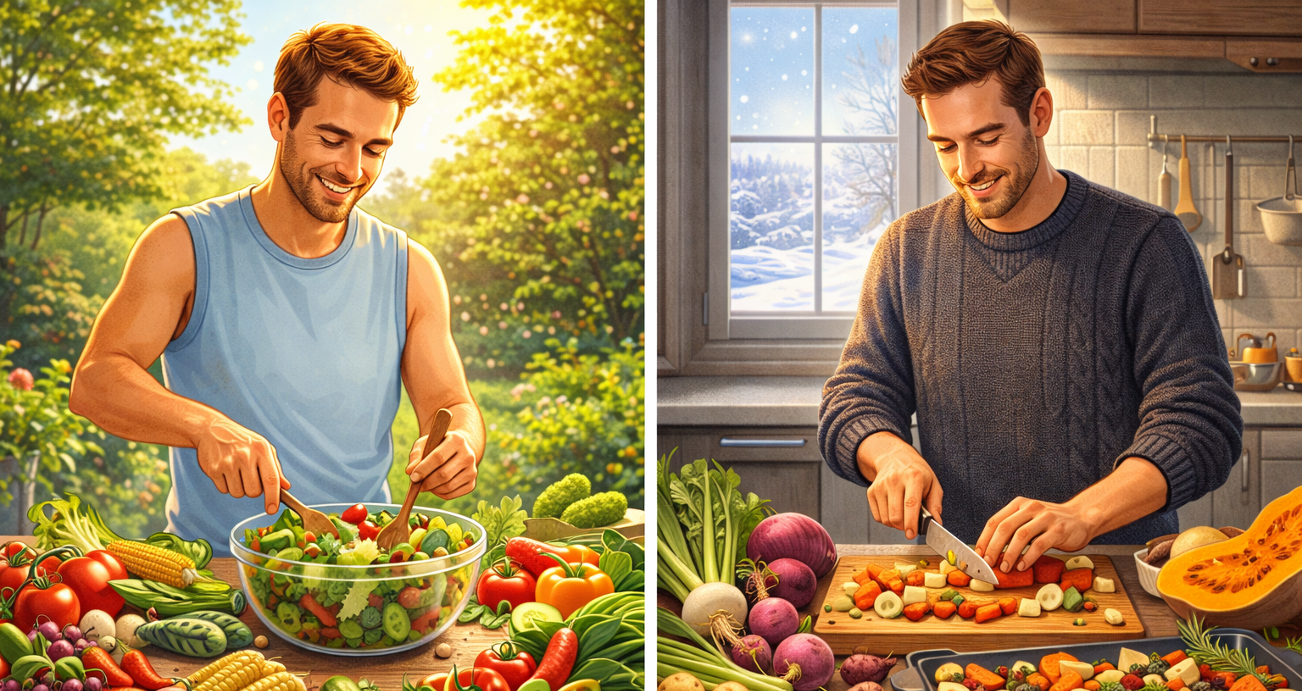
In a French kitchen, the first question is rarely how should I cook this? It is almost always when should I cook this? Seasonality is at the heart of this approach.
Seasonality is not a trendy ethical choice here. It is not a badge of honour worn by restaurants with tasting menus. It is simply the way food has always worked. The markets change, and so the menus change. The cook adapts, not because they are following a rule, but because they are paying attention. Instead of expecting every ingredient to be available every day, the French kitchen expects absence. It plans around it. It finds comfort in it.
This single idea shapes the entire rhythm of the year. Each season arrives with its own mood, its own techniques, its own appetite.
Spring — Brief and Delicate
Spring arrives like a shy guest. After the long, slow sleep of winter, after the months of preserved foods and hearty stews, the first vegetables are tender and mild. Asparagus, no thicker than a finger. Peas, sweet and small. Young carrots, their tops still fresh and green. A few brave herbs.
Spring cooking is cautious. It does not want to overwhelm these fragile things. The techniques are gentle—a quick blanch, a warm vinaigrette, a bare whisper of butter. Sauces become light, almost translucent. The goal is protection, not transformation. You are not trying to improve upon spring; you are simply trying not to get in its way.
The lesson: Do less when nature is already working.
Summer — Raw and Immediate
Then comes summer, and with it, abundance. The world explodes. Tomatoes, heavy with juice. Courgettes, shining and firm. Peppers, berries, peaches, apricots—they all arrive at once, a joyful, chaotic crowd.
Cooking, in response, retreats. When a tomato is perfectly ripe, it does not need a sauce. It does not need heat. It needs a plate, a pinch of salt, a thread of good olive oil. Many summer dishes move toward room temperature—salads, chilled soups, grilled meats left to rest, fresh cheeses that crumble at a touch.
Acidity becomes your friend. A sharp vinaigrette, a handful of herbs, a quick pickle—these things do not preserve food here; they simply refresh the palate against the heat. Meals grow shorter. Preparation happens just before serving. You slice, you arrange, you eat.
The lesson: When flavour peaks, the cook steps back and lets it speak.
Autumn — Depth Returns
Autumn arrives with a change in the light, and a change in the kitchen. The air cools, and cooking grows longer again. Mushrooms appear, earthy and dense. Squash, sweet and orange. Apples, crisp and tart. Game, rich and dark.
This is the return of structure. Roasting comes back. Butter sizzles in pans. Pan sauces, made from the fond left behind by a seared piece of meat, reappear on the table. Stocks simmer on the back of the stove for hours, filling the house with warmth.
This is also the season of transition. You find fruit cooked with meat—a duck with figs, a pork roast with apples. Sweet and savoury dance together. The kitchen is preparing for the heaviness of winter, but it is not quite there yet.
The lesson: Cooking becomes interpretation, not just presentation.
Winter — Patience and Preservation
And then, winter. The world outside is quiet, cold, sometimes still. The kitchen becomes a warm heart beating at the centre of the house.
Winter cooking is built on storage. The vegetables that last—cabbage, potatoes, lentils, onions. The meats that have been cured and hung. The cheeses that have aged throughout the year. These are the ingredients that ask for patience.
Techniques stretch time. Braising turns tough things tender. Stewing fills the house with fragrance for hours. Gratins bubble under the broiler. Soups simmer all afternoon. Here, the cook actively creates comfort. Heat transforms resistance into softness. Fat, once a concern, becomes welcome, necessary, and kind.
And winter also honours what came before. The sausages are cured in autumn. The vegetables preserved in jars. The cheeses that have matured in cool cellars. The year’s cooking connects to itself. You taste November in January. You remember summer in a spoonful of bottled tomatoes.
The lesson: When ingredients resist, technique must lead.
More Than a Calendar
Seasonality in the French kitchen is not about restriction. It is not a list of rules about what you are allowed to eat. It is about rhythm. It is about listening.
Each season changes not only the ingredients in your basket, but the methods you use, the textures you crave, and the way you sit at the table. You do not cook the same way year-round because you do not eat the same way year-round. Your body knows this. Your appetite shifts with the weather.
The French cook follows the environment rather than trying to correct it. They work with the year, not against it.
And that is why French food so often feels right. It is not always the most impressive food you have ever tasted. It does not shout. But it matches the moment. It belongs to the day you are eating it. It tastes like the season it came from.