
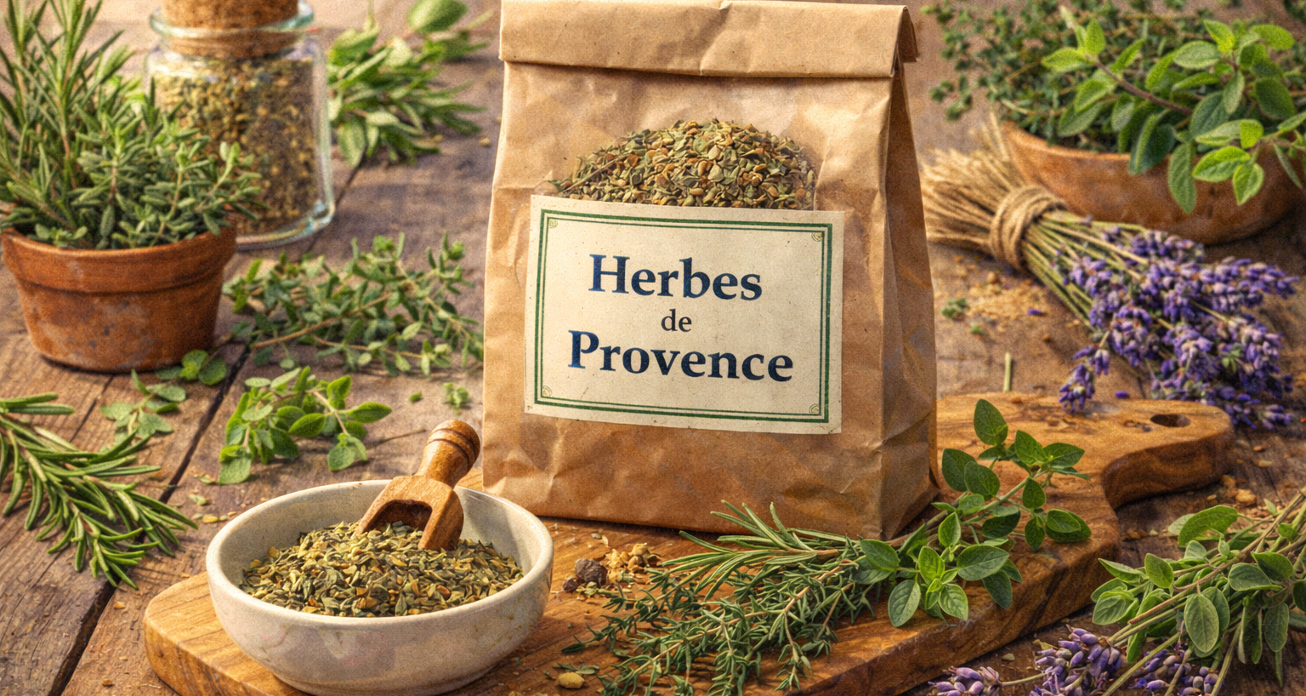
Herbes de Provence is a fragrant blend of dried herbs inspired by southern France. Known for its warm, earthy aroma, it reflects the flavours of Mediterranean cooking. Traditionally, Herbes de Provence includes thyme, rosemary, oregano, and savoury, sometimes with a hint of lavender.
Unlike fresh herbs, this mixture works best in dishes that cook slowly. The dried leaves release flavour gradually, creating depth without overpowering other ingredients.
Herbes de Provence and Its Mediterranean Roots
Herbes de Provence developed from herbs growing naturally across the Provençal countryside. Farmers gathered thyme and rosemary from nearby hills and used them to season meats and vegetables.
Over time, this everyday habit evolved into a recognised seasoning mix. Today, it symbolises rustic southern French cooking. It brings warmth and balance to simple dishes such as roast chicken or baked tomatoes.
The link between landscape and flavour remains central to its identity.
Understanding the Classic Provençal Herb Blend
The classic Provençal herb blend usually combines dried thyme, rosemary, oregano, and savoury. Each herb contributes something distinct. Thyme adds earthiness, rosemary provides pine-like fragrance, oregano deepens flavour, and savoury introduces mild peppery notes.
Because the herbs are dried, they withstand heat well. That makes the classic Provençal herb blend ideal for roasting, grilling, or baking.
Balance matters more than strength in this mixture.
Why This Herb Mix Works in Slow Cooking
Herbes de Provence performs especially well in recipes that allow time for flavour to develop. When sprinkled over roast chicken, it infuses the skin with aroma. When stirred into tomato-based stews, it adds warmth without sharpness.
Even roasted vegetables benefit from a small pinch. The herbs soften as they cook, blending naturally into oils and juices.
This gentle release of flavour explains its popularity in everyday meals.
Simple Herbes de Provence Recipe
Preparing Herbes de Provence at home allows you to adjust proportions according to taste.
Ingredients:
- 2 tablespoons dried thyme
- 1 tablespoon dried rosemary, crushed
- 1 tablespoon dried oregano
- 1 teaspoon dried savoury
- Optional: ½ teaspoon dried lavender
Method:
- Combine all dried herbs in a bowl.
- Mix thoroughly until evenly blended.
- Store in an airtight container away from light.
- Use within six months for best flavour.
This homemade blend captures the character of traditional southern French seasoning.
Using the Classic Provençal Herb Blend in Everyday Cooking
The classic Provençal herb blend pairs beautifully with olive oil and garlic. Mix a teaspoon with oil and lemon juice to create a quick marinade for fish or chicken.
It also works well with roasted potatoes or grilled aubergines. A small amount stirred into soups adds depth without complexity.
Because it combines several herbs into one mixture, it simplifies seasoning while maintaining balance.
Why Herbes de Provence Remains Popular
Herbes de Provence continues to matter because it delivers reliable flavour with minimal effort. A single spoonful transforms ordinary ingredients into something reminiscent of southern France.
In modern kitchens, convenience often guides cooking choices. However, this blend preserves authenticity while saving time. Through dried herbs and regional tradition, it remains an essential part of Mediterranean cuisine.


