
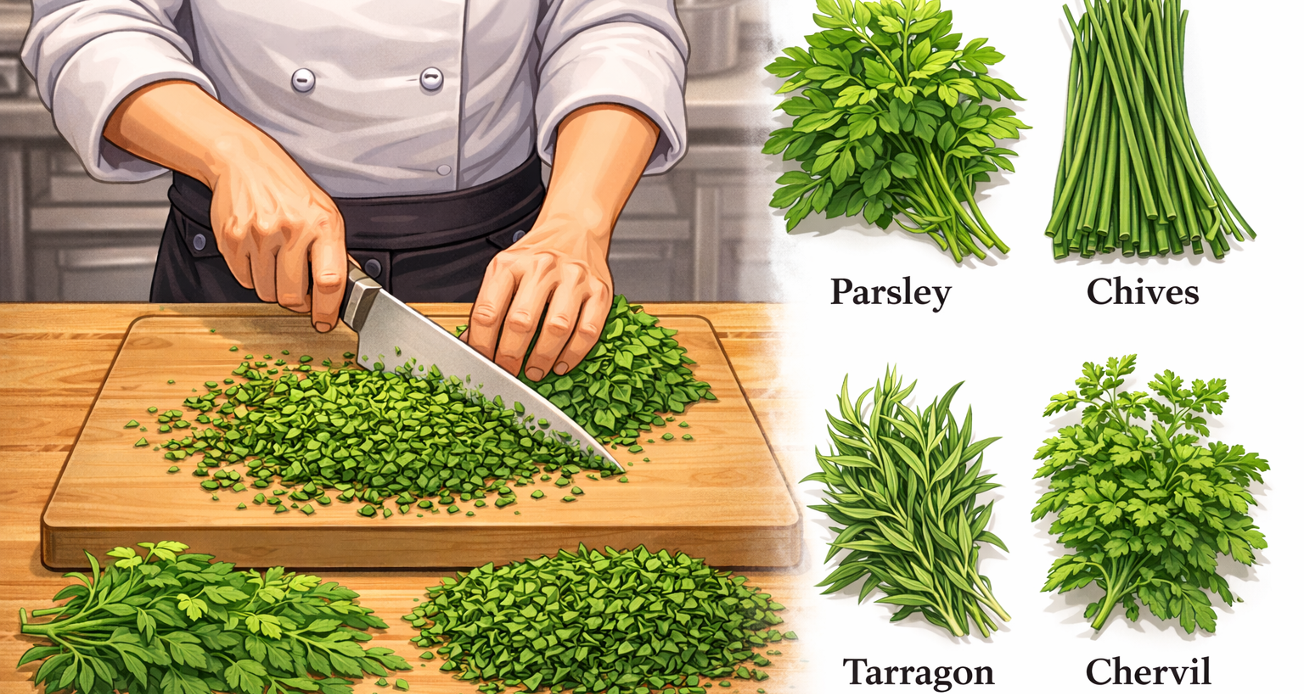
Fines herbes is a classic blend of delicate fresh herbs used in French cooking. Unlike stronger herb mixtures, fines herbes focuses on lightness and freshness. Traditionally, it includes parsley, chives, tarragon, and chervil, all finely chopped and added at the end of cooking.
The purpose of fines herbes is not to dominate a dish but to brighten it. Because these herbs are soft and fragrant, they lose flavour if overcooked. For this reason, chefs add them just before serving.
This subtle blend reflects the elegance and restraint found in French cuisine.
Fines herbes and Its Role in French Herb Blends
Fines herbes holds an important place among French herb blends. While other mixtures such as bouquet garni are designed for long simmering, this one is intended for fresh finishing.
The herbs are chopped finely so that they distribute evenly throughout a dish. Omelettes, creamy sauces, and lightly cooked vegetables often benefit from this mixture. For example, a simple omelette becomes fragrant and refined when sprinkled with fines herbes.
Because the flavours are mild, balance is essential. Too much tarragon, for instance, can overpower the blend.
Understanding the Classic French Herb Mix
The classic French herb mix always relies on fresh herbs rather than dried ones. Parsley provides freshness, chives add mild onion flavour, tarragon contributes gentle sweetness, and chervil gives a subtle anise note.
Each herb plays a specific role. Together, they create harmony rather than intensity. If one herb is missing, the balance changes noticeably.
This attention to proportion explains why fines herbes remains a respected part of traditional technique.
Why Fines herbes Must Be Added at the End
Fines herbes should never be cooked for long periods. Heat quickly reduces their aroma and colour. Instead, they are stirred into dishes just before serving.
For example, when preparing a creamy chicken sauce, adding the herbs at the final stage keeps their flavour bright. The same applies to scrambled eggs or sautéed mushrooms.
By preserving freshness, the blend enhances flavour without becoming heavy.
Simple Fines herbes Recipe
Preparing fines herbes at home is straightforward.
Ingredients:
- 1 tablespoon fresh parsley, finely chopped
- 1 tablespoon fresh chives, finely chopped
- 1 teaspoon fresh tarragon, finely chopped
- 1 teaspoon fresh chervil, finely chopped
Method:
- Wash and dry all herbs thoroughly.
- Remove any thick stems.
- Chop the herbs finely with a sharp knife.
- Combine gently in a small bowl.
- Use immediately for best flavour.
This blend works especially well in omelettes, light sauces, or over steamed vegetables.
Using the Classic French Herb Mix in Everyday Cooking
The classic French herb mix adds freshness to many dishes. Stir it into soft butter to create herb butter for grilled fish. Sprinkle it over roasted potatoes for subtle flavour. Fold it into cream cheese for a quick spread.
Because it complements rather than competes, it suits simple recipes best. Even plain rice or pasta can feel refined with a small spoonful mixed through at the end.
Freshness remains the key.
Why Fines herbes Still Matters Today
Fines herbes continues to matter because it represents restraint in seasoning. Instead of relying on bold spices, it highlights freshness and balance.
In modern kitchens, where flavours can sometimes become intense, this blend reminds cooks that subtlety has power. By adding it carefully and at the right moment, dishes gain brightness without losing their identity.
Through simplicity and precision, fines herbes remains an essential part of French culinary tradition.


