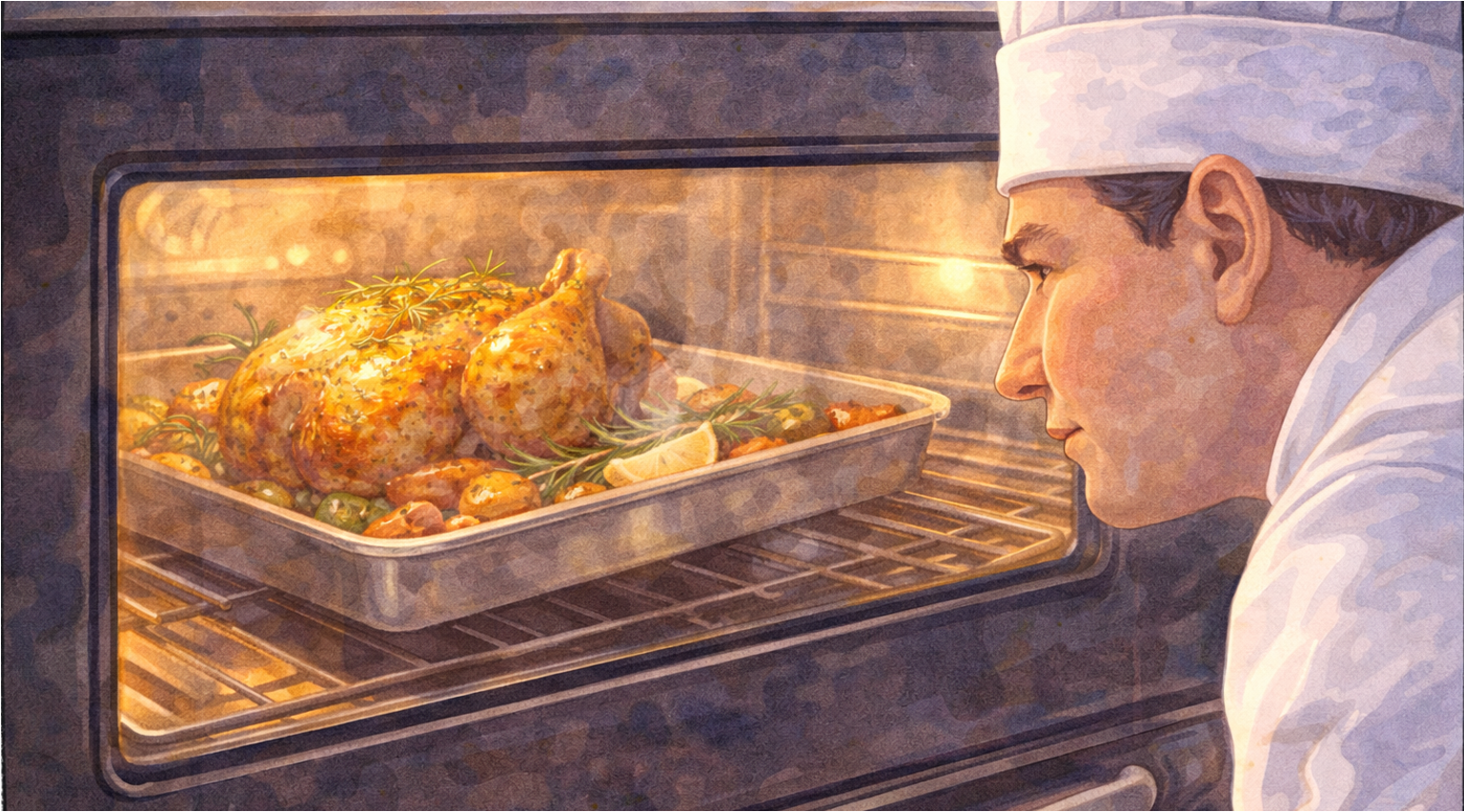
Few cooking methods fill a kitchen with such an irresistible aroma as Roasting (rôtir). The art of rotir, or roasting, is known in French as rôtir. Roasting uses dry heat — usually in an oven — to cook food evenly while developing rich colour and complex flavour. From golden roast chicken to caramelised root vegetables, roasting transforms simple ingredients into deeply satisfying dishes.
At its core, roasting is about heat, air circulation, and patience. When done correctly, it produces crisp exteriors, tender interiors, and natural flavour concentration without drowning food in sauce.
What Is Roasting?
Roasting is a dry-heat cooking method that uses hot air, typically in an oven, to cook food evenly on all sides. Unlike braising or poaching, roasting does not rely on liquid. Instead, the heat surrounds the food, encouraging browning and caramelisation.
Traditionally, roasting referred to cooking meat over an open flame or spit. Modern ovens replicate this principle by circulating hot air around the food. The technique works especially well for larger cuts of meat, whole poultry, and sturdy vegetables.
The defining feature of roasting is browning — a key contributor to flavour.
The Science Behind Roasting
Roasting creates flavour through two important chemical reactions.
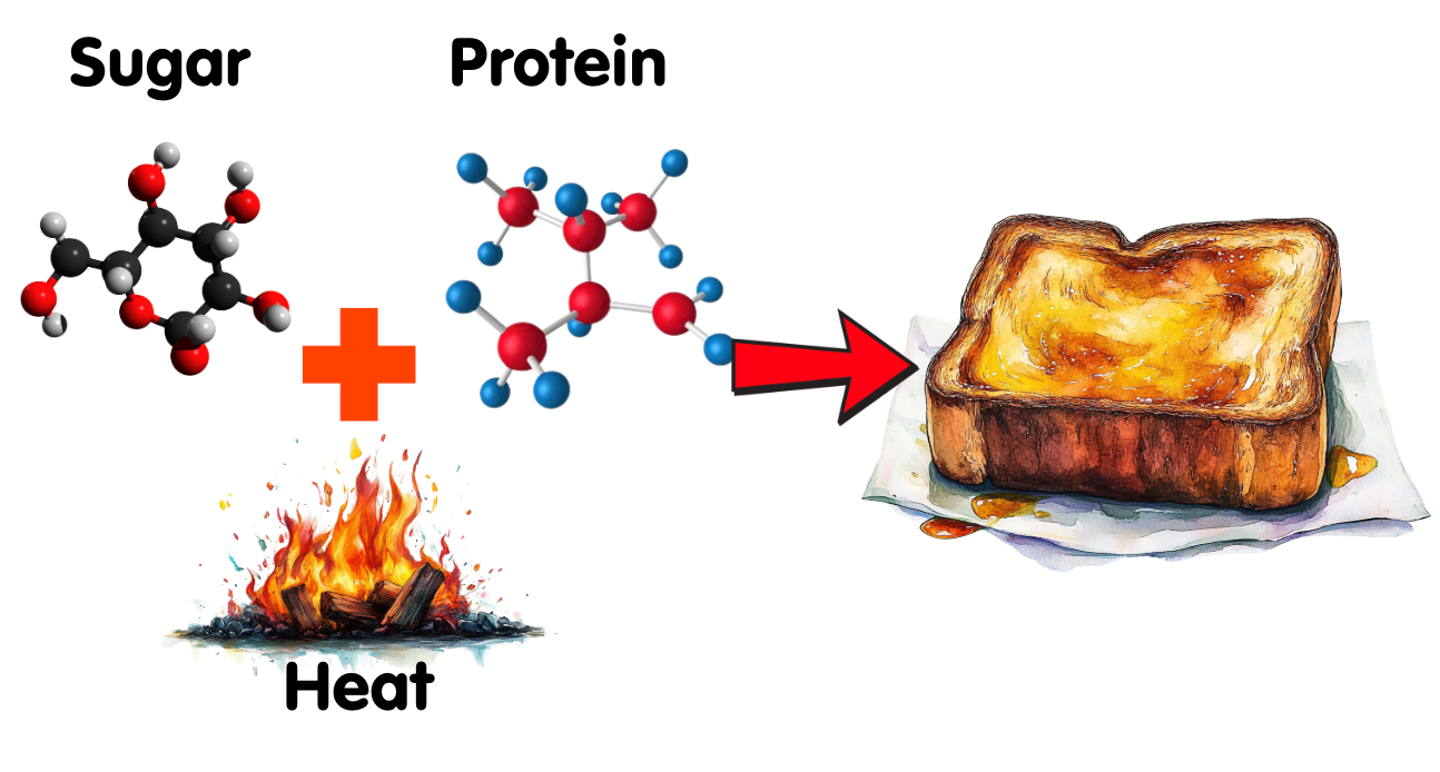
First is the Maillard reaction. When proteins and sugars are exposed to high heat, they react to form hundreds of flavour compounds. This process gives roasted meat its savoury crust and golden colour.
Second is caramelisation. Natural sugars in vegetables and fruits break down under heat, creating sweetness and a complex aroma.
Meanwhile, moisture evaporates from the surface, concentrating flavour inside. Proper roasting balances crispness and tenderness.
Choosing the Right Temperature
Temperature plays a crucial role in successful roasting.
High temperatures (200–230°C) create crisp exteriors quickly, ideal for vegetables or smaller cuts. Moderate temperatures (170–190°C) suit whole chickens or larger roasts, allowing even cooking without burning the outside.
Some recipes begin with high heat to brown the surface, then lower the temperature to cook gently inside. This two-stage approach ensures both colour and tenderness.
Roasting Meat: Building Flavour and Texture
Roasting meat requires attention to both preparation and timing.
Preparing the Meat
Pat the surface dry before rôtir. Moisture prevents browning. Season generously with salt and pepper. Herbs such as rosemary or thyme add aroma.
Allow the meat to reach near room temperature before placing it in the oven. This encourages even cooking.
Cooking and Resting
Place the meat on a rack or in a roasting pan, so air circulates freely. Avoid overcrowding. Baste occasionally if desired, though frequent opening of the oven can reduce heat.
Once cooked, allow the meat to rest before slicing. Resting redistributes juices, keeping the meat moist.
Roasting Vegetables: Caramelised Perfection
Vegetables respond beautifully to roasting. Potatoes, carrots, cauliflower, squash, and peppers develop sweet, nutty flavours when exposed to dry heat.
Cut vegetables evenly for uniform cooking. Toss lightly in oil and season before spreading them in a single layer. Crowding traps steam, preventing proper browning.
Turn them once during cooking to ensure even caramelisation.
Roasted vegetables often taste richer and sweeter than their boiled counterparts because water evaporates and sugars concentrate.
The Role of Fat in Roasting
Although roasting is a dry-heat method, a small amount of fat improves results. Oil or melted butter helps conduct heat and promotes browning.
Fat also enhances flavour and prevents sticking. However, excessive fat can lead to greasiness rather than crispness.
Choosing the right fat matters. Olive oil works well for vegetables, while animal fats such as duck fat add depth to roasted potatoes.
Roasting vs. Baking
Though similar, roasting and baking differ slightly in purpose and temperature.
Baking usually refers to cooking breads, pastries, and delicate dishes at moderate heat. Roasting typically involves higher temperatures and focuses on browning and flavour development in savoury dishes.
In practice, modern ovens perform both functions. The distinction lies mainly in technique and desired outcome.
Common Mistakes to Avoid
Roasting rôtir may seem simple, yet small errors affect results.
Overcrowding the Pan – Trapped steam prevents crispness.
Skipping Preheating – A hot oven ensures proper browning.
Cooking Straight from the Fridge – Cold meat cooks unevenly.
Cutting Meat Too Soon – Resting is essential for juicy slices.
Attention to these details ensures success.
Enhancing Flavour Through Pan Juices
One advantage of roasting meat is the flavourful juices left in the pan. These drippings can be deglazed with wine or stock to create a quick sauce.
The browned bits at the bottom hold concentrated flavour. By scraping and reducing them, you create a rich accompaniment without extra ingredients.
This method connects roasting with other classical techniques such as reduction and deglazing.
Why Roasting Remains Timeless
Roasting is one of the oldest cooking methods, yet it remains central in modern kitchens. It suits both everyday meals and festive occasions. A roast chicken can feel comforting on a weeknight, while a whole roasted lamb leg commands celebration.
The technique encourages understanding of heat and timing. It teaches cooks to observe colour, aroma, and texture rather than rely solely on strict rules.
Perhaps most importantly, roasting brings out natural flavour rather than masking it.
Final Thoughts: Heat, Air, and Transformation
Roasting rôtir transforms raw ingredients through dry heat and patience. It builds complex flavour through browning and caramelisation while preserving tenderness inside.
Whether preparing crisp potatoes, a golden chicken, or a tray of seasonal vegetables, roasting rewards attention and care. It requires little more than good ingredients, proper temperature, and time.
In the end, roasting proves that simple methods often produce the most memorable meals.