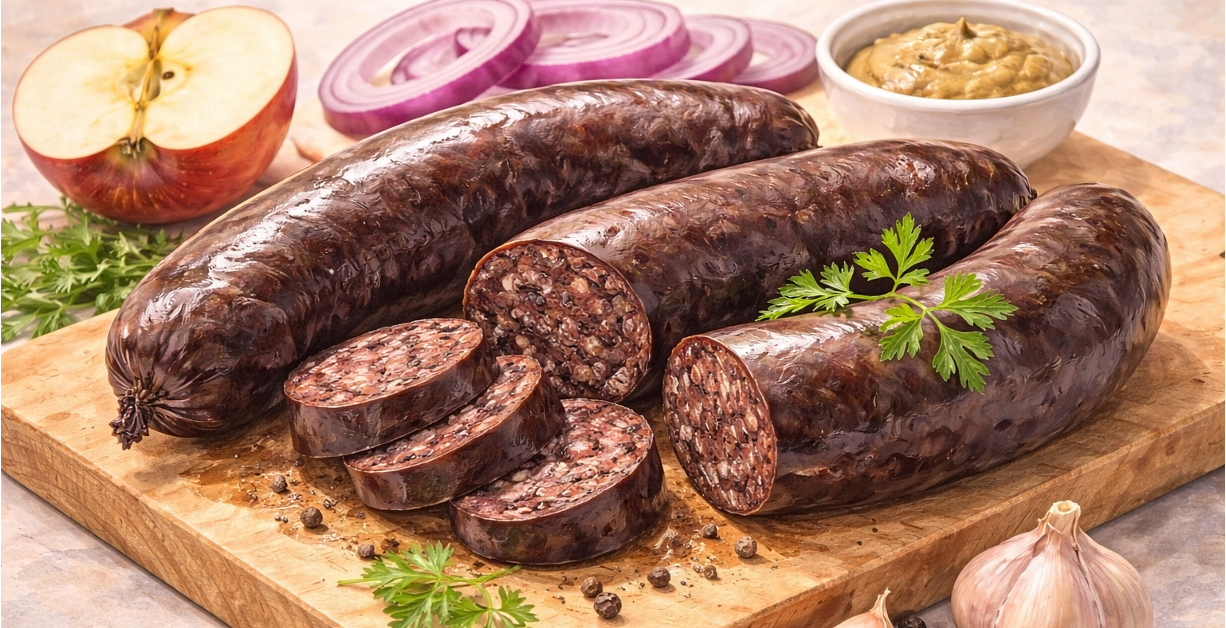
Boudin noir is one of the oldest and most traditional sausages in French cuisine. Made primarily from pork blood, fat, and seasoning, it reflects a time when nothing from the animal went to waste. Although the idea may sound unfamiliar to some, this sausage holds an important place in regional cooking across France.
Rather than being heavy or overwhelming, boudin noir is known for its soft texture and surprisingly delicate flavour. When prepared correctly, it tastes rich yet balanced, making it a respected part of French charcuterie.
Boudin Noir and Its Place in French Charcuterie
Boudin noir developed from rural necessity. Before refrigeration, families used every part of the animal after slaughter. Blood was mixed with fat and simple seasoning to create a sausage that could be cooked quickly and enjoyed fresh.
Over time, this preparation became part of French charcuterie traditions. Each region added small variations. Some versions include onions for sweetness, while others incorporate apples or spices. Despite differences, the foundation remains simple and practical.
Today, boudin noir appears in both countryside markets and refined restaurants, proving its lasting appeal.
Understanding Traditional French Blood Sausage
Traditional French blood sausage relies on balance. The mixture usually combines fresh pork blood with fat, finely chopped onions, salt, and pepper. The ingredients are blended gently before being filled into natural casings.
Texture plays a crucial role. The sausage should remain soft and smooth rather than crumbly. When sliced and cooked, it becomes tender inside with a lightly crisp exterior.
Because the flavour is deep but not aggressive, it pairs well with mild ingredients that add contrast.
How Boudin Noir Is Cooked and Served
Boudin noir is typically pan-fried gently rather than grilled at high heat. Slow cooking prevents the casing from bursting and keeps the interior moist.
It is often served with mashed potatoes or sautéed apples. The sweetness of fruit balances the richness of the sausage. In some regions, cooks add caramelised onions or a splash of vinegar to brighten the plate.
Although simple, this combination creates harmony between richness and freshness.
Regional Variations of French Blood Sausage
French blood sausage changes slightly depending on location. In Normandy, apples frequently accompany the dish, reflecting the region’s orchards. In other areas, spices such as nutmeg or herbs add subtle warmth.
Some variations produce a firmer texture, while others remain soft and spreadable. These differences show how local ingredients influence even the most traditional foods.
Despite variation, the identity of boudin noir remains recognisable.
Why Boudin Noir Remains Relevant Today
In modern kitchens, boudin noir continues to appear in creative forms. Some chefs crumble it into salads for contrast. Others serve it alongside roasted vegetables or lentils.
Its enduring presence comes from its depth of flavour and connection to heritage. Rather than relying on complexity, it highlights simple ingredients treated with respect.
For many, it represents a link to rural traditions and sustainable cooking practices.
What Boudin Noir Teaches About French Cooking
Boudin noir demonstrates how French cuisine values resourcefulness and balance. What began as a necessity became a respected speciality.
It also reminds us that flavour does not always come from luxury ingredients. Sometimes, careful seasoning and thoughtful pairing create something memorable.
Through tradition and technique, boudin noir remains a meaningful part of French culinary culture.
Traditional Boudin Noir Recipe
Making boudin noir at home requires fresh ingredients and attention to temperature. Cleanliness is essential when working with blood.
Ingredients:
- 500 ml fresh pork blood
- 250 g pork fat, finely diced
- 2 medium onions, finely chopped
- 1 teaspoon salt
- ½ teaspoon freshly ground black pepper
- A pinch of nutmeg (optional)
- Natural sausage casings
Method:
- Gently sauté the chopped onions in a little fat until soft but not browned. Allow them to cool completely.
- In a large bowl, combine the pork blood with diced fat and cooled onions.
- Add salt, pepper, and nutmeg. Stir slowly to avoid creating air bubbles.
- Carefully fill the mixture into natural casings, tying the ends securely.
- Poach the sausages gently in water at around 80°C for about 20 minutes. Do not boil, as this may cause splitting.
- Remove and allow them to cool.
To serve, slice and pan-fry gently until lightly crisp on the outside while remaining soft inside.
How to Serve French Blood Sausage
French blood sausage is usually pan-fried over moderate heat. Gentle cooking prevents the casing from bursting and keeps the interior moist.
It is traditionally served with mashed potatoes or sautéed apples. The sweetness of fruit balances the richness of the sausage. In some regions, caramelised onions or a splash of vinegar add brightness.
These simple pairings highlight rather than overpower the flavour.