
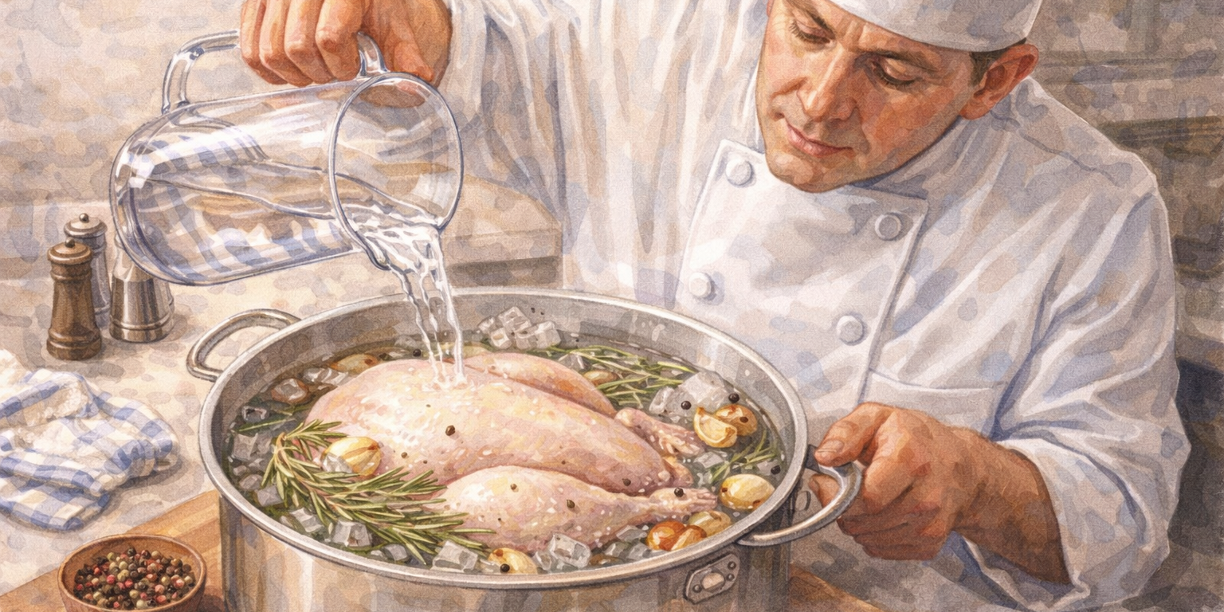
Brining (saumurage) is one of the simplest yet most effective techniques in cooking. At its core, it involves soaking food in a saltwater solution before cooking. Although the process sounds basic, it can completely transform texture, flavour, and moisture.
Cooks have used brining for centuries, not only to preserve food but also to improve its quality. Today, it remains popular in both home kitchens and professional settings because it delivers reliable results with minimal effort.
Brining (saumurage) and How It Works
Brining (saumurage) works through a combination of salt, water, and time. When food sits in a salted solution, the salt begins to interact with its proteins. This process helps the food retain moisture during cooking.
For example, when chicken is brined before roasting, it stays juicy rather than drying out. The salt dissolves some muscle proteins, allowing them to trap more water. As a result, the final dish feels tender and evenly seasoned.
The technique does not simply add saltiness. Instead, it improves structure and balance.
The Science Behind the Saltwater Cure
The saltwater cure functions through osmosis and diffusion. At first, salt draws some moisture out of the food. However, over time, the liquid flows back in, carrying dissolved salt with it.
This exchange seasons the food from within rather than just on the surface. Because of this, brined meat tastes fuller and more consistent throughout.
The balance is important. Too little salt will not create noticeable change. Too much salt, or too long a soak, can lead to excessive seasoning.
When to Use Brining (saumurage)
Brining (saumurage) is particularly useful for lean proteins. Poultry, pork chops, and certain cuts of fish benefit greatly from this method.
For instance, turkey often dries out during roasting. A few hours in brine beforehand makes a dramatic difference. Similarly, pork loin becomes more forgiving and less likely to toughen.
Vegetables can also be briefly brined to improve texture. Cucumbers, for example, become crisp and flavourful before pickling.
Timing depends on size. Smaller cuts may need only one hour, while larger pieces require several hours.
Basic Brining (saumurage) Method at Home
A simple brining (saumurage) solution contains water and salt. A common ratio is about 60 grams of salt per litre of water. The salt should dissolve completely before adding the food.
Submerge the food fully and refrigerate during the process. Once finished, remove it, rinse lightly if necessary, and pat dry before cooking.
Some cooks add sugar, herbs, spices, or citrus to enhance flavour. While these additions can deepen taste, the salt itself remains the key ingredient.
Keep the method simple at first. Mastery comes from understanding proportion and timing.
Dry Brining and the Saltwater Cure Difference
Dry brining offers an alternative to the traditional saltwater cure. Instead of using a liquid solution, you rub salt directly onto the surface of the food.
Over time, the salt draws out moisture, which then dissolves and re-enters the food naturally. This method produces similar benefits without requiring extra space or containers.
Dry brining works especially well for poultry skin, as it helps create crisp texture during roasting.
Common Mistakes to Avoid
Although brining (saumurage) is straightforward, mistakes can happen. Leaving food too long in brine may result in excessive saltiness. Using table salt instead of coarse salt can also alter measurements, as finer salt packs more densely.
Another mistake is forgetting refrigeration. Food must stay chilled throughout the process to remain safe.
With careful timing and balance, these issues are easy to avoid.
Why Brining (saumurage) Matters in Modern Cooking
Brining (saumurage) proves that simple techniques often have the greatest impact. With just salt, water, and patience, cooks can dramatically improve tenderness and flavour.
Rather than relying on heavy sauces or complex marinades, brining strengthens the ingredient itself. It prepares food to cook better, not just taste stronger.
That quiet effectiveness explains why this method remains essential in kitchens around the world.


