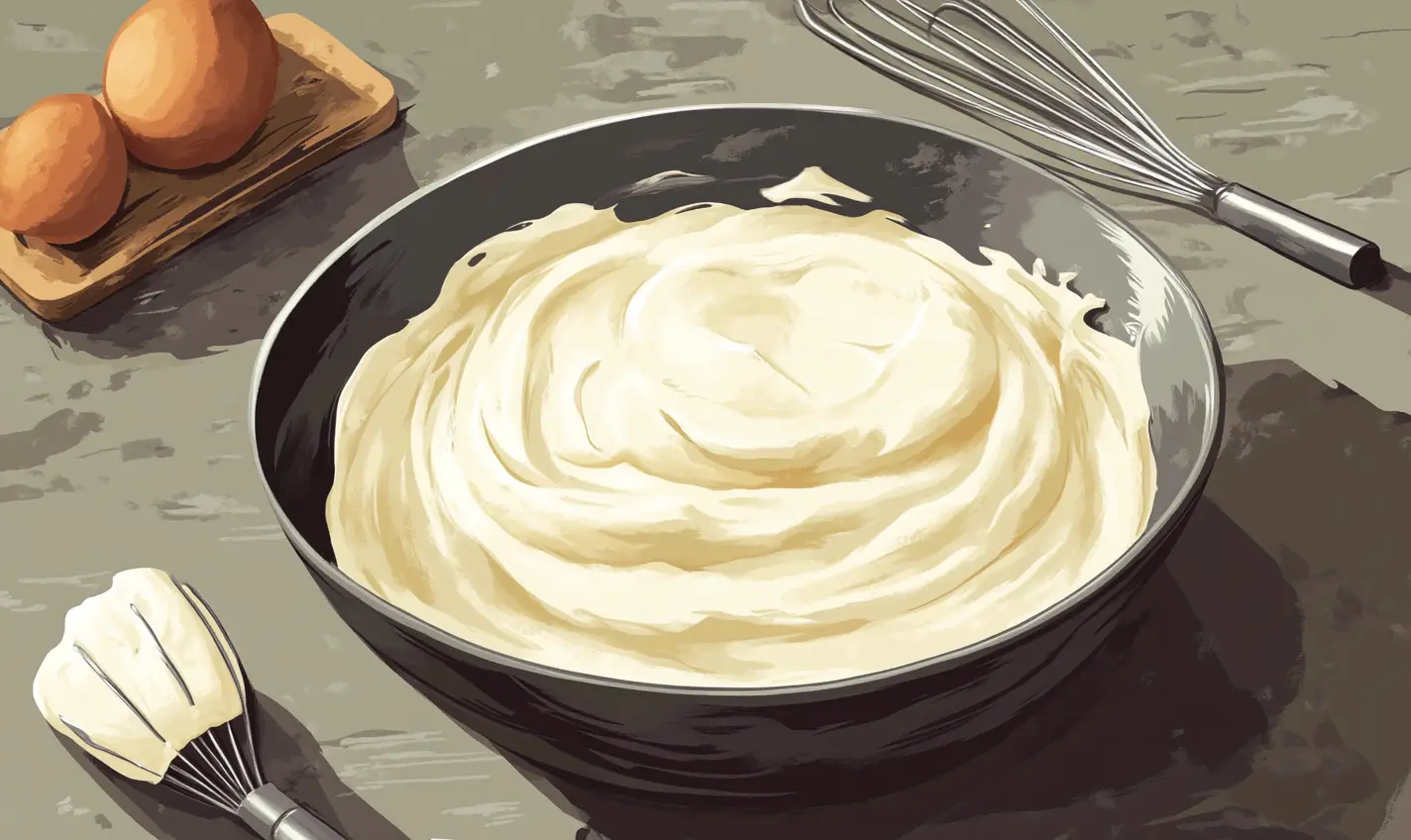
In many traditional kitchens, one humble mixture quietly supports some of the world’s most beloved dishes. That mixture is roux. Made from just fat and flour, roux may appear simple at first glance. Yet it forms the backbone of countless sauces, soups, stews, and baked dishes across French, Cajun, and global cuisines.
Understanding it means understanding how texture, flavour, and patience work together. It is not merely a thickener. It is a technique that teaches control, timing, and transformation.
What Is Roux?
Roux (pronounced “roo”) is a cooked mixture of equal parts fat and flour. The fat can be butter, oil, or animal fat, while the flour is usually plain wheat flour. The mixture is cooked over heat until it reaches a desired colour and aroma.
The purpose is to thicken liquids such as milk, stock, or broth. As it cooks, the flour loses its raw taste and develops flavour. When liquid is added, the starch in the flour swells and thickens the mixture, creating a smooth sauce.
Although simple in composition, the cooking stage determines its final character.
The Science Behind Roux
Roux works because of starch gelatinisation. Flour contains starch granules that expand when heated with liquid. However, raw flour tastes unpleasant and chalky. Cooking it in fat first coats the starch particles, preventing lumps and eliminating the raw flavour.
When liquid is later added gradually and whisked in, the coated starch thickens evenly. The result is smooth rather than clumpy.
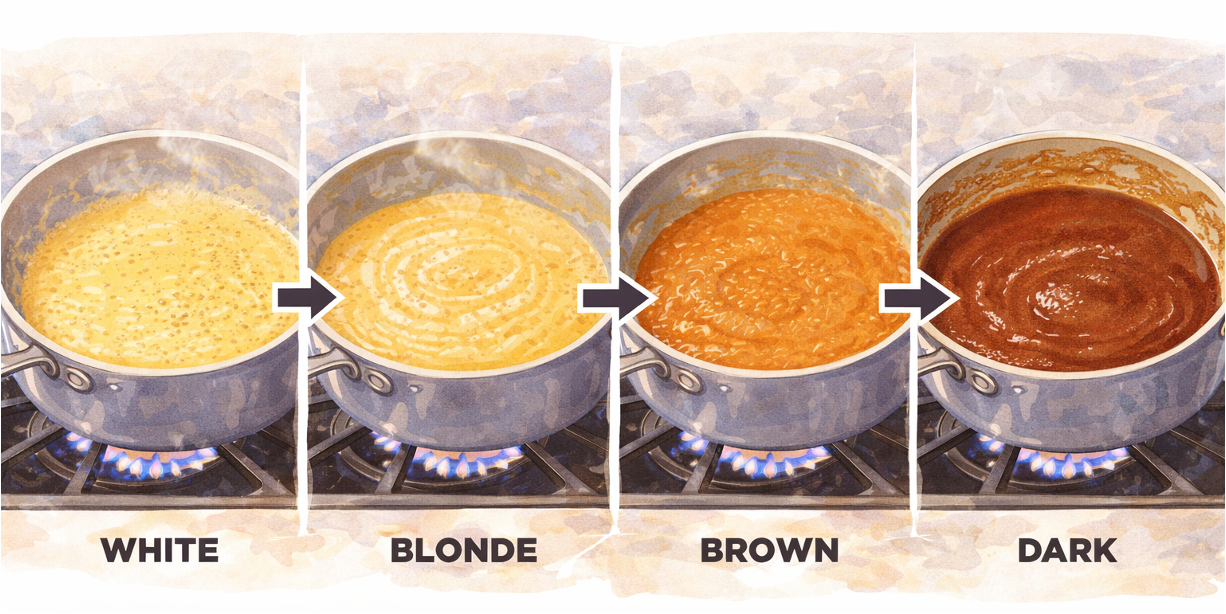
The longer it cooks, the darker it becomes. As it browns, flavour develops through gentle caramelisation, but its thickening power slightly decreases.
The Three Main Types of Roux
Roux changes character depending on how long it cooks. Each stage serves a different purpose.
White Roux
White roux cooks briefly, usually just long enough to remove the raw flour taste. It remains pale in colour. This type has the strongest thickening power and is commonly used for béchamel sauce, creamy soups, and cheese sauces.
It tastes mild and neutral, allowing other ingredients to shine.
Blonde Roux
Blonde roux cooks slightly longer until it turns light golden. It develops a subtle nutty aroma and offers balanced flavour. It is often used in velouté sauce and lighter gravies.
It thickens well while adding gentle depth.
Brown Roux
Brown roux cooks until deep golden or even chocolate-coloured. It carries a rich, toasted aroma and is central to Cajun and Creole cooking, especially gumbo. Although it provides less thickening power than white roux, it contributes remarkable flavour.
In Cajun kitchens, brown roux may cook for 20–40 minutes with constant stirring.
How to Make Roux Step by Step
Making requires attention but not complexity.
- Melt fat in a heavy saucepan over medium heat.
- Add equal weight or volume of flour.
- Stir continuously with a wooden spoon or whisk.
- Cook until the mixture reaches the desired colour.
- Remove from heat or add liquid gradually while whisking.
Constant stirring prevents burning. The mixture should smell nutty, not bitter. If black specks appear or it smells scorched, it must be discarded and started again.
Adding Liquid to Roux
One of the most important skills is combining with liquids. Always add liquid gradually while whisking continuously. This ensures smooth blending.
The liquid may be warm or hot, depending on preference, but consistency in temperature helps avoid lumps. As the mixture simmers, it thickens naturally.
Once thickened, the sauce should cook gently for several minutes to remove any remaining flour taste.
Common Dishes That Use Roux
Roux appears in a wide range of culinary traditions.
- Béchamel sauce for lasagne or gratins
- Cheese sauce for macaroni and cheese
- Velouté for poultry or seafood dishes
- Brown gravy for roasts
- Gumbo in Cajun cuisine
Each dish relies on roux to provide body and smoothness.
Choosing the Right Fat
Butter is traditional in French cooking because of its flavour. However, oil or clarified butter works well for higher heat cooking. In Cajun cuisine, vegetable oil is preferred because it withstands long cooking without burning.
Animal fats such as duck fat or bacon fat can also be used, adding extra flavour to savoury dishes.
The choice of fat influences both taste and stability.
Common Mistakes to Avoid
Although straightforward, it can go wrong if neglected.
Burning the Roux – Even slight scorching creates bitterness. Stir continuously.
Adding Too Much Flour – Equal proportions ensure balance.
Rushing the Process – Proper colour takes time.
Pouring Liquid Too Quickly – Sudden addition can cause lumps.
Care and patience lead to smooth results.
Roux vs. Other Thickeners
Unlike cornstarch or arrowroot, roux adds flavour as well as thickness. Cornstarch thickens quickly but remains neutral in taste. Roux, however, deepens dishes through cooking and browning.
In some recipes, cooks combine both methods, using roux for flavour and cornstarch for final adjustment.
Why Roux Remains Essential
Despite modern shortcuts and packaged thickeners, roux remains fundamental because it teaches control. It shows how two simple ingredients transform under heat. It encourages cooks to observe colour changes and aroma development carefully.
Mastering roux builds confidence. Once you understand it, you can create countless sauces and dishes from scratch.
Final Thoughts: A Simple Mixture with Lasting Impact
Roux proves that complexity often begins with simplicity. Flour and fat, cooked with patience, create the foundation of comfort foods and refined sauces alike.
By learning the stages of colour, understanding the science of starch, and practising careful stirring, you gain more than a thickening method. You gain insight into classical cooking itself.
In the end, roux is not just a recipe step. It is a technique that connects generations of cooks, turning humble ingredients into lasting flavour.