
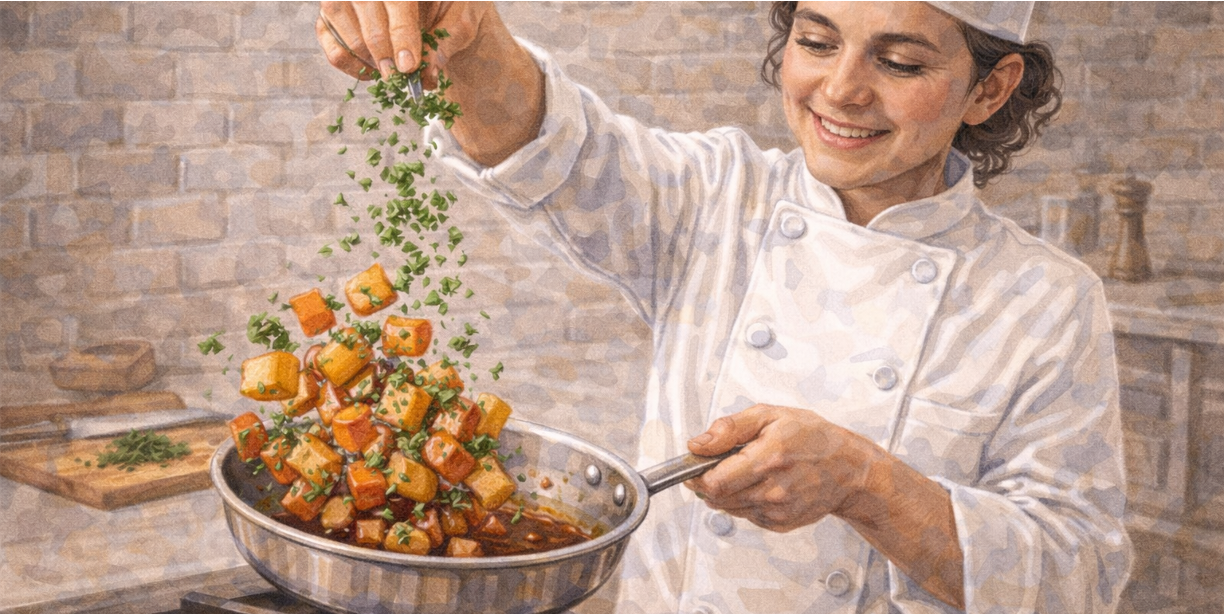
In professional kitchens, presentation and flavour meet at one elegant point: glazing. Glazing (Glacer) is the French term for this technique, which creates a glossy coating that enhances both appearance and taste. A well-glazed carrot shines like polished amber. A glazed chicken breast carries a smooth, flavourful sheen. Even pastries gleam under a delicate sugar glaze.
Glazing is not simply decoration. It is a method that intensifies flavour, improves texture, and gives food a refined finish. Once understood, it becomes one of the most satisfying techniques to master.
What Does Glazing Mean?
Glazing refers to coating food with a thin, shiny layer created by reducing liquid, sugar, stock, butter, or sauce until it lightly coats the surface. Unlike heavy sauces that pool around food, a glaze clings closely, creating shine without excess moisture.
In classical French cooking, glacer can mean slightly different things depending on the context. It may involve coating vegetables in butter and stock until glossy. It may refer to brushing meats with reduced sauce. In pastry, it can mean applying a sweet icing or syrup.
At its heart, glazing is about controlled reduction combined with surface coating.
Why Glazing Matters
Glazing (Glacer) enhances flavour concentration while improving visual appeal. A glossy surface suggests richness and care. It signals that the dish has been finished thoughtfully rather than rushed.
Beyond aesthetics, Glazing (Glacer)locks flavour onto the surface of food. Instead of the sauce remaining separate, it integrates with the ingredient itself. A glazed vegetable tastes fuller because its natural sugars combine with butter or stock. A glazed meat carries a balanced coating that intensifies savouriness.
The technique also helps retain moisture, especially in meats.
The Science Behind Glazing
Glazing (Glacer)works through evaporation and concentration. When liquid simmers, water evaporates, leaving behind sugars, proteins, and fats in higher concentration. As the liquid thickens, it begins to coat surfaces rather than flow freely.
Natural sugars in vegetables caramelise gently during glazing. Butter emulsifies with reduced stock, creating a smooth shine. In sweet applications, sugar syrups thicken as water evaporates, forming a glossy layer.
Temperature control is essential. Too much heat can burn sugars, while too little prevents proper thickening.
Types of Glazing in Cooking
Glazing appears in both savoury and sweet preparations.
Vegetable Glazing (Glacer)
This classic method involves cooking vegetables with a small amount of stock, butter, and sometimes sugar. The liquid reduces until it coats the vegetables in a glossy layer. Carrots, pearl onions, and turnips respond beautifully to this technique.
Meat Glazing (Glacer)
Meat may be brushed with reduced sauce or stock during or after cooking. Roasts are often basted with glaze for shine and flavour.
Sweet Glazing
In baking, pastries and cakes receive sugar glaze or fruit glaze for shine and sweetness. A fruit tart, for example, is often brushed with warm apricot glaze to give it a polished finish.
Each type follows the same principle: reduce, coat, and shine.
Step-by-Step: How to Glaze Vegetables
Glazing (Glacer) vegetables is one of the easiest ways to practise this technique.
- Place prepared vegetables in a shallow pan.
- Add enough stock or water to come halfway up the vegetables.
- Add a small knob of butter and a pinch of sugar.
- Bring to a simmer and cook uncovered.
- Allow the liquid to reduce while occasionally shaking the pan.
- Continue until the liquid thickens and coats the vegetables.
The vegetables should become tender and glossy, not dry or sticky. The glaze should cling lightly without forming a thick syrup.
Glazing Meat for Shine and Depth
When glazing meat, timing matters. A glaze can be brushed on during the final stage of cooking or after roasting.
For example, a chicken breast can be coated with a reduced white wine and stock glaze just before serving. The glaze adds depth and shine without drowning the meat in sauce.
Barbecue-style glazes, made with honey or sugar, should be applied near the end of cooking to prevent burning.
Achieving the Perfect Texture
A good glaze is smooth and lightly thickened. It should coat the back of a spoon and leave a thin layer when brushed onto food.
If the glaze becomes too thick, add a small splash of water or stock to loosen it. If too thin, continue reducing gently.
Avoid stirring constantly. Instead, gently swirl or shake the pan to coat evenly without breaking delicate vegetables.
Common Mistakes to Avoid
While glazing is simple, a few errors can affect the result.
Over-Reducing – A glaze that becomes too thick may turn sticky or overly sweet.
High Heat – Excess heat can burn sugar or butter quickly.
Too Much Liquid – Using excessive liquid prevents proper coating.
Neglecting Seasoning – Because flavour concentrates, balance salt and sweetness carefully.
Mindful cooking ensures a balanced finish.
Glazing in Professional Kitchens
In classical French cuisine, glazing vegetables is a foundational skill. Restaurants use it to present vegetables with elegance and precision. A perfectly glazed carrot appears vibrant and refined, often served alongside roasted meats.
Pastry kitchens rely on glazing for visual perfection. Fruit tarts shine under a thin glaze that protects fruit and enhances colour.
Across culinary traditions, glazing symbolises completion. It is often the final step before serving.
Glazing vs. Saucing
Although similar, glazing differs from saucing. A sauce surrounds or pools beneath food. A glaze adheres directly to the surface.
Sauces provide moisture and contrast, while glazes emphasise and enhance the ingredient itself. In many dishes, both techniques work together harmoniously.
Final Thoughts: The Finishing Touch That Matters
Glazing transforms ordinary ingredients into polished dishes. It adds shine without heaviness and flavour without excess. More than a decorative technique, it represents balance and refinement.
By learning to control heat, reduction, and coating, you gain a method that elevates vegetables, meats, and desserts alike.
In the end, glazing teaches an important lesson in cooking: sometimes, the smallest finishing touch creates the greatest impact.


