
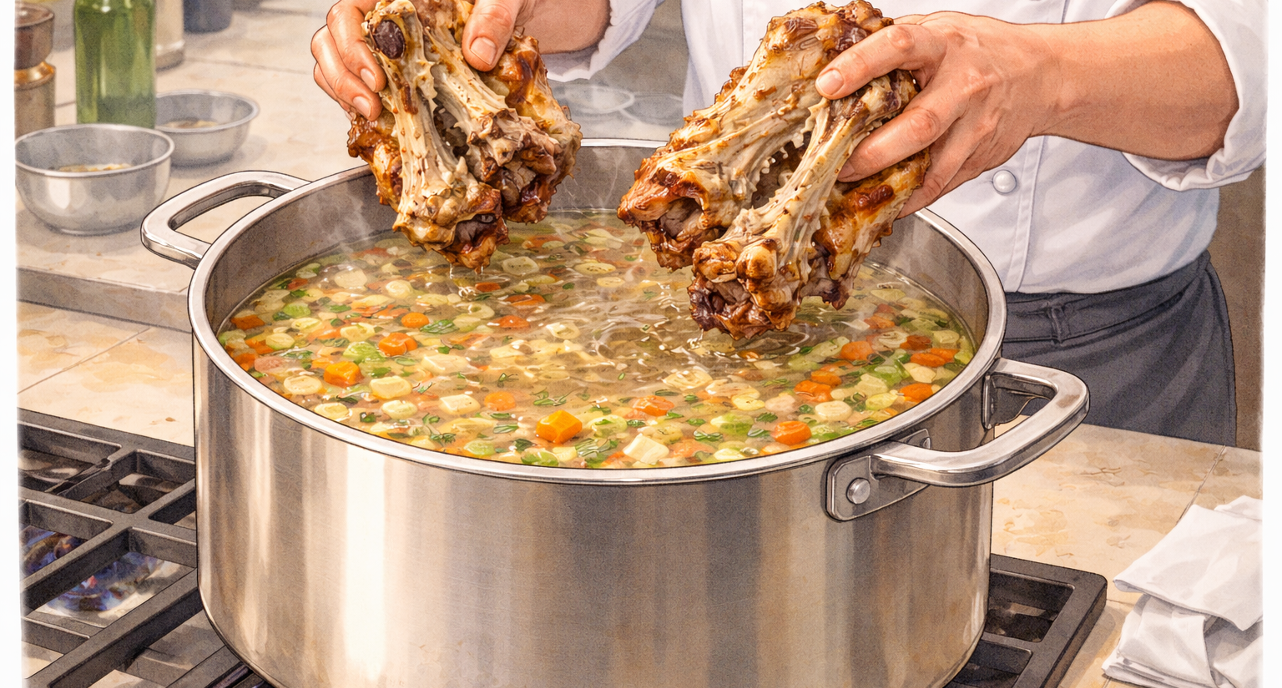
What Is Chicken Stock?
Chicken stock forms one of the most important foundations in French cooking. Cooks make it by gently simmering chicken bones with vegetables, herbs, and water to extract flavour, nutrients, and body. Although it rarely takes centre stage on its own, it strengthens soups, sauces, risottos, gravies, and braises.
Unlike ready-made broths from cartons, homemade chicken stock offers depth and natural richness. It carries subtle savoury notes and a clean, rounded flavour that enhances other ingredients rather than overpowering them. Many chefs consider it one of the first skills every serious cook should master.
When prepared properly, chicken stock becomes more than a cooking liquid — it becomes a flavour-building tool.
Stock vs Broth: Understanding the Difference
People often confuse stock and broth, but they serve slightly different purposes. Stock relies primarily on bones, while broth uses more meat.
Bones contain collagen, which breaks down into gelatin during slow cooking. Gelatin gives stock body and a silky texture. When chilled, a well-made chicken stock should set into a soft jelly. That texture signals proper extraction and depth.
Broth, by contrast, tastes lighter and more straightforward because it focuses on meat rather than collagen-rich bones. Both have value, but stock offers greater versatility in professional cooking.
Why Chicken Works So Well
Chicken produces a clean and adaptable flavour. Unlike beef stock, which delivers bold richness, chicken stock supports delicate ingredients without dominating them.
It pairs beautifully with vegetables, grains, seafood, and white meats. Because of this flexibility, cooks across many cuisines rely on it as their everyday base. From French velouté to Asian noodle soups, chicken stock fits naturally into diverse culinary traditions.
Its relatively mild flavour also allows you to season and adjust dishes more easily.
The Role of Bones and Gelatin
The best chicken stock begins with bones that contain joints and connective tissue. Wings, necks, backs, and carcasses work especially well because they hold higher levels of collagen.
As the stock simmers, heat slowly converts collagen into gelatin. This transformation gives the liquid a smooth mouthfeel and slight thickness. Gelatin also helps sauces cling to food and creates a more satisfying texture in soups.
For a deeper flavour, some cooks roast the bones first. Roasting adds colour and a subtle caramelised note. However, many traditional chicken stocks skip this step to preserve a lighter, cleaner taste.
The Importance of Aromatics
Bones alone cannot create balance. Cooks add aromatic vegetables — usually onions, carrots, and celery — to build depth. This mixture, known as mirepoix, provides sweetness, freshness, and structure.
Herbs such as thyme, bay leaf, and parsley stems enhance aroma without overwhelming the stock. Garlic and peppercorns can also add gentle complexity.
Restraint matters. Too many strong ingredients can muddy the flavour. A well-made chicken stock should taste clean, savoury, and balanced.
Gentle Simmering: The Key to Clarity
Patience shapes the final result. Bring the stock slowly to a simmer rather than a boil. Vigorous boiling agitates fat and impurities, which clouds the liquid and creates a greasy texture.
As foam rises to the surface during the early stages of cooking, skim it off carefully. This simple step improves clarity and flavour.
Most chicken stocks need three to four hours of gentle simmering. Longer cooking can extract bitterness from bones and vegetables, so timing matters.
Everyday Uses of Chicken Stock
Once you prepare homemade chicken stock, you will find endless uses for it.
Add it to soups to create depth without heavy seasoning. Use it instead of water when cooking rice or grains for a richer flavour. Stir a ladle into the pan drippings to form an instant sauce. Blend it into vegetable purées for smooth, balanced soups.
Because chicken stock enhances rather than dominates, it works quietly in the background — much like a good foundation in architecture.
Storage and Practical Tips
After cooking, strain the stock carefully through a fine sieve or cheesecloth. Cool it quickly to prevent bacterial growth. Refrigerate it for up to four days or freeze it in portions for several months.
Many cooks freeze stock in ice cube trays. This method allows you to add small amounts to dishes whenever needed.
Before using chilled stock, remove any solidified fat from the surface. The remaining liquid should look clear and slightly gelatinous.
Classic Chicken Stock Recipe
Ingredients
- 2–3 kg chicken bones (carcasses, wings, backs, necks)
- 1 large onion, roughly chopped
- 1 carrot, roughly chopped
- 1 celery stalk, roughly chopped
- 2–3 parsley stems
- 1 bay leaf
- 2–3 sprigs fresh thyme
- 6–8 black peppercorns
- 4–5 litres cold water
Method
- Prepare the bones
Rinse the chicken bones under cold water to remove excess blood or debris. Place them in a large stockpot. - Add cold water
Pour in enough cold water to fully cover the bones. Starting with cold water encourages gradual extraction of collagen. - Heat gently
Bring the pot slowly to a gentle simmer over medium heat. As foam rises, skim it off with a spoon. - Add vegetables and herbs
Once the stock reaches a steady simmer, add the chopped onion, carrot, celery, herbs, and peppercorns. - Simmer patiently
Maintain a gentle simmer for three to four hours. Avoid boiling. Skim occasionally if needed. - Strain and cool
Remove the pot from heat. Strain the liquid through a fine sieve into a clean container. Cool it quickly before refrigerating. - Store properly
Chill overnight. Remove the layer of fat from the surface before using.
When you chill a properly made chicken stock, it should set lightly due to natural gelatin — a clear sign that careful technique has extracted maximum flavour.


