
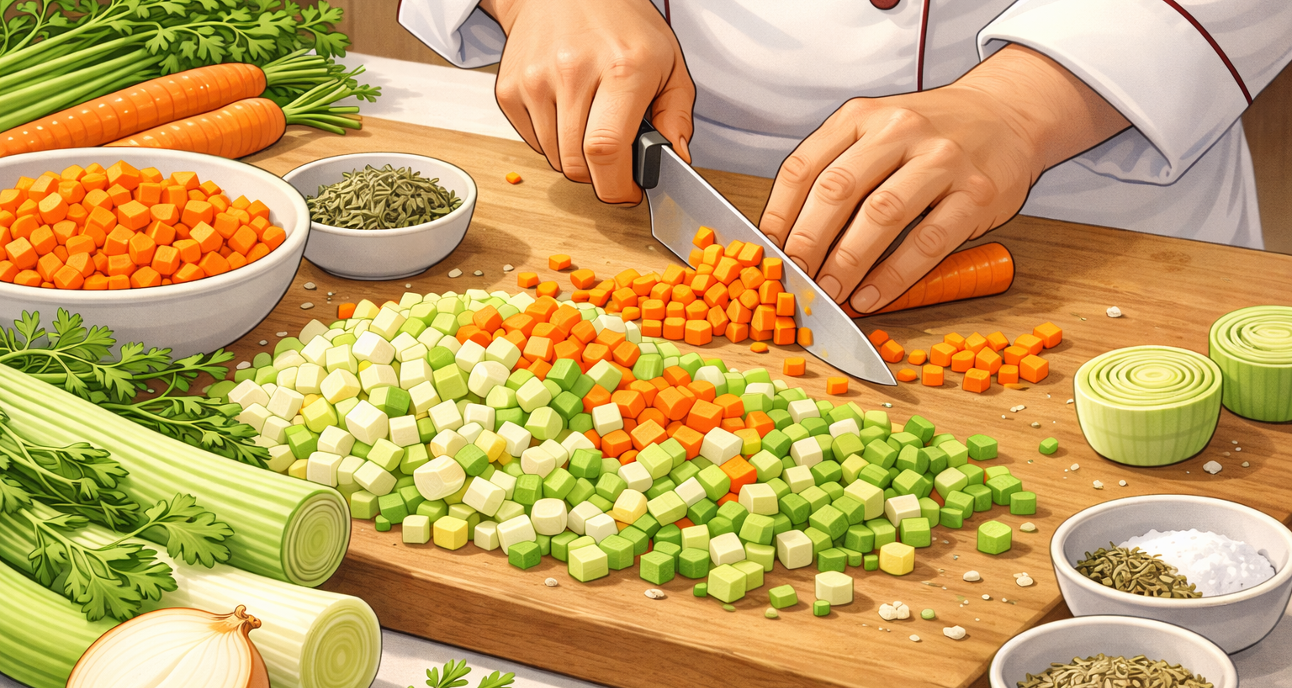
What Is Mirepoix?
Mirepoix is one of the most important building blocks in French cuisine. At its simplest, it is a mixture of diced onions, carrots, and celery gently cooked in fat. Yet behind this humble trio lies a powerful technique that forms the backbone of soups, stews, sauces, braises, and stocks.
Unlike bold spices or dramatic garnishes, mirepoix rarely draws attention to itself. Instead, it works quietly in the background, building depth and structure. It is not meant to dominate a dish but to support and enhance everything else.
In many ways, mirepoix represents the philosophy of French cooking: careful preparation, patience, and respect for foundational flavours.
The Classic Ratio and Preparation
Traditional mirepoix follows a simple ratio of 2:1:1 — two parts onion to one part carrot and one part celery. The onion provides sweetness and aroma, the carrot adds subtle earthiness and colour, and the celery contributes a mild bitterness and fresh note.
The vegetables are usually cut into small, even dice to ensure consistent cooking. In professional kitchens, the size of the cut may vary depending on the dish. A fine dice works well for sauces, while larger chunks suit stocks and braises where the vegetables will later be strained out.
Mirepoix is typically cooked slowly in butter or oil over low heat. The goal is to soften the vegetables and release their natural sugars without browning them too much. This gentle cooking develops sweetness and complexity.
The History Behind the Name
The name “mirepoix” is believed to come from the Duke of Mirepoix, a French aristocrat from the 18th century. Although he was not a cook himself, his chef reportedly named the vegetable mixture in his honour.
Regardless of its exact origin, the technique became central to French culinary tradition. As classical French cuisine evolved, especially during the time of chefs like Auguste Escoffier, mirepoix became codified as a standard aromatic base.
Today, it remains a staple in culinary schools around the world.
How Mirepoix Builds Flavour
Mirepoix works through layering. When vegetables cook slowly, their cell walls break down and release natural sugars. This creates a soft sweetness that balances savoury ingredients such as meat, poultry, or legumes. In stocks, mirepoix contributes a subtle aroma and body. Stewing thickens the cooking liquid slightly and deepens the overall flavour. In sauces, it provides complexity that cannot be achieved with seasoning alone.
For example, a classic chicken soup begins with softened mirepoix. Before any broth is added, the vegetables gently perfume the pot. The finished soup may not taste distinctly of carrot or celery, but it would feel incomplete without them.
White and Brown Mirepoix
Not all mirepoix is identical. Variations depend on the final dish.
White mirepoix is made without carrots. It typically includes onions, celery, and sometimes leeks or parsnips. This version is used in pale sauces or light stocks where colour must remain delicate.
Brown mirepoix, on the other hand, is cooked longer and sometimes browned to develop deeper flavour. It is often used in beef stock or dark sauces. The caramelisation adds richness and a slightly nutty undertone.
The difference lies not only in ingredients but also in technique and intention.
Mirepoix Around the World
Although mirepoix is distinctly French, similar aromatic bases appear in many cuisines.
In Italy, soffritto combines onions, carrots, and celery, often cooked in olive oil as the base for pasta sauces and risottos. Spain, sofrito may include tomatoes and garlic along with onions and peppers. In Cajun and Creole cooking, the “holy trinity” replaces carrots with green bell peppers.
These variations show how fundamental the idea is: before building a dish, first build its foundation.
Practical Uses in Everyday Cooking
Home cooks can easily use mirepoix to improve everyday meals. When preparing lentil soup, sautéing mirepoix before adding the lentils will create a deeper flavour. When braising meat, layering mirepoix beneath the protein adds natural sweetness and aroma as it cooks slowly. Even simple rice dishes benefit from a small amount of finely chopped mirepoix stirred in at the beginning. Because it is inexpensive and made from common vegetables, mirepoix is accessible to everyone. Its power lies not in luxury but in technique.
Tips for Perfect Mirepoix
To get the best results, focus on a few key principles. First, cut the vegetables evenly. Uneven pieces cook at different rates and affect texture. Second, control the heat. Mirepoix should soften gently, not burn. If it browns too quickly, lower the heat and stir more often. Third, season lightly at the beginning. A pinch of salt helps draw out moisture and speeds softening. Finally, be patient. Flavour develops gradually. Rushing the process reduces depth.
Why Mirepoix Matters
Mirepoix may not appear glamorous, but it is a cornerstone of classical cooking. It teaches cooks to think about structure rather than decoration. Instead of adding flavour at the end, it encourages building it from the beginning.
This technique reflects a broader culinary lesson: great dishes rarely rely on a single dramatic ingredient. They depend on careful preparation and layered foundations.
In the end, mirepoix reminds us that extraordinary flavour often begins with the simplest ingredients — onions, carrots, and celery — treated with care and attention.


