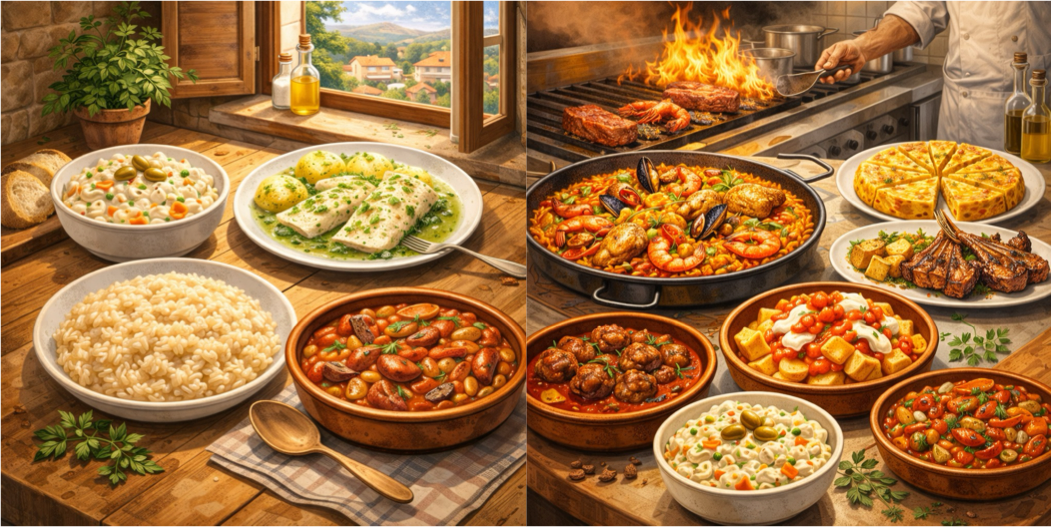
Feasting vs everyday cooking in Spain reveals how Spanish food culture moves comfortably between simplicity and celebration. Meals change depending on place and moment, yet the underlying values stay the same. Food is meant to be shared, enjoyed slowly, and adapted to daily life rather than fixed rules.
To understand Spanish eating habits, it helps to look at three key spaces: homes, bars, and restaurants. Each one plays a different role in how people eat.
Feasting vs Everyday Cooking in Spain at Home
Feasting vs everyday cooking in Spain looks very different inside the home. Daily meals tend to be modest and practical. People cook what is available, focusing on nourishment rather than presentation.
Lunch might be a simple stew, eggs with vegetables, or rice cooked with whatever is on hand. Dinners are often lighter, especially during the week. Leftovers are common, and cooking aims to support routine rather than impress guests.
However, when feasting happens at home, everything changes. Family gatherings bring longer meals, multiple dishes, and special recipes saved for these moments.
Spanish Daily Cooking Is Quiet and Functional
Spanish daily cooking rarely aims to surprise. Instead, it builds comfort and rhythm into everyday life.
People rely on familiar ingredients like olive oil, bread, vegetables, legumes, and simple proteins. Cooking methods stay straightforward. Food appears on the table without ceremony, yet it still feels complete.
This quiet approach allows energy and attention to remain elsewhere during busy days.
Spanish Feasting and Daily Cooking in Bars
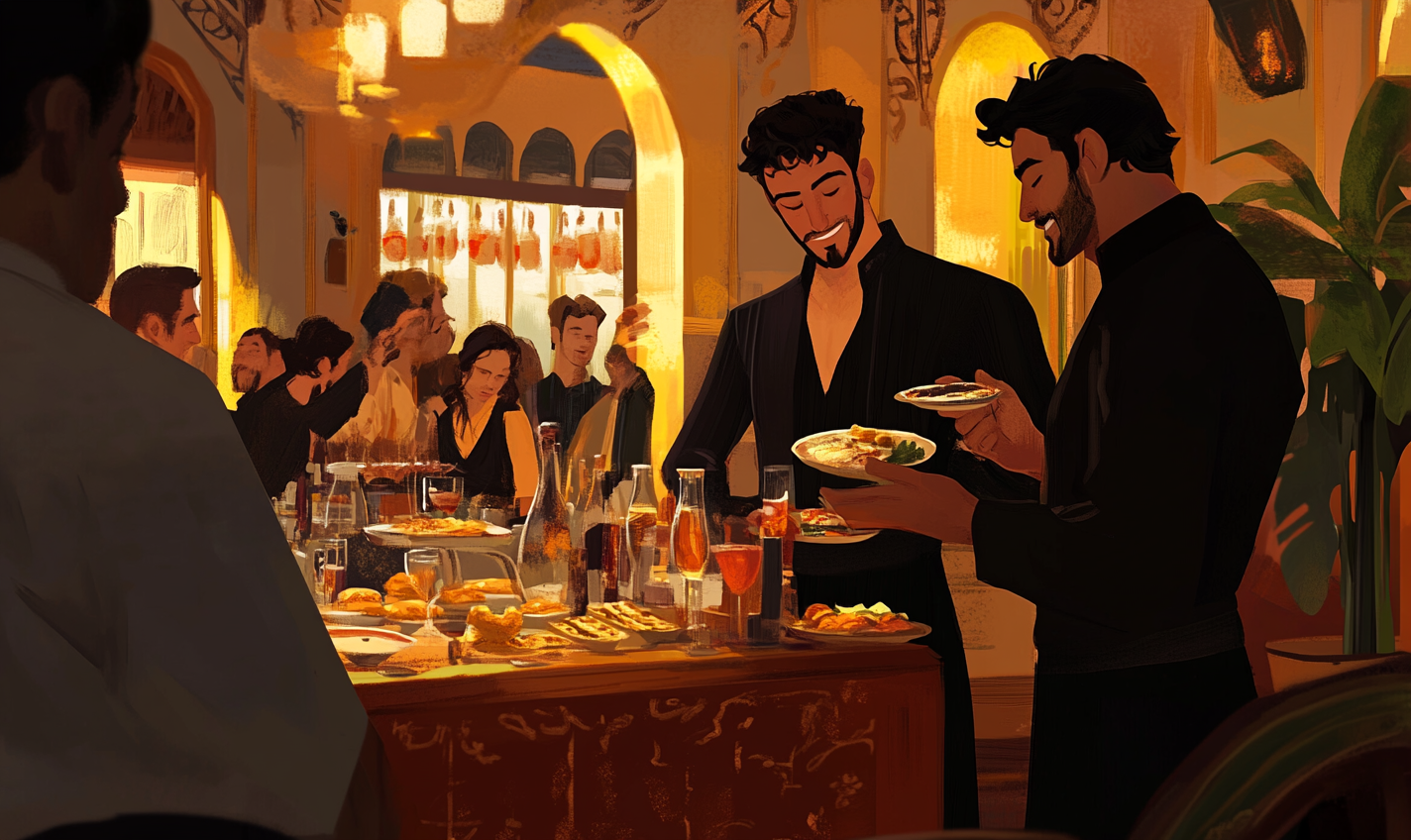
Spanish feasting and daily cooking meet most visibly in bars. Bars blur the line between routine eating and social celebration.
On an ordinary day, someone may stop for a coffee and a small sandwich. Later, the same space fills with shared plates, drinks, and conversation. Tapas allow people to eat without committing to a full meal.
Bars make food flexible. They allow eating to expand or shrink depending on mood and company.
How Restaurants Reflect Feasting vs Everyday Cooking in Spain
Feasting vs everyday cooking in Spain becomes clearer in restaurants. Many restaurants serve food that sits between home cooking and celebration.
Lunch menus often reflect daily eating, offering affordable, filling dishes. Dinner menus lean more towards feasting, with slower pacing and richer choices. Special occasions usually happen here, rather than at home.
Restaurants provide space for extended meals without the pressure of cooking or cleaning.
Why Feasting Feels Slow in Spanish Culture
Spanish feasting takes time. Meals stretch over hours, with conversation flowing between courses.
Food arrives gradually, allowing people to pause, talk, and enjoy the moment. This pace contrasts with everyday cooking, which supports efficiency and routine.
Slowness turns eating into an experience rather than a task.
Everyday Cooking Supports the Bigger Picture
Everyday cooking exists to support feasting rather than replace it. Simple meals keep people nourished so celebrations remain meaningful.
Because daily food stays uncomplicated, festive meals feel special rather than exhausting. The contrast between the two creates balance.
This rhythm keeps Spanish food culture sustainable.
Feasting vs Everyday Cooking in Spain and Social Connection
Feasting vs everyday cooking in Spain both serve social connection, just in different ways. Daily meals keep households running smoothly. Feasts strengthen bonds.
Bars offer spontaneity. Homes offer familiarity. Restaurants offer space and structure. Together, they form a complete system of eating.
Food adapts to life, not the other way around.
What This Balance Teaches About Spanish Food
Spanish food culture shows that eating well does not mean eating extravagantly every day. Instead, it values timing, purpose, and people.
By separating feasting from everyday cooking, Spain preserves joy without turning it into an obligation. That balance keeps food meaningful.