Regional chilies and peppers of Spain reveal a side of Spanish cooking that often surprises people. While Spanish food is not known for extreme heat, it relies deeply on peppers for flavour, colour, and aroma. From mild and sweet to gently spicy, these ingredients shape many of the country’s most familiar dishes.
Rather than overpowering food, Spanish peppers tend to support it. They add warmth, depth, and personality without dominating the plate.
History
Regional chillies and peppers of Spain have a history that begins with one of the most transformative moments in European food culture: the arrival of peppers from the Americas in the late 15th century. When Spanish explorers brought Capsicum varieties back from the New World, these plants quickly attracted attention for their colour, flavour, and adaptability. Spanish farmers experimented with cultivation across different climates, gradually selecting varieties that thrived in specific regions. As a result, peppers evolved differently in northern, central, and southern Spain, laying the foundation for the country’s remarkable diversity of chillies and sweet peppers.
Over time, peppers moved from novelty crops to essential agricultural produce. Because fresh peppers were available only seasonally, communities developed methods to preserve them for year-round use. Drying peppers in the sun became common in inland areas, while smoking techniques developed in regions such as Extremadura, giving rise to smoked paprika (pimentón). These preservation methods not only extended shelf life but also created entirely new flavour profiles, deeply influencing local cuisines. Consequently, peppers became defining ingredients rather than mere additions.
As Spanish cooking continued to evolve, peppers began to shape regional identities. Mild varieties dominated everyday dishes in some areas, while hotter chillies found favour in others. Paprika became indispensable in stews, sausages, and sauces, while fresh peppers added sweetness and structure to countless preparations. Rather than remaining seasonal vegetables, peppers became flavour foundations that determined how regional food developed.
Spanish Chilies and Peppers Are More About Flavour Than Heat
Spanish chillies and peppers rarely seek overwhelming heat, as Spanish cooking traditionally values balance over intensity. Rather than dominating a dish, peppers contribute sweetness, smokiness, and a measured warmth that supports other ingredients. This restrained approach allows flavours to remain layered and harmonious, ensuring that no single element overshadows the whole.
For instance, pimientos del piquillo are prized for their natural sweetness and tender texture. After roasting, they develop gentle caramel notes that pair particularly well with grilled fish, roast chicken, cured meats, and soft cheeses.
In contrast, guindilla chillies introduce a mild, clean heat rather than aggressive spice. Often served pickled, they cut through rich foods such as fatty meats, stews, and anchovies.
Similarly, smoked paprika (pimentón) contributes depth rather than spice, pairing especially well with legumes, potatoes, pork, and seafood.
Sweet paprika enhances stews and sauces, while the smoked variety complements grilled meats and traditional sausages.
Smoked Peppers Shape Northern Spanish Cooking
In northern Spain, smoked peppers add flavour through process rather than heat. Peppers are slowly dried over oak wood, which allows smoke to penetrate the flesh without burning it. This method concentrates aroma while preserving natural sweetness. As a result, pimentón de la Vera delivers depth and warmth in small amounts, enhancing stews, sausages, and legumes without overpowering them.
Regional Chilies and Peppers of Spain in the South
Southern regions favour fresh peppers with gentle sweetness. Green frying peppers appear often in everyday cooking, lightly blistered and seasoned simply with salt. In Andalucía, these peppers work as tapas or side dishes. Their mild flavour suits hot weather and relaxed meals. Even when chilies appear, they remain subtle rather than fiery.Freshness takes priority over intensity.
Spanish Chilies and Peppers in Preservation Traditions
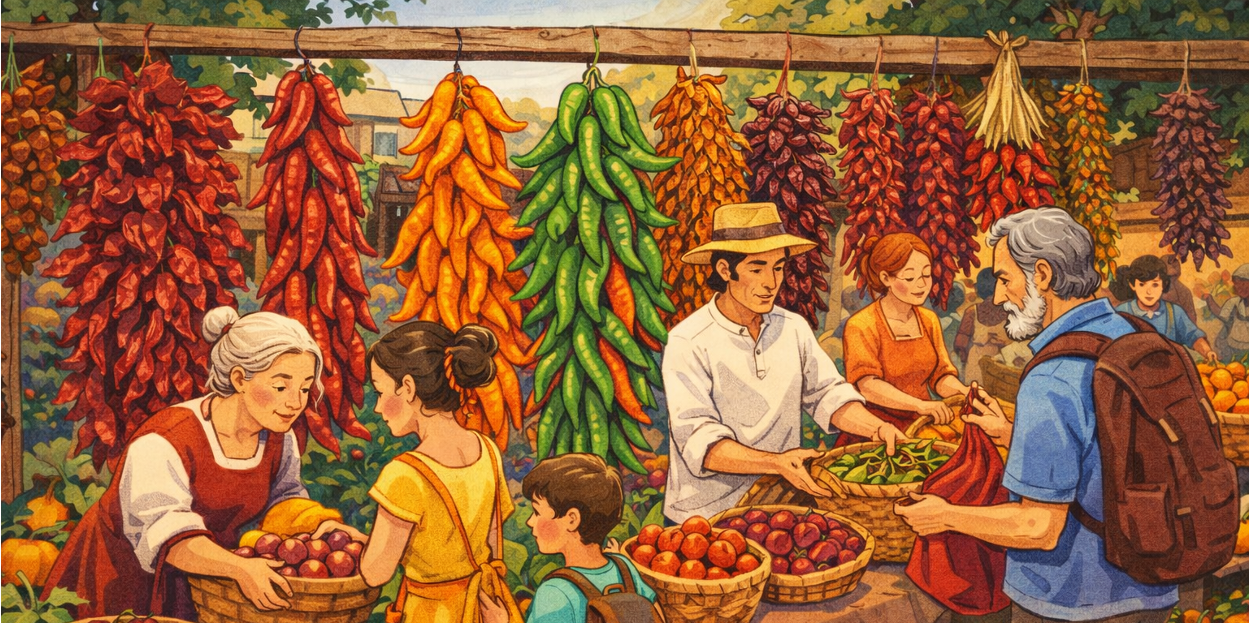
Spanish chilies and peppers also play a role in preservation. Drying peppers concentrates flavour and extends shelf life. Pickling adds acidity and contrast. Pickled guindillas cut through rich foods like cured meats or cheese. Dried peppers appear in sauces and stews, releasing flavour slowly during cooking. Preservation keeps peppers useful beyond their growing season.
How Texture Matters With Peppers
Texture matters just as much as flavour. Roasted peppers feel soft and silky. Fried peppers offer light crispness. Dried peppers add depth when rehydrated. Spanish cooking uses these textures intentionally. A dish may combine soft peppers with firm ingredients, creating contrast without complication. Texture helps peppers support the overall dish.
Why Regional Chilies and Peppers of Spain Stay Balanced
Regional chilies and peppers of Spain stay balanced because cooks respect their strength. Instead of using large quantities, they rely on timing and technique. Peppers are often added at specific moments, allowing their flavour to develop gently. This approach prevents bitterness or excess heat.Balance remains the guiding principle.