
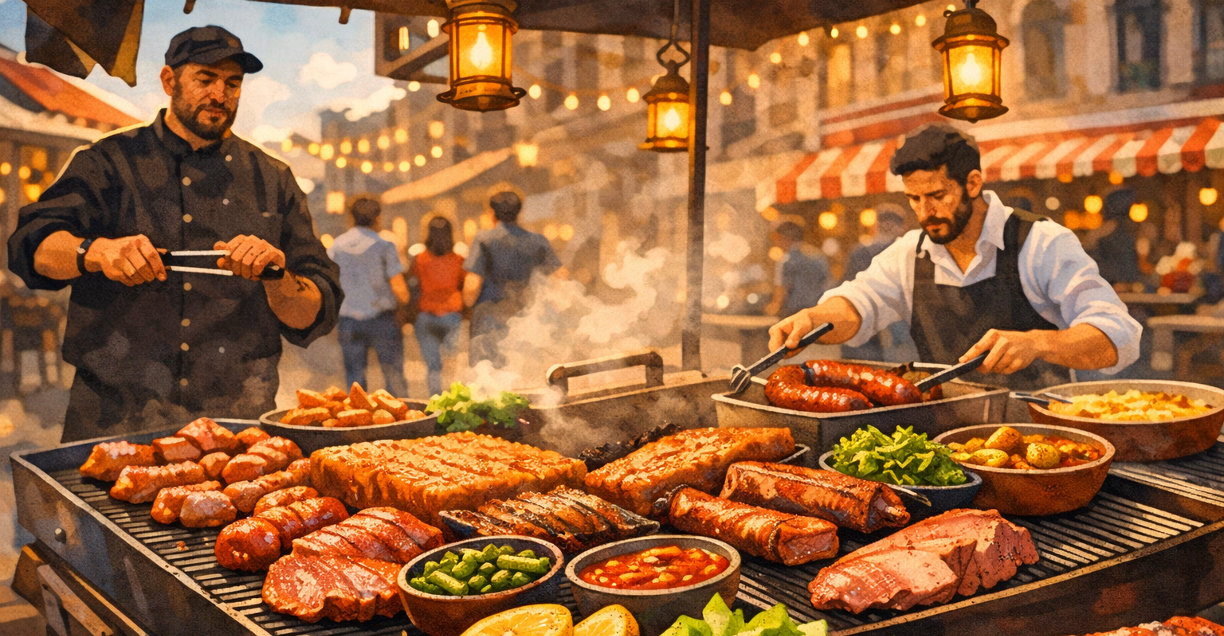
Fire, smoke, and grilling in Spain sit at the heart of the country’s outdoor cooking traditions. Long before modern kitchens became common, Spanish cooks relied on open flames to prepare everyday meals. Even now, grilling remains closely tied to social life, regional identity, and seasonal eating.
Rather than chasing speed or spectacle, this style of cooking values patience and awareness. Fire acts as a guide, shaping flavour gently instead of forcing it.
Fire, Smoke, and Grilling in Spain’s Food History
Throughout Spanish history, open-fire cooking developed out of necessity. Rural families cooked outdoors because it made practical sense, while fishing communities relied on flames close to the shore.
As a result, grilling became instinctive. Fish often went straight from boat to fire. Inland, meat, vegetables, and bread were cooked over embers rather than flames. Over time, smoke added depth without the need for heavy seasoning.
Because these methods worked so well, they never disappeared.
How Spanish Fire Cooking Relies on Control
Spanish fire cooking focuses on control rather than intensity. Instead of placing food directly into flames, cooks wait until the fire settles into glowing embers.
This approach allows heat to stay steady and predictable. Consequently, meat remains juicy, fish holds its structure, and vegetables soften evenly. Timing matters more than force, which is why experienced cooks watch closely rather than rushing.
In this context, restraint becomes a skill.
Smoke as a Quiet Element in Spanish Fire Cooking
Smoke plays a supporting role rather than a leading one. Instead of dominating flavour, it adds aroma and subtle depth.
Different woods create gentle variations. For instance, olive wood produces a mild sweetness, while vine cuttings bring an earthy note. These choices often reflect what grows nearby, connecting flavour to landscape.
Because smoke stays restrained, ingredients remain recognisable.
Fire, Smoke, and Grilling in Spain’s Regional Traditions
Across Spain, grilling styles shift with geography. In the Basque Country, cooks grill large cuts of beef or whole fish over wood embers. Meanwhile, in Galicia, seafood cooks gently over open grills near the coast.
Further south, Andalucía balances grilling with frying, creating contrast between smoky and crisp textures. Despite these differences, one idea stays constant: fire should enhance, not overpower.
Regional identity appears through technique rather than excess.
Why Marinades Stay Minimal
Heavy marinades rarely appear in Spanish grilling. Instead, cooks season food lightly before cooking and finish it afterwards if needed.
This method allows fire and smoke to shape flavour naturally. A sardine needs little more than salt and heat. A steak benefits from resting rather than sauce. As a result, food tastes clean and direct.
Simplicity protects the ingredient’s character.
How Fire Shapes Texture and Comfort
Fire influences texture just as much as flavour. Grilling creates contrast between crisp surfaces and tender interiors.
Vegetables develop sweetness as natural sugars caramelise. Meat forms a light crust while staying moist inside. Fish firms gently without drying out. Because of this balance, grilled food feels satisfying without heaviness.
Texture does the quiet work of comfort.
Spanish Fire Cooking as a Social Experience
Fire cooking in Spain often unfolds in public view. Meals happen outdoors, with people gathered around the grill rather than separated from it.
While food cooks, conversation flows. Waiting becomes part of the pleasure. In turn, the meal slows down and feels shared rather than rushed.
Cooking becomes a moment, not a task.
Why Grilling Feels Honest in Spanish Cuisine
Grilled food feels honest because it reveals its process. Fire leaves marks, smoke leaves aroma, and nothing hides behind decoration.
This openness reflects Spanish food culture as a whole. When ingredients are good, fire simply brings them forward.
What Fire, Smoke, and Grilling in Spain Teach Us
Fire, smoke, and grilling in Spain show that good cooking relies on trust — trust in ingredients, timing, and experience.
By stepping back and letting fire work gradually, Spanish cooks create food that feels grounded, generous, and deeply human.


