
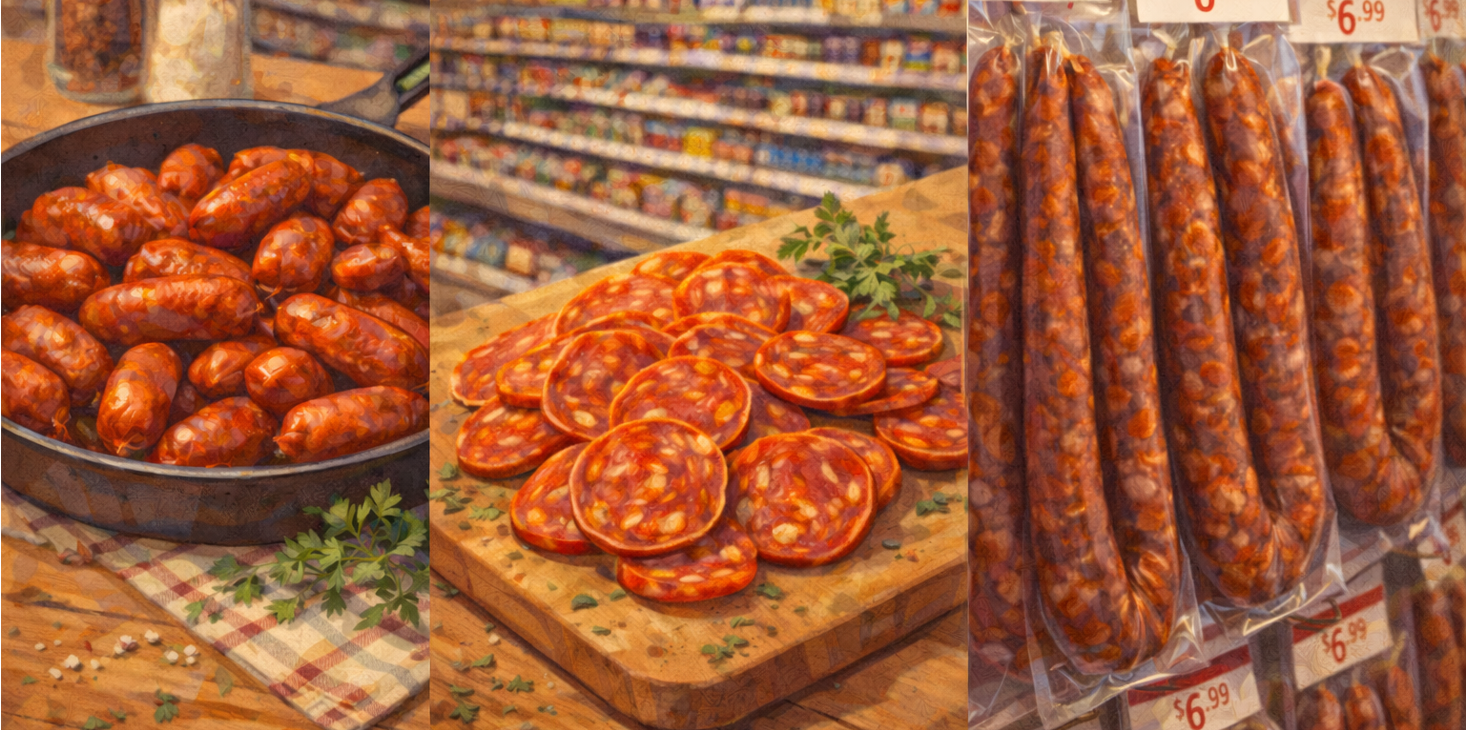
Spanish cured chorizo is one of Spain’s most recognisable foods. Deep red in colour, firm yet tender, and rich in aroma, it appears everywhere from tapas bars to family kitchens. Unlike fresh sausages, this chorizo is eaten sliced and uncooked, allowing its flavour to develop naturally over time.
At its heart, this food reflects patience. It relies on pork quality, seasoning, and curing rather than speed or complexity.
Traditional Origins
Spanish cured chorizo began as a method of preserving meat before refrigeration. Rural families slaughtered pigs once a year and transformed fresh pork into sausages that could last for months.
They mixed the meat with salt, garlic, and paprika, then stuffed it into natural casings. After that, the sausages hung in cool, airy spaces to dry slowly. During curing, flavour deepened and texture firmed naturally.
What started as a necessity eventually became a tradition.
Colour and Flavour
Paprika defines the character of this sausage more than any other ingredient. Known as pimentón, it gives chorizo both colour and aroma.
Sweet paprika creates a gentle, rounded flavour. Smoked paprika adds warmth and depth. Some regions also include spicy paprika, which brings mild heat. Garlic supports these flavours instead of overpowering them.
Together, they create balance rather than intensity.
Why is Spanish Cured Chorizo Eaten Without Cooking
The curing process makes Spanish cured chorizo safe to eat without heat. As moisture slowly leaves the sausage, the meat becomes firm and sliceable.
When eaten at room temperature, the fat softens slightly, allowing the flavour to release gradually. Cooking would dull this effect rather than improve it.
This is why the sausage is almost always served raw, thinly sliced.
How Dry-Cured Chorizo Is Used at the Table
Dry-cured chorizo appears most often in simple settings. People slice it thinly and serve it with bread, olives, or cheese as part of a relaxed snack.
Although cooks sometimes add it to stews or lentils for depth, it shines most when eaten on its own. A few slices add richness without effort.
Simplicity allows the sausage to speak clearly.
Texture Matters in Dry-Cured Chorizo
Texture reveals quality just as much as flavour. Good dry-cured chorizo should feel firm but not hard.
When sliced, it should hold its shape while remaining tender. Too dry, and it becomes chewy. Too soft, and it suggests under-curing. The ideal texture balances resistance with melt.
This balance makes each bite satisfying.
Regional Styles Across Spain
Different regions produce different styles. Northern versions often taste milder and more garlicky. Central regions favour bold paprika flavour. Southern styles may feel sweeter or slightly spicier.
Climate affects curing time, which influences both texture and intensity. These variations explain why chorizo tastes different across Spain, even when ingredients stay similar.
Each style reflects its environment.
Why Spanish Cured Chorizo Feels Comforting
Spanish cured chorizo feels comforting because it connects food with everyday life. It appears at casual meals, shared plates, and long conversations rather than formal occasions.
The sausage does not demand attention. Instead, it supports moments. That quiet confidence explains its lasting popularity.
What This Sausage Teaches About Food Culture
Spanish cured chorizo shows how flavour develops through time and restraint. Instead of rushing or adding more, the process relies on balance and patience.
It reminds us that some of the most satisfying foods are made slowly and eaten simply.


Comments 1