
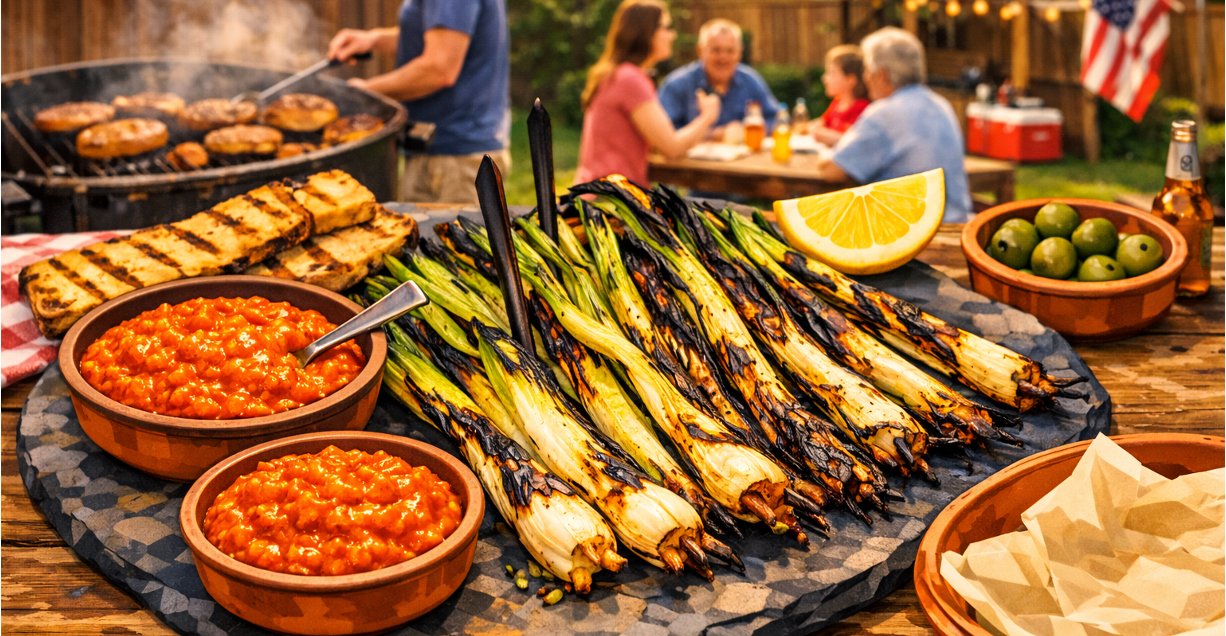
Calçots and the romesco ritual are more than just food in Catalonia; they represent a seasonal celebration deeply rooted in Spanish cooking. Each gathering draws people together around fire, smoke, and shared plates, transforming a simple meal into a communal experience. At first glance, calçots resemble oversized spring onions, charred almost beyond recognition. Beneath the blackened skin, however, lies something sweet, soft, and deeply comforting, rewarding those willing to peel and taste.
Through this ritual, eating becomes an event rather than a formality. Messiness is not only accepted but expected, while pleasure takes precedence over manners. In this way, Spanish cooking reveals its social heart, using food as a reason to gather, laugh, and share time together.
Calçots and the Romesco Ritual in Catalan Culture
Calçots and the romesco ritual come from rural Catalonia, particularly around Tarragona. The tradition centres on calçotades, gatherings held between late winter and early spring.
Farmers originally grew calçots by repeatedly covering young onions with soil, encouraging long white stems. These onions became a seasonal treat, grilled outdoors and eaten communally. Over time, the practice grew into a cultural ritual that marks the colder months.
Today, families, friends, and restaurants all take part.
What Makes Calçots Different From Ordinary Onions
Calçots are not ordinary onions. Their growing method makes them longer, milder, and sweeter than standard varieties.
When grilled, their sugars caramelise gently. The outer layers burn, but the inside steams and softens. Once peeled, the onion feels silky and warm, with a sweetness closer to leeks than sharp onions.
This gentle flavour is why calçots rely on sauce for contrast rather than heat or spice.
The Romesco Sauce That Defines the Ritual
The sauce is as important as the onions. Romesco combines roasted tomatoes, garlic, dried peppers, nuts, olive oil, and vinegar. Each household adjusts the balance slightly.
Some versions feel nutty and rich. Others lean sharper and brighter. Regardless of variation, the sauce adds depth and texture to the soft onion. Without it, the ritual would feel incomplete.
The pairing creates balance: sweet, smoky vegetables meet bold, savoury sauce.
How the Calçotada Tradition Is Practised
The calçotada tradition follows a relaxed rhythm. Calçots cook directly over flames until their skins turn black. They are then wrapped to steam briefly before serving.
People sit together wearing bibs, peeling away the charred layers by hand. Each calçot is dipped generously into romesco and eaten whole. Plates pile up quickly, and no one counts portions.
Laughter and conversation matter as much as the food.
Why Calçots and the Romesco Ritual Are So Messy
Eating calçots is intentionally messy. Sauce drips, hands get stained, and napkins disappear fast.
This lack of formality removes pressure. Everyone eats the same way, regardless of age or status. The ritual encourages enjoyment rather than control, making the experience feel playful and human.
Mess becomes part of the memory.
Calçots and the Romesco Ritual Beyond the First Course
Calçots rarely appear alone. After the onions, meals often continue with grilled meats, sausages, beans, or bread.
The onions act as a warm-up, opening the appetite and setting the tone. The meal unfolds slowly, often outdoors, with wine and long conversations.
Food becomes a reason to gather, not the only focus.
Why This Ritual Feels So Meaningful
Calçots and the romesco ritual feel meaningful because they connect people to season, place, and community. The ingredients are local. The timing is specific. The method remains unchanged.
There is no rush and no perfection. The value lies in repetition and shared experience rather than presentation.
What Calçots Teach About Catalan Cooking
This tradition shows how Catalan cooking values simplicity supported by ritual. The food itself is basic, but the way it is eaten gives it importance.
Calçots remind us that eating well is often about people, patience, and moments shared around a table—or a fire.


