
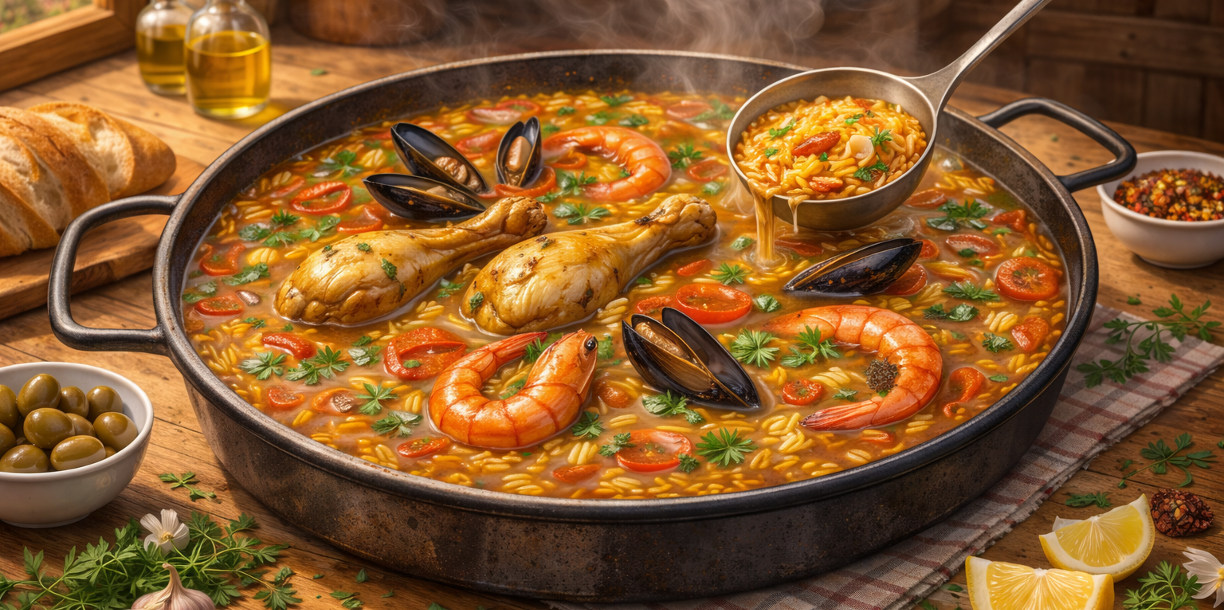
Arroz caldoso is one of Spain’s most comforting rice dishes, sitting somewhere between a soup and a stew. Unlike dry rice dishes, this one is served with a generous amount of broth, creating a soft, spoonable texture that feels warming and satisfying.
Often prepared with seafood, meat, or vegetables, arroz caldoso reflects a relaxed approach to cooking. It focuses less on precision and more on comfort, making it especially popular in cooler weather or when sharing meals with family.
Arroz Caldoso and Its Place in Spanish Home Cooking
Arroz caldoso holds a special place in Spanish home kitchens. Families often prepare it for weekend lunches or gatherings, where meals last long and conversation flows easily.
This dish adapts well to what is available. Coastal areas use fish, shellfish, and seafood stock, while inland regions favour chicken, rabbit, or vegetables. Because of this flexibility, the dish feels personal rather than fixed.
The broth-rich nature encourages slower eating and shared enjoyment.
The Brothy Rice Dish Is About Balance, Not Thickness
The brothy rice dish relies on balance. It should never feel watery like soup, nor thick like risotto. Instead, the rice floats gently in the broth, absorbing flavour while keeping its shape.
Short-grain rice works best because it releases starch slowly. This creates a light body without heaviness. The grains stay tender but distinct, which keeps the texture pleasing rather than mushy.
Achieving this balance matters more than following exact measurements.
Why Stock Defines Arroz Caldoso
Stock plays the central role in arroz caldoso. Because the dish contains so much liquid, flavour must come from the broth rather than toppings.
A seafood version might use shells, fish bones, garlic, and vegetables to build depth. A meat-based version depends on slow-simmered bones and herbs. As the rice cooks, it absorbs and releases flavour at the same time.
Good stock turns simple rice into something deeply comforting.
How Arroz Caldoso Is Cooked Differently From Other Rice Dishes
Unlike paella or baked rice, arroz caldoso requires attention throughout cooking. The liquid is added gradually and adjusted as needed.
Cooks stir gently to prevent sticking but avoid constant movement. This approach helps the rice release just enough starch while remaining intact. Cooking time stays shorter than risotto, which keeps the dish lighter.
The result feels relaxed rather than technical.
The Brothy Rice Dish Works Well With Seasonal Ingredients
The brothy rice dish adapts beautifully to the seasons. In winter, it often includes mushrooms, root vegetables, or hearty meats. In warmer months, lighter seafood versions appear more frequently.
For example, prawns and clams create a fresh, coastal flavour, while chicken and vegetables feel grounding and warm. This adaptability keeps the dish relevant all year.
Seasonality guides flavour without changing the method.
Why Arroz Caldoso Feels Comforting Without Being Heavy
Despite its richness, arroz caldoso rarely feels heavy. The high liquid content keeps the dish light, while the rice provides satisfaction.
Each spoonful warms without overwhelming the palate. That balance explains why people often return for seconds without feeling tired of eating.
Comfort comes from warmth and texture, not excess.
How Arroz Caldoso Is Served and Enjoyed
Arroz caldoso is served hot and eaten with a spoon. It rarely includes side dishes because it already feels complete.
Meals often end with conversation rather than rushing, as the dish naturally slows the pace. Sharing from one pot reinforces its communal nature.
This style of eating reflects Spanish food culture at its most relaxed.
What Arroz Caldoso Teaches About Spanish Cooking
Arroz caldoso shows that good cooking does not always aim for structure or presentation. Sometimes, the goal is comfort and generosity.
By allowing rice, stock, and time to work together, Spanish cooks create a dish that feels honest and nourishing. That philosophy explains why this humble dish remains so loved.


