
Mojo verde vs mojo rojo reflects how island cooking adapts to climate and ingredients. The Spanish cooking rely on sauces to bring life to potatoes, fish, and grilled foods, which are often cooked plainly.
Rather than overpowering dishes, these sauces add contrast. They bring freshness, heat, or depth where needed. Families prepare them at home, restaurants serve them automatically, and everyone has a preference.
These sauces are not optional extras. They are essential.
Green Mojo and Red Mojo Sauces Explained Simply
Green mojo and red mojo sauces differ mainly in ingredients and flavour direction. Mojo verde uses herbs, while mojo rojo relies on peppers and spices.
Mojo verde usually contains coriander or parsley, garlic, olive oil, vinegar, and sometimes cumin. The result tastes fresh, grassy, and slightly sharp. It feels lively and light on the palate.
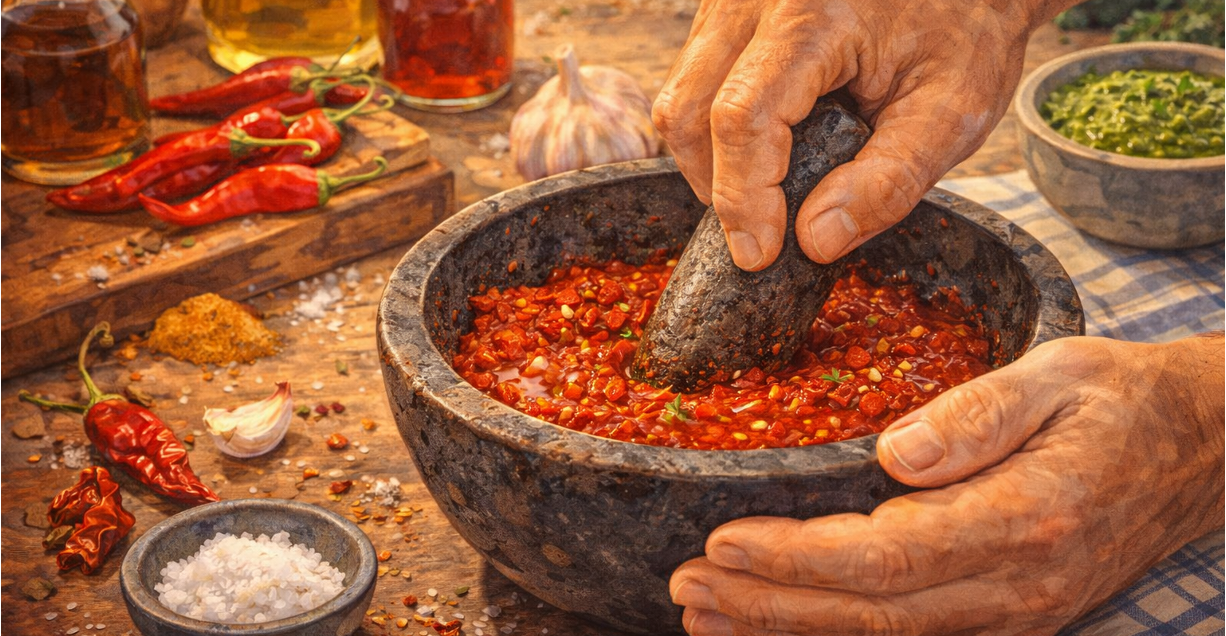
Mojo rojo, on the other hand, uses dried red peppers or paprika, garlic, oil, vinegar, and spices. It tastes deeper, warmer, and sometimes spicy. The sauce feels richer and more robust.
Both share a similar base, but their personalities differ completely.
How Mojo Verde Is Used at the Table
Mojo verde often pairs with fish and lighter foods. Grilled or boiled fish tastes brighter with a spoonful of this sauce. It also works well with vegetables, salads, and simple grains.
Because the flavour stays fresh and herbal, it does not weigh dishes down. Instead, it adds lift. For example, plain boiled potatoes feel more exciting when dipped into green mojo.
This sauce suits warm weather and relaxed meals where freshness matters most.
Why Mojo Rojo Feels Deeper and Bolder
Mojo rojo brings warmth and strength to food. It pairs naturally with roasted meats, grilled vegetables, and fried dishes.
The pepper and spice combination gives the sauce body. Even a small amount changes how a dish feels. Potatoes become heartier. Meat tastes richer. Fried food feels more grounded.
Despite its intensity, good mojo rojo stays balanced. Vinegar keeps it from feeling heavy, while oil smooths the edges.
Traditional Mojo Verde Recipe
To make mojo verde, start with a generous handful of fresh coriander or parsley, washed and roughly chopped. Place the herbs in a mortar or bowl along with two garlic cloves, a pinch of salt, and a small pinch of ground cumin.
Crush or blend the mixture until it forms a coarse paste. Slowly add olive oil while mixing, followed by a splash of wine vinegar. Continue until the sauce feels loose but not watery.
Taste and adjust salt or vinegar if needed. The finished sauce should taste bright, herbal, and fresh. Mojo verde works best with fish, vegetables, and papas arrugadas.
Traditional Mojo Rojo Recipe
Mojo rojo begins with dried red peppers soaked in warm water until soft, or alternatively smoked paprika for a quicker version. Combine the softened peppers or paprika with two garlic cloves, salt, and a pinch of cumin.
Crush or blend until smooth, then slowly add olive oil to build richness. Finish with wine vinegar to balance the depth and, if desired, a small amount of chilli for heat.
The sauce should taste warm, rounded, and slightly smoky. Mojo rojo pairs especially well with meat, fried food, and potatoes.
Texture Matters as Much as Flavour
Both sauces rely on texture to work properly. They should feel loose but not watery, smooth but not creamy.
Traditional preparation involves crushing ingredients rather than blending them fully. This method keeps texture alive and prevents the sauces from becoming flat. Small pieces of garlic or herbs add interest with each bite.
Texture controls how the sauce coats food, which affects how flavour spreads across the palate.
Mojo Verde vs Mojo Rojo With Papas Arrugadas
One of the best ways to understand these sauces is through papas arrugadas, the famous Canarian wrinkled potatoes.
These potatoes are boiled in heavily salted water until the skin dries and wrinkles. They taste mild and salty, making them perfect for dipping. Mojo verde adds freshness. Mojo rojo adds depth.
Together, they offer choice and contrast on the same plate.
What These Sauces Teach About Canarian Cooking
Mojo verde vs mojo rojo shows how Canarian cooking values balance. Instead of changing the food, cooks change the sauce.
This approach allows simple ingredients to feel varied and satisfying. With just two sauces, one dish becomes many.
That flexibility explains why these sauces remain central to island cooking today.


Awesome post.