
Introduction: A Dish Born from Fire
Escalivada catalana feels elemental, as if it belongs to an older way of cooking that predates recipes and measurements. At its heart, escalivada catalana is a celebration of fire and patience, transforming humble vegetables into something deeply aromatic and expressive. I first encountered escalivada served at room temperature in a small Catalan home, laid out simply with bread and olive oil. Nothing about it looked elaborate, yet every bite carried smoke, sweetness, and depth. That contrast between simplicity and intensity defines the dish perfectly.
Origins Rooted in Rural Cooking
Escalivada originates from Catalonia’s rural traditions, where cooking often happened over open flames rather than controlled kitchen heat. The name itself comes from escalivar, meaning “to cook in ashes,” which reveals the dish’s rustic beginnings. Farmers roasted vegetables directly over embers, allowing charred skins to protect the flesh while infusing it with smoke. Over time, escalivada catalana evolved into a regional classic, retaining its rustic soul even as it entered urban kitchens.
Ingredients That Rely on Technique, Not Excess
Escalivada uses very few ingredients, which places enormous importance on technique. Eggplants, red peppers, onions, and sometimes tomatoes form the base, each chosen for how well they respond to fire. Rather than seasoning heavily, cooks allow roasting to coax out natural sweetness and complexity. Olive oil and salt appear only at the end, enhancing rather than masking flavor. Because of this restraint, escalivada reflects Catalonia’s broader culinary philosophy: respect the ingredient, then step aside. In short, escalivada catalana represents the essence of Catalan food culture.
The Role of Fire and Transformation
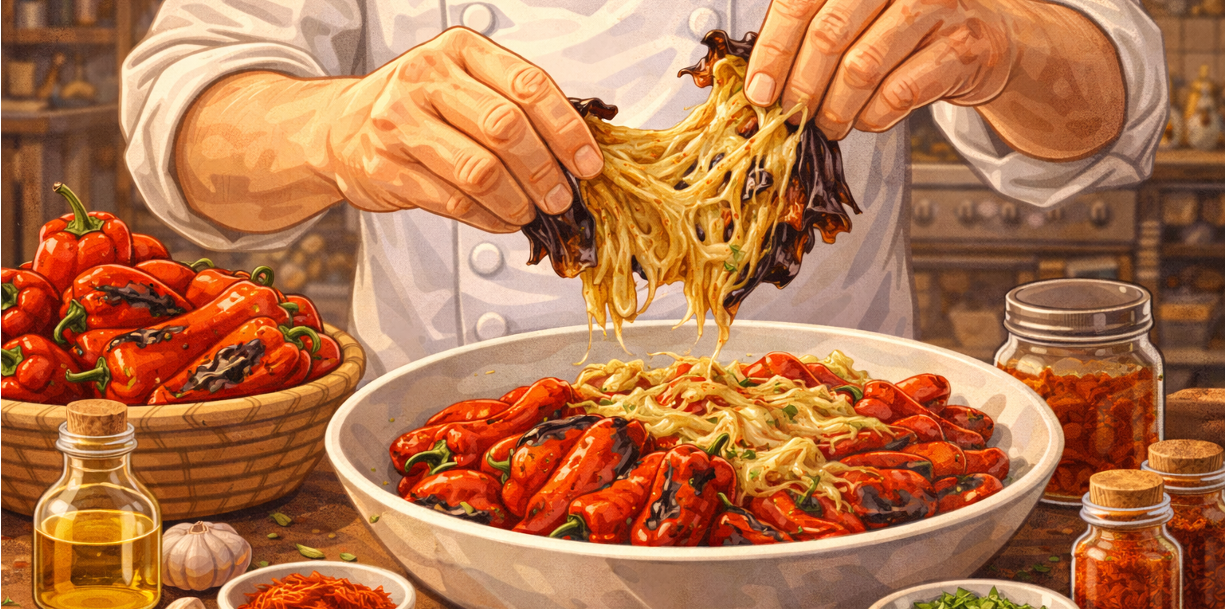
Fire is not just a heat source in escalivada; it is an active ingredient. Roasting vegetables whole allows the exterior to char while the interior steams gently, creating soft textures and layered flavors. As a result, bitterness fades and sweetness emerges naturally. I once watched a cook refuse to peel vegetables until they had cooled completely, explaining that rushing would sacrifice flavor. That moment made it clear that escalivada rewards patience more than precision. For those who appreciate tradition, escalivada catalana can be a culinary revelation.
Texture, Flavor, and Balance
Once peeled and sliced, the vegetables reveal silky textures and deep, smoky aromas. Eggplant becomes almost buttery, peppers turn sweet and fragrant, and onions soften into gentle sweetness. When combined, these elements create balance rather than dominance. No single vegetable overwhelms the others. Instead, they work collectively, producing a dish that feels light yet satisfying, rustic yet refined.
Cultural Presence in Catalan Life
In Catalonia, escalivada appears in countless forms, served as a tapa, a side dish, or even a main course when paired with bread or anchovies. Families prepare escalivada catalana in advance and serve it at room temperature, which allows flavors to settle and deepen. Because of this, escalivada often accompanies long meals and conversation rather than hurried eating. Its presence reflects a culture that values shared time as much as shared food.
Escalivada in Modern Catalan Cuisine
Modern chefs continue to serve escalivada with minimal alteration, occasionally adding tuna, anchovies, or cheese. However, the vegetables remain the focus. Restaurants may refine presentation, yet the essence stays intact. Escalivada resists reinvention because its strength lies in honesty, not innovation.
Traditional Escalivada Catalana Recipe
Ingredients
- Eggplants – 2
- Red bell peppers – 2
- Onion – 1 large
- Tomato – 1 (optional)
- Extra virgin olive oil – 3–4 tbsp
- Salt – to taste
Method
Place whole eggplants, peppers, onion, and tomato directly over a grill, open flame, or in a very hot oven. Roast until skins are completely charred and flesh is soft, turning occasionally. Remove vegetables and cover them briefly to allow steaming. Once cool, peel off skins and remove seeds. Slice vegetables into strips, arrange on a plate, drizzle generously with olive oil, and season with salt. Serve at room temperature. In summary, escalivada catalana is best enjoyed as described above.


