
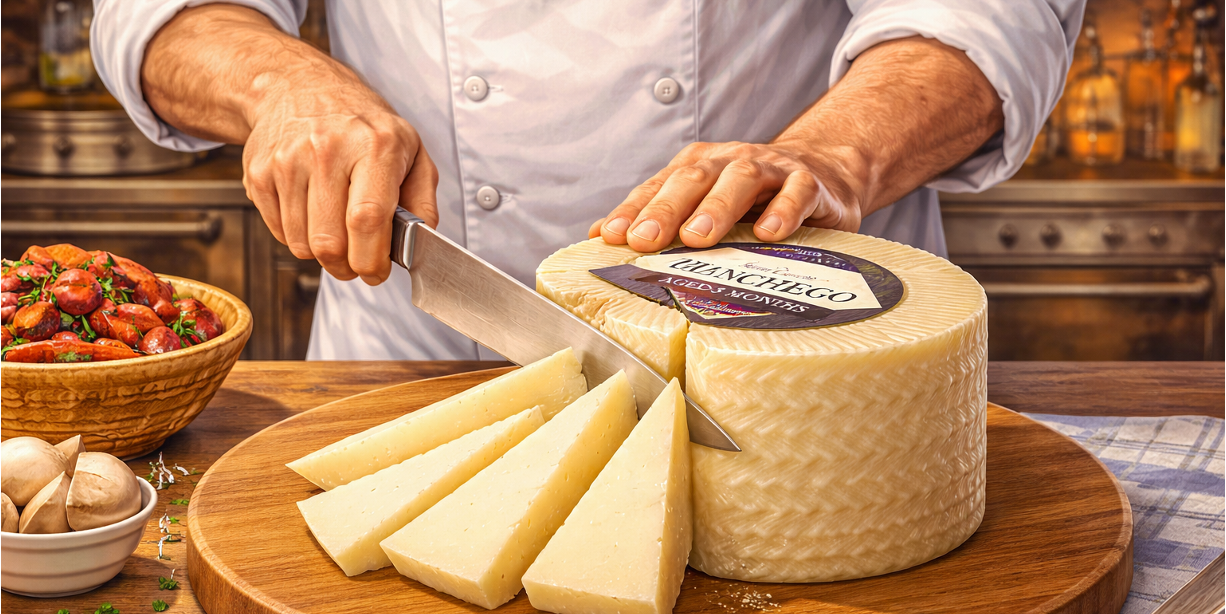
Introduction: A Cheese That Defines a Region
Queso manchego is not merely Spain’s most famous cheese; it is a symbol of La Mancha itself. In a land of wide plains, strong winds, and literary legends, this cheese reflects resilience, patience, and quiet intensity. I first tasted queso manchego in a modest countryside inn, served simply with bread and olive oil, yet it commanded attention immediately. There was nothing flashy about it, but its firm texture and deep, nutty flavor felt grounded, as if it belonged exactly where it was made. That sense of place is what defines true queso manchego.
Historical Roots and Pastoral Life
The origins of queso manchego stretch back thousands of years, shaped by shepherding traditions that predate written history. La Mancha’s dry climate and sparse vegetation favored sheep over cattle, and over time, the Manchega sheep became inseparable from the region’s identity. Shepherds relied on cheese as a durable, nourishing food that could withstand long journeys and harsh conditions. What began as a necessity evolved into craftsmanship, with methods refined over generations. Even today, queso manchego carries echoes of this pastoral past.
The Manchega Sheep: Heart of Authenticity
True queso manchego can only be made from the milk of Manchega sheep, a breed uniquely adapted to La Mancha’s environment. Their milk is rich and aromatic, producing a cheese with exceptional depth and balance. Watching these sheep graze across open plains, it becomes clear that their diet and movement shape the cheese as much as any technique. This tight connection between animal and product is why authenticity is fiercely protected and imitations are easily recognized by locals.
Landscape, Climate, and Flavor
La Mancha’s climate plays a crucial role in shaping queso manchego. Hot summers and cold winters influence how the cheese matures, while the dry air aids natural aging. The distinctive zigzag pattern on the rind, once created by woven grass molds, reflects both tradition and environment. This landscape is not just a backdrop but an active contributor, imprinting character into every wheel.
Aging, Texture, and Complexity
Queso manchego derives its character primarily from its aging process, which moves deliberately from youthful freshness to deep maturity. In its earlier stages, the cheese offers mild, milky flavors and a supple, creamy texture that feels approachable and gentle. As aging progresses, however, the cheese firms gradually, developing concentrated flavors marked by nutty depth, caramelized undertones, and a lingering sharpness that stays on the palate. Throughout this process, cheesemakers actively turn and inspect each wheel, guiding its evolution rather than leaving it to chance. I once tasted three different ages of manchego in succession, and the experience felt almost narrative; each version built upon the last, revealing how time transforms simplicity into complexity.
Cultural Presence in Spanish Life
Across Spain, queso manchego appears naturally in both everyday meals and ceremonial gatherings, which highlights its remarkable versatility. At home, families serve it casually with bread or olives, while at celebrations, it often arrives paired with honey or quince paste. Yet despite these accompaniments, the cheese never depends on them. Instead, it holds attention on its own. In La Mancha, especially, offering manchego signals pride and hospitality. Notably, conversations often pause when a well-aged cheese reaches the table, allowing guests to taste and reflect before speaking again. That brief silence, therefore, reveals the cheese’s cultural weight more clearly than words ever could.
Protection, Identity, and Denomination
Spain protects queso manchego under a Denomination of Origin, which actively regulates milk sources, production techniques, and aging standards. These controls prevent industrial shortcuts and preserve traditional methods passed down over generations. Rather than promoting exclusivity, this system reinforces respect for regional heritage and craftsmanship. As a result, consumers recognize authentic Manchego not only by flavor but also by trust in its origin. When people choose a certified cheese, they affirm continuity, tradition, and identity. In this way, the denomination protects far more than a product; it safeguards a cultural legacy.
Queso Manchego in the Modern World
As queso manchego gains international popularity, it walks a careful line between tradition and demand. While exported widely, the most treasured wheels remain local, aged patiently, and consumed without hurry. Modern recognition has expanded its reach, but its soul remains rooted in La Mancha’s fields and shepherds.
Queso Manchego Preparation Process
Ingredients
- Manchega sheep’s milk
- Natural rennet
- Salt
Traditional Method Overview
Fresh Manchega sheep’s milk is gently heated and curdled using rennet.
The curds are cut, stirred, and pressed into molds that create the cheese’s characteristic pattern.
Wheels are salted and aged for a minimum period depending on desired maturity, ranging from several weeks to over a year.
During aging, cheeses are turned regularly and monitored carefully to ensure even development and proper texture


Comments 1