
Introduction: When Technique Becomes Magic
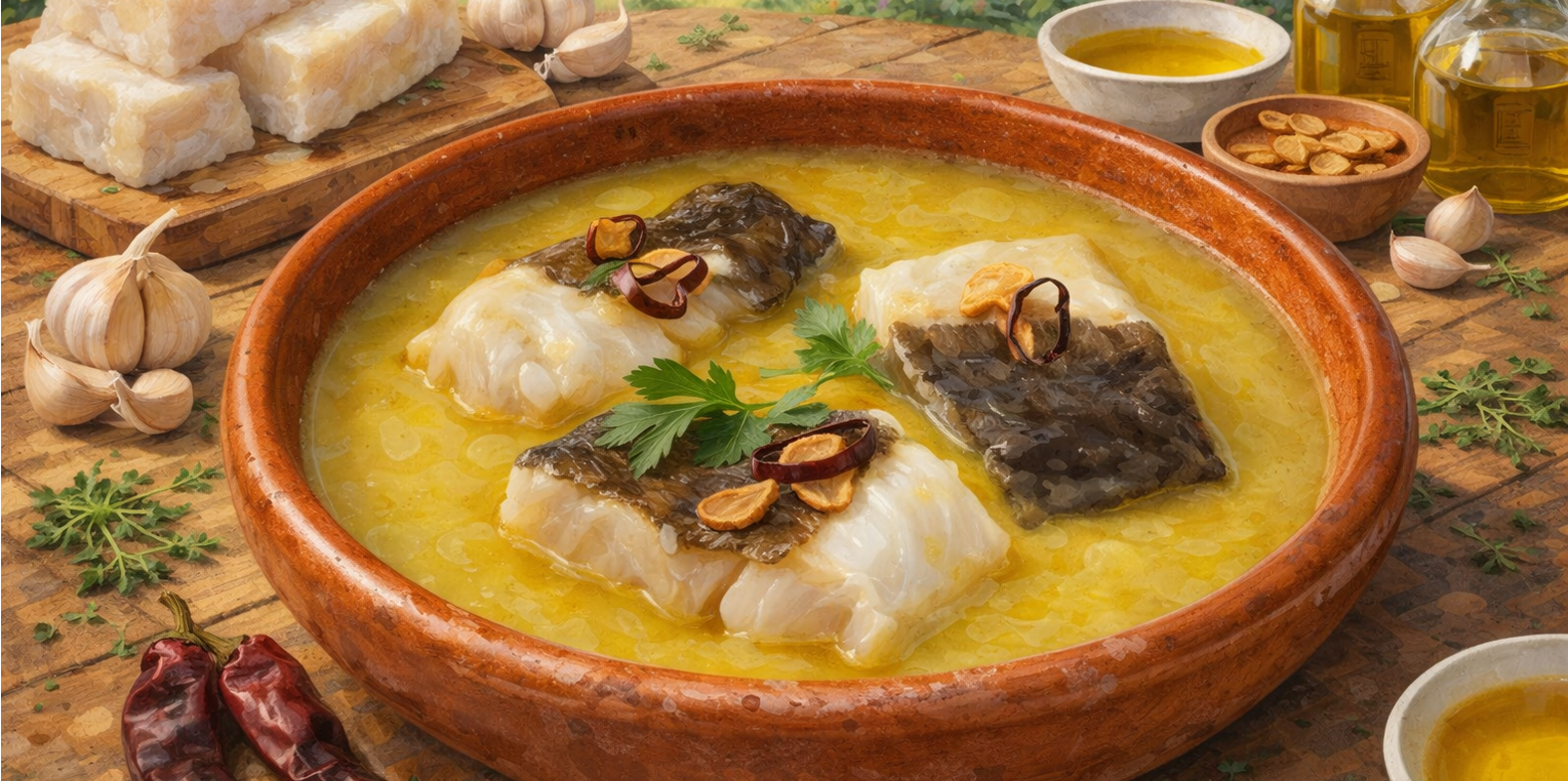
Bacalao al pil-pil is a dish that appears deceptively simple yet demands absolute respect for technique. At first glance, it is just salt cod, olive oil, garlic, and chili. In reality, it is one of the most technically demanding classics of Basque cuisine. I remember watching a cook prepare it in a quiet kitchen, moving the pan in slow, rhythmic circles, completely focused, as if performing a ritual. The sauce formed gradually, almost magically, and that moment alone explained why this dish commands such reverence.
Historical Roots in Trade and Preservation
Salt cod arrived in the Basque Country through maritime trade, where preservation was essential for long voyages. Cod could be dried and salted, making it ideal for coastal communities. Over time, Basque cooks transformed this preserved fish into something refined and elegant. Bacalao al pil-pil became a culinary emblem of ingenuity, proving that limited ingredients could still produce complexity and depth when treated with care.
The Meaning of “Pil-Pil”
The name “pil-pil” refers to the sound made as gelatin from the cod mixes with olive oil over gentle heat. This natural emulsification forms the sauce, without flour, cream, or thickening agents. Understanding this process is key, as the dish depends entirely on the release of gelatin from the cod skin. The sound, the movement, and the temperature all matter, turning cooking into a sensory experience rather than a formula.
Ingredients That Demand Precision
Bacalao al pil-pil relies on impeccable ingredients. The cod must be properly desalted, firm yet moist, with skin intact. Extra virgin olive oil provides both flavor and structure, while garlic and dried chili add aroma without dominating. In Basque kitchens, cooks insist that nothing more is needed because adding anything extra would distract from the delicate balance that defines the dish.
Technique: Control Over Heat and Motion
What truly defines bacalao al pil-pil is technique. The cod is cooked gently, skin-side down, allowing gelatin to seep into the oil. The pan is then moved in circular motions, encouraging emulsification without breaking the fish. I once attempted this dish myself and learned quickly that impatience ruins everything; too much heat separates the oil, while rushing prevents the sauce from forming. Success depends on calm, controlled movements.
Texture, Flavor, and Elegance
When done correctly, bacalao al pil-pil achieves remarkable harmony. The cod becomes silky and tender, while the sauce turns pale, glossy, and velvety. Garlic infuses the oil gently, and chili adds subtle warmth. Despite its richness, the dish never feels heavy, showcasing elegance through restraint rather than excess.
Cultural Importance in Basque Cuisine
In the Basque Country, bacalao al pil-pil is associated with celebration and pride. It is often served during special occasions or in traditional restaurants where technique is honored. Preparing it successfully is considered a mark of culinary competence, passed down through observation rather than written instruction.
Bacalao al Pil-Pil in Modern Cooking
Modern chefs continue to showcase bacalao al pil-pil as a test of skill. While some experiment with plating or texture, the core method remains untouched. Its endurance reflects the Basque respect for tradition and mastery.
Traditional Bacalao al Pil-Pil Recipe
Ingredients
- Salt cod (bacalao), desalted – 4 pieces
- Extra virgin olive oil – 200 ml
- Garlic – 4 cloves, sliced
- Dried chili (guindilla) – 1–2 pieces
Method
Heat olive oil gently in a wide pan and sauté garlic and chili until aromatic.
Remove and set aside.
Place cod pieces skin-side down in the oil and cook gently, basting occasionally.
Once gelatin begins to release, remove the cod and lower the heat.
Move the pan in slow circular motions or use a strainer to emulsify the oil until it thickens.
Return cod to the pan, spoon sauce over it, garnish with garlic and chili, and serve immediately.


