
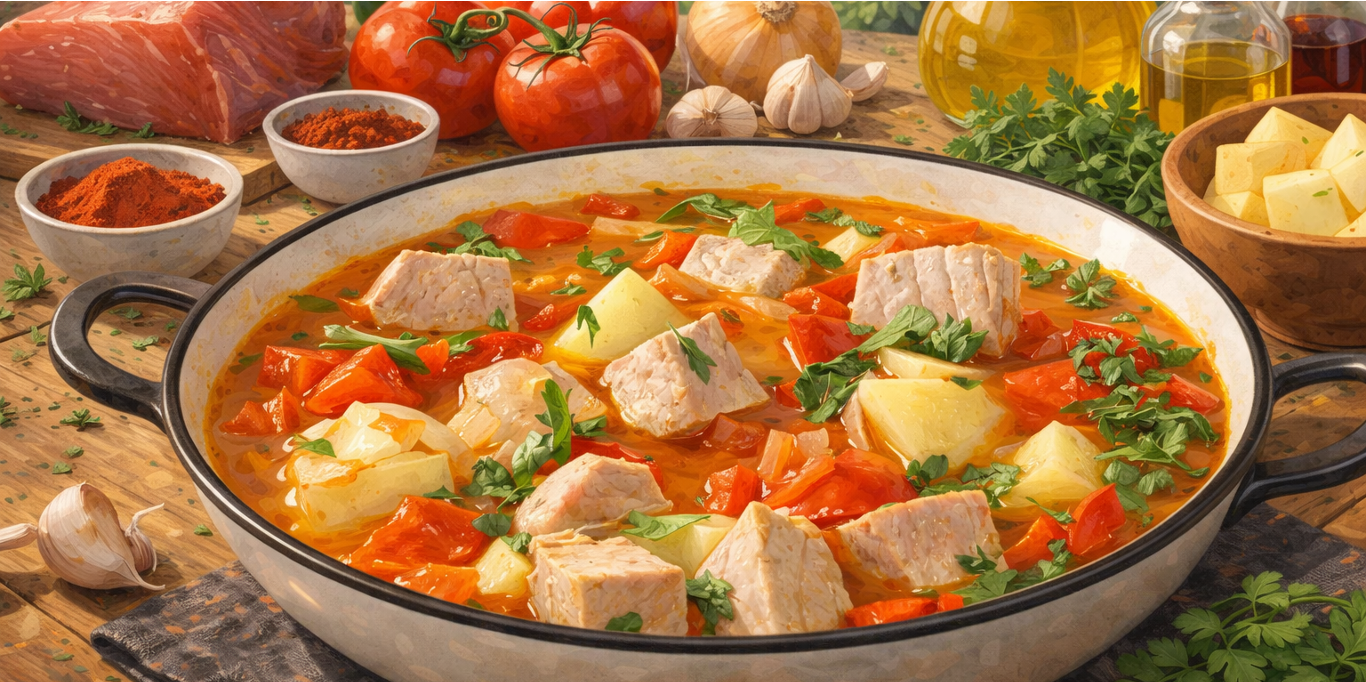
Introduction: A Dish That Smells of the Ocean
Marmitako is a stew that carries the rhythm of the sea within it. Unlike Spain’s meat-heavy winter stews, this Basque classic reflects coastal life, fishing traditions, and the quiet resilience of sailors. I first tasted marmitako in a small port town in the Basque Country, where the air smelled of salt, and the stew arrived steaming, its aroma unmistakably marine yet comforting. It felt honest and unpretentious, exactly the kind of food one imagines being cooked on a boat after a long day at sea.
Origins in Basque Fishing Culture
Marmitako was born aboard fishing vessels, where Basque fishermen needed meals that were filling, adaptable, and easy to prepare in a single pot. The name itself comes from marmita, the metal pot used on ships. Potatoes, onions, and preserved ingredients formed the base, while fresh tuna was added when the catch allowed. Over time, this practical meal moved from boats to homes and taverns, becoming a defining dish of Basque culinary identity.
Ingredients That Reflect the Coast
The ingredients of marmitako are modest, yet each plays a crucial role. Fresh tuna, traditionally bonito del norte, provides a firm texture and clean flavor. Potatoes give the stew body and absorb the paprika-scented broth, while onions and green peppers build sweetness and aroma. Tomatoes add subtle acidity, and olive oil binds everything together. The absence of heavy spices is deliberate, allowing the quality of the fish to remain central.
Technique and Timing
What sets marmitako apart is the careful handling of tuna. The stew begins like many rustic dishes, with a slow sauté of vegetables to develop depth. Potatoes are then added and “cracked” rather than cut cleanly, helping thicken the broth naturally. Tuna is added only at the end, cooking briefly to remain tender. I once watched a cook remove the pot from the heat entirely before adding the fish, explaining that residual warmth is enough and overcooking would ruin the dish.
Texture, Flavor, and Balance
Marmitako achieves balance through restraint. The broth is rich without being heavy, the potatoes soft but intact, and the tuna meaty yet delicate. Smoked paprika adds warmth rather than heat, echoing the stew’s coastal roots. Each spoonful feels nourishing, making marmitako ideal for cool evenings near the sea.
Cultural Significance in the Basque Country
In the Basque Country, marmitako is closely associated with fishing seasons and community gatherings. It often appears during festivals and is cooked in large quantities, shared among friends and family. The dish embodies Basque values of simplicity, respect for ingredients, and collective enjoyment. Eating marmitako feels less like dining and more like participating in a tradition.
Marmitako in Modern Cuisine
Today, marmitako is served across Spain, sometimes refined for restaurant settings but rarely altered in essence. Modern chefs may adjust presentation, yet the core remains unchanged. Its endurance speaks to the strength of the Basque culinary heritage.
Conclusion: A Stew That Tells a Maritime Story
Marmitako is a reminder that great cuisine often emerges from necessity. Rooted in fishing life and shaped by the sea, it remains deeply satisfying and emotionally grounding. More than a tuna stew, marmitako is a story of endurance, respect, and place.
Traditional Marmitako Recipe
Ingredients
- Fresh tuna (bonito) – 600 g
- Potatoes – 4 medium
- Onion – 1 large
- Green bell pepper – 1
- Garlic – 2 cloves
- Tomato – 2 medium, grated
- Smoked paprika – 1 tsp
- Olive oil – 3 tbsp
- Fish stock or water – 750 ml
- Bay leaf – 1
- Salt – to taste
Method
Heat olive oil in a heavy pot and sauté onion, garlic, and green pepper until soft. Add grated tomatoes and cook until reduced. Stir in smoked paprika, then add potatoes, cracking them as they are cut. Pour in stock and add bay leaf. Simmer until potatoes are tender. Remove from heat, add cubed tuna, cover, and let it cook gently in residual heat. Season with salt and serve hot.


