
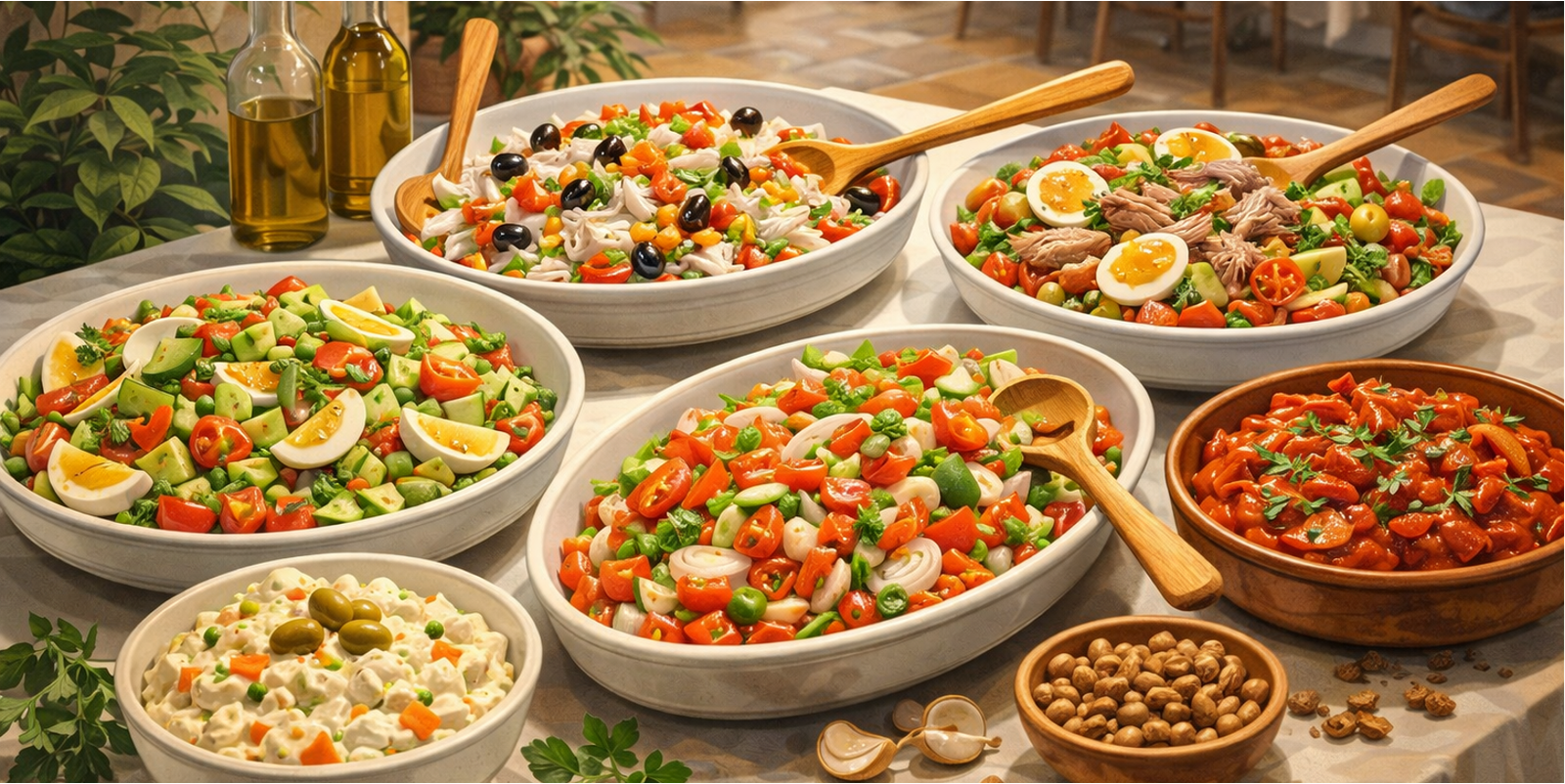
Salad as a way of thinking
In Spain, a “salad” is less a bowl of raw leaves and more a cool, seasoned counterpoint to hot, garlicky, fried, or smoky food. Spanish salad culture is unique and Spanish salads tend to be sturdy, well-dressed, and built around a few strong flavours rather than many delicate ones. They are meant to refresh, reset the palate, and stretch a meal — not disappear in the background.
You’ll see this logic everywhere: in beach bars, at family lunches, in pintxos displays, and on restaurant menus. A plate of something cool is almost always present alongside meat, fish, or rice.
Ensaladilla rusa — Spain’s great comfort salad
The most iconic is ensaladilla rusa. Its origins are Russian, but Spain made it its own: a creamy mixture of potatoes, carrots, peas, eggs, and mayonnaise, often crowned with tuna, olives, or roasted peppers.
What matters here is texture first. Potatoes should be tender but intact, not mashed. The mayonnaise should coat, not drown. The balance is gentle richness, mild acidity, and just enough salt to keep everything lively.
In bars, ensaladilla is often served on toast as a montadito; at home it appears in big shared bowls for summer lunches.
Tomato salads — simplicity with discipline
Spanish tomato salads are never casual. Good tomatoes, sliced thick; good olive oil; salt; sometimes onion or tuna. That’s it. The technique is timing: tomatoes are seasoned just before serving so they don’t weep, and oil is poured generously so every bite glistens.
In Andalucía, you’ll often see tomatoes with oranges or sherry vinegar; in coastal regions, tomatoes pair with bonito or anchovies.
Escalivada & roasted salads
In Catalonia, salads are often roasted rather than raw. Escalivada — charred peppers, aubergines, and onions — is peeled, torn into strips, dressed with olive oil, and served cold. Smoke replaces crunch; sweetness replaces bitterness.
Bread as salad
Spanish cooks blur the line between salad and starch. Pipirrana (Andalucía) or pan con tomate variations mix bread, tomatoes, peppers, garlic, and oil into something that feels both salad and side dish.
Vinegar with intention
Sherry vinegar is the quiet backbone of many Spanish salads. It is sharper than wine vinegar but less aggressive than balsamic, and it works beautifully with olive oil, tomatoes, and seafood.
Two easy Spanish salad recipes
1) Classic ensaladilla rusa (serves 4)
Ingredients
- 600 g waxy potatoes, diced
- 2 carrots, diced
- 150 g frozen peas
- 3 eggs, boiled and chopped
- 180–220 g good mayonnaise
- 1 tin tuna in olive oil (drained)
- Salt, white pepper
- To finish: olives + roasted red pepper strips
Method
- Boil potatoes and carrots in salted water until just tender; drain and cool.
- Blanch peas 1 minute, cool.
- Mix vegetables with eggs and tuna. Fold in mayonnaise little by little.
- Season gently, chill 1–2 hours.
- Top with olives and pepper strips before serving.
2) Spanish tomato & tuna salad (serves 2–3)
Ingredients
- 4 ripe tomatoes, thickly sliced
- 1 small red onion, very thinly sliced
- 1 tin bonito or tuna in olive oil
- 3 tbsp extra virgin olive oil
- 1 tbsp sherry vinegar
- Flaky salt, black pepper
- A few torn basil or parsley leaves
Method
- Arrange tomatoes on a plate; scatter onion.
- Flake tuna over the top.
- Whisk oil and vinegar, drizzle generously, season, and finish with herbs.
The bigger idea
Spanish salads are about temperature, texture, and seasoning more than raw vegetables. They cool the table, balance fat, and carry the flavour of good oil and vinegar. When you cook Spanish food well, salad is never an afterthought — it is part of the rhythm of the meal.



Comments 1