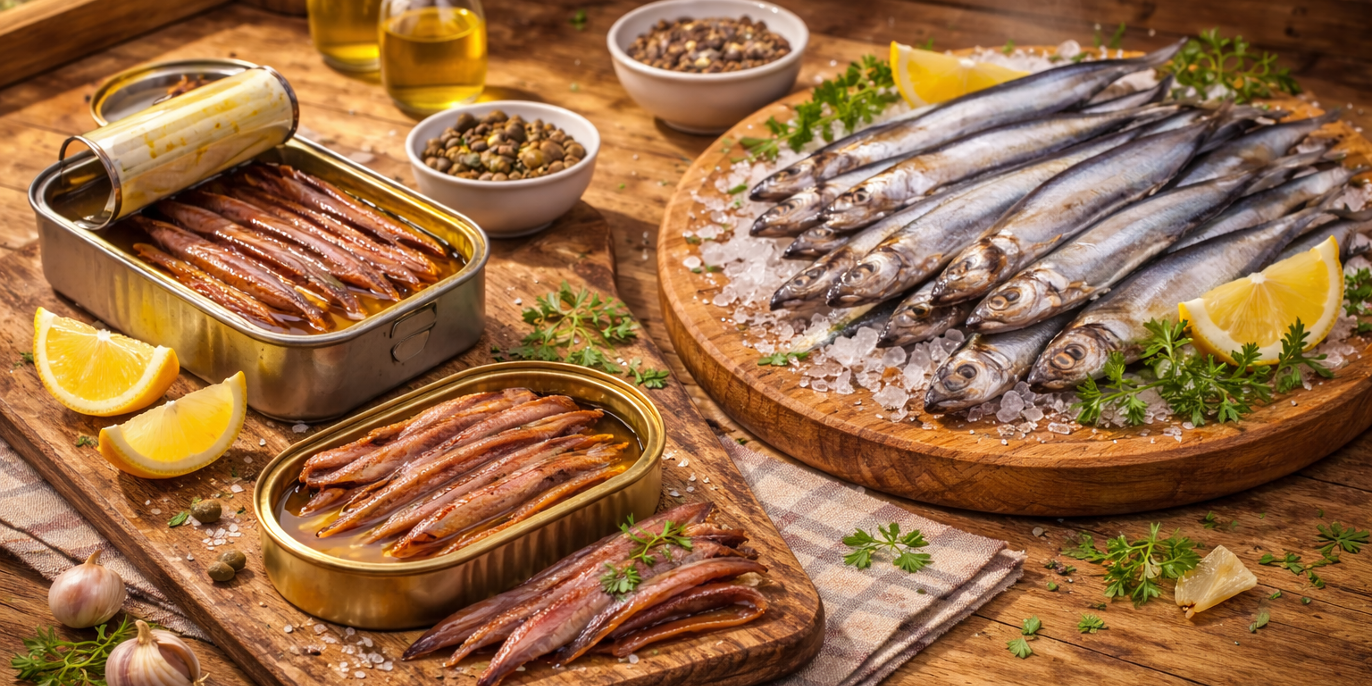
A fish that defines a shoreline
Along Spain’s northern rim — from Santander to San Sebastián — the Cantabrian Sea shapes how people eat. The Cantabrian coast is famous for its seafood traditions. Few ingredients capture this more precisely than the boquerón (European anchovy). Small, silver, and intensely seasonal, it appears on Basque and Cantabrian tables in two very different forms: fresh anchovies cooked gently, and cured anchovies preserved in salt or vinegar. Understanding the difference is essential to cooking them well.
Fresh anchovies: delicate, fleeting, coastal
Fresh anchovies arrive in summer when the fish are plump with fat. Their flavour is clean, sweet, and lightly briny — closer to sardine than to the punchy tinned anchovy many people know. They spoil quickly, which is why you mostly encounter them near the coast or cooked the same day. Even so, these fresh anchovies are inseparable from the identity of the Cantabrian coast.
How Spaniards cook them
- A la plancha (grilled or griddled): split, lightly oiled, and cooked skin-side down for seconds.
- Fritos (fried): dusted in flour and crisped in hot olive oil.
- En salsa verde: poached gently in a parsley-garlic sauce.
The key technique with fresh anchovies is speed and restraint. Overcook them and they become dry; treat them gently and they taste like the sea with sunlight, echoing the delicacy found along the coast of Cantabria.
Cured anchovies: concentration, depth, memory
Curing transforms the fish entirely. Traditionally, anchovies are layered in salt for months, then cleaned, filleted, and packed in olive oil. The result is the dark, silky anchovy familiar across Spain — savoury, meaty, and umami-rich, and central to the cuisine of the Cantabrian coast.
A lighter cousin is boquerones en vinagre — white anchovies cured briefly in vinegar rather than salt. These are tender, bright, and garlicky, finished with parsley and oil. You’ll see them everywhere in pintxos bars from Bilbao to San Sebastián, a true hallmark of Cantabrian coastal tradition.
Two very different jobs in the kitchen
- Fresh anchovies = texture and freshness. They behave like a fragile fish.
- Cured anchovies = seasoning and backbone. They behave like a condiment.
Think of cured anchovies the way Italians think of anchovy paste: a hidden layer that deepens sauces, dressings, and stews, transporting you to the flavors of the Cantabrian coast.
Recipe 1 — Fresh anchovies a la plancha (serves 2)
Ingredients
- 400 g very fresh anchovies, cleaned and split
- 1 tbsp olive oil
- Flaky salt
- Lemon wedges
Method
- Pat the fish very dry.
- Heat a heavy pan until smoking hot.
- Brush anchovies lightly with oil and place skin-side down.
- Cook 30–45 seconds, flip for 10 seconds, and remove.
- Season with salt and a squeeze of lemon.
Serve with crusty bread and a glass of Txakoli. These quick-cooked anchovies are a simple tribute to the Cantabrian coast.
Recipe 2 — Boquerones en vinagre (serves 2–3)
Ingredients
- 300 g fresh anchovies, cleaned and filleted
- 150 ml white wine vinegar
- 150 ml cold water
- 1 garlic clove, finely sliced
- Handful chopped parsley
- Extra virgin olive oil, to cover
Method
- Submerge fillets in vinegar + water for 6–8 hours in the fridge until they turn opaque white.
- Drain, pat dry, and arrange on a plate.
- Scatter garlic and parsley, then cover generously with olive oil.
- Rest 30 minutes before serving with bread. This classic recipe is beloved all across the Cantabrian coast.
Why this matters
Cantabrian anchovies teach a broader lesson: preservation changes purpose. Fresh fish celebrates place; cured fish preserves memory. Master both, and you cook the coast — not just the ingredient, honoring the unique culture and foodways of the Cantabrian coast.
If you’d like, I can add a third mini-recipe (anchovy butter or salsa verde) or adapt this for a Cookdom lesson slide. Exploring the recipes on the Cantabrian coast opens up new flavors and techniques.