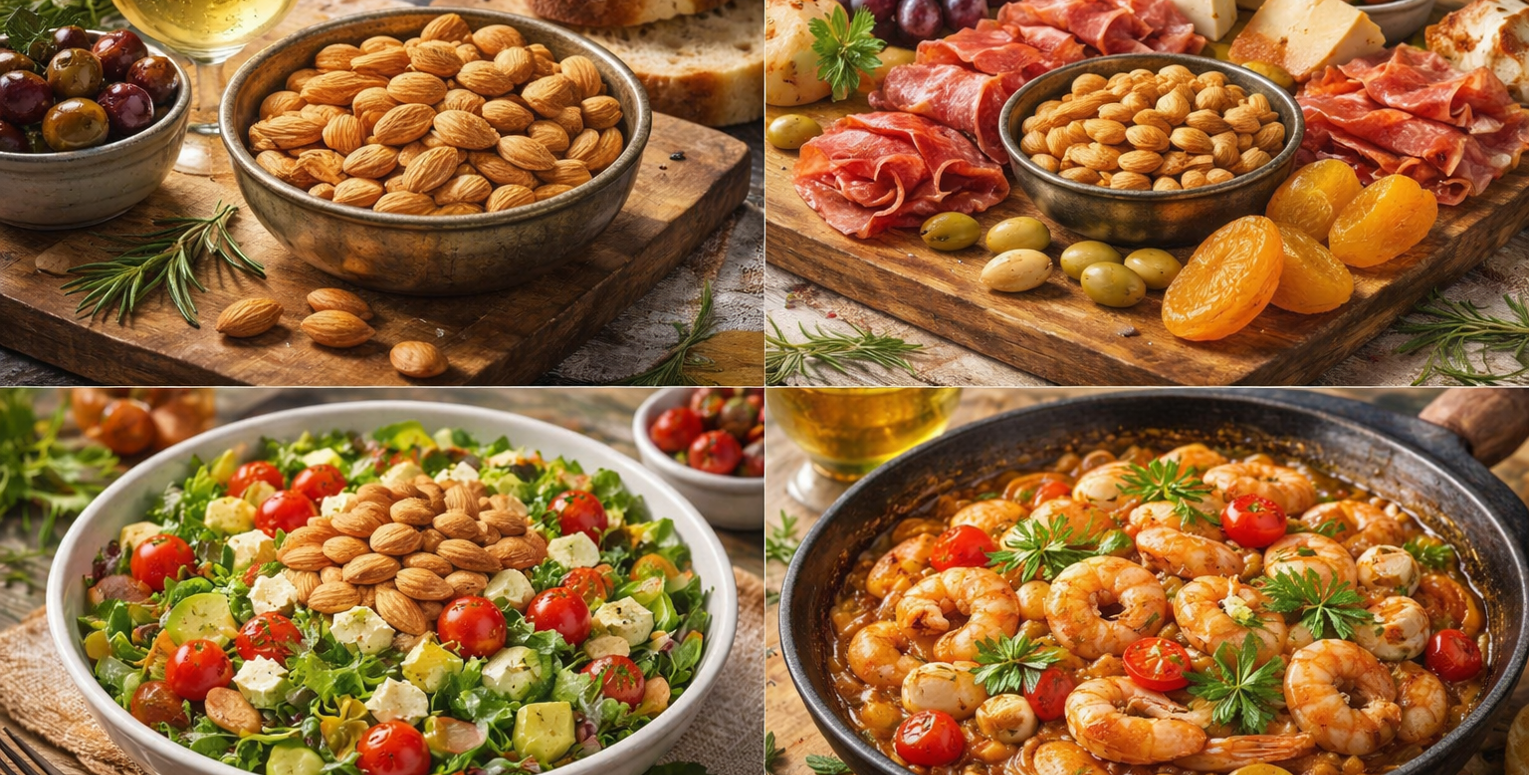
From orchard to kitchen
Almond trees have shaped the landscapes of Andalucía, Valencia, Murcia, and Catalonia for centuries. In Spain, Spanish Almonds are not a luxury ingredient but a working one — part of the everyday flavour grammar of soups, sauces, stews, sweets, and salads. Within this family, Marcona almonds hold a special place: shorter, rounder, and naturally sweeter than standard almonds, with a creamy texture that makes them feel almost like a cross between a nut and a piece of cheese.
Why Marcona tastes different
Most commercial almonds are bred for size and yield. Marcona is bred for flavour. It has lower tannin, higher natural sweetness, and a softer crunch, which is why Spaniards often serve it simply fried in olive oil with salt — no further adornment needed. When cooked, Marcona releases a gentle, buttery aroma rather than a dry, dusty nuttiness.
Almonds as a thickener
One of the most important culinary roles of almonds in Spain is as a natural thickener. In dishes like ajo blanco, romesco, and certain meat and fish sauces, ground almonds create body without flour or cream. They emulsify with olive oil, absorb liquid, and lend a silky texture while adding subtle sweetness.
Technique tip:
- Always toast almonds lightly before grinding. Heat wakes up their aroma and deepens flavour.
- Grind to a fine paste with garlic, bread, or vinegar depending on the recipe — this helps the sauce come together smoothly.
Cold soups and summer cooking
In Andalucía, almonds star in chilled dishes that define summer eating. Ajo blanco — a pale almond-and-garlic soup — is Spain’s elegant answer to gazpacho. Blended with bread, garlic, olive oil, vinegar, and cold water, it is refreshing, creamy, and savoury all at once, often topped with green grapes or melon.
Sauces with backbone
Romesco, the Catalan sauce of roasted peppers, tomatoes, garlic, and almonds, shows another side of the nut: earthy, smoky, and robust. Here almonds give weight to grilled vegetables, fish, or calçots (spring onions), preventing the sauce from feeling thin or sharp.
Crunch and contrast
Whole Marcona almonds are also used as texture rather than paste:
- Scattered over sautéed greens or roasted vegetables.
- Mixed into salads with citrus and olives.
- Paired with jamón or Manchego on a simple snack plate.
Their mild sweetness balances salt and acid beautifully.
In sweets and celebrations
Spanish desserts often feature almonds in cakes, turrón, polvorones, and marzipan (mazapán). Ground almonds provide tenderness and moisture, creating crumb that is rich without being heavy.
A simple kitchen rule
If you want a dish to taste “Spanish”:
- Use almonds for body,
- Marcona for snacking or finishing,
- And always combine them with olive oil, garlic, and vinegar — the classic triad that makes almonds sing.