
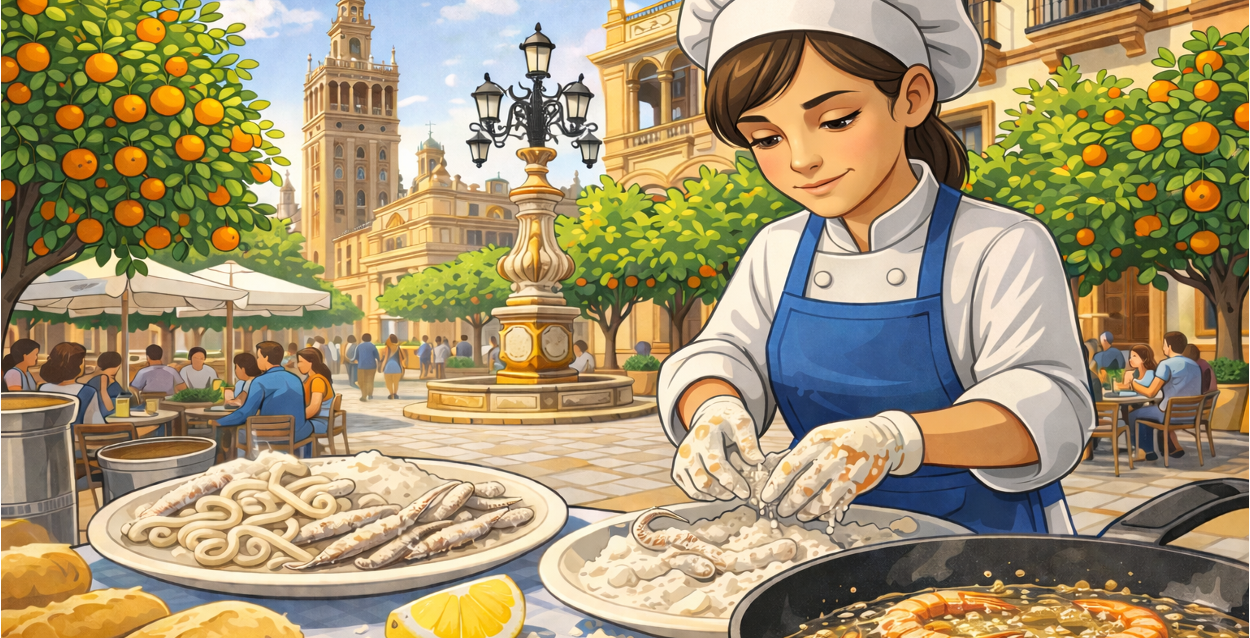
Andalusian frying culture reflects southern Spain’s relaxed but skilled approach to food. In Andalucía, frying is not about indulgence. Instead, cooks use it as a fast, respectful way to highlight fresh ingredients. As a result, fried food here feels crisp and light rather than greasy.
This tradition grew alongside daily life. People fry food confidently because they understand oil, timing, and balance.
Andalusian Frying Culture and Everyday Mediterranean Life
Andalusian frying culture developed naturally within a Mediterranean lifestyle. Olive oil has long shaped local cooking, so frying became a practical and familiar technique.
Because olive oil handles heat well, cooks learned to fry quickly and serve food immediately. As a result, ingredients keep their flavour and texture. Over time, frying became routine rather than special, which raised standards across homes and bars alike.
Frying here supports daily eating, not excess.
Fresh Ingredients Always Come First
Freshness guides every frying decision. Cooks choose ingredients that require very little preparation.
For example, anchovies, sardines, prawns, and baby squid fry in minutes. Meanwhile, vegetables like aubergines or peppers need only slicing before hitting the pan. Because the ingredients are fresh, the frying process enhances flavour instead of covering it.
This focus on freshness explains why the food tastes clean rather than heavy.
Why Light Coating Matters More Than Batter
Instead of thick batter, Andalusian cooks prefer restraint. They often dust fish lightly with flour rather than coating it fully.
This thin layer crisps quickly and protects the ingredient. At the same time, it avoids trapping oil. As a result, the food stays dry and crunchy instead of greasy.
By keeping coatings minimal, cooks allow the ingredient itself to remain the star.
The Andalusian Fried Food Tradition Relies on Olive Oil Skill
The Andalusian fried food tradition depends on understanding oil temperature. Cooks heat olive oil properly before adding food, which prevents excess absorption.
When the oil is hot enough, food fries fast and seals on the outside. Therefore, it stays moist inside. Skilled cooks watch timing closely, knowing that seconds matter.
Good oil and attention replace complicated techniques.
Seafood Shapes the Region’s Frying Style
Seafood defines much of Andalucía’s frying culture. Coastal towns serve pescaíto frito—small plates of fried fish meant for sharing.
Anchovies, red mullet, cuttlefish, and prawns appear simply fried and served with lemon. Because the seafood is fresh, no sauce is necessary. Instead, the flavour comes from the sea, the oil, and precise cooking.
These dishes feel casual, yet they require experience.
Why Fried Food Feels Light, Not Heavy
Although the food is fried, meals rarely feel overwhelming. The reason lies in balance.
People share dishes, eat slowly, and combine fried food with salads or bread. As a result, frying supports the meal rather than dominating it. Portion size also stays modest, which keeps eating comfortable.
This balance explains why fried food fits naturally into everyday life.
What Andalusian Frying Culture Teaches Home Cooks
Andalusian frying culture shows that technique matters more than ingredients. With fresh food, hot oil, and confidence, simple dishes become memorable.
Overall, the tradition proves that restraint, not excess, creates the best results.


