
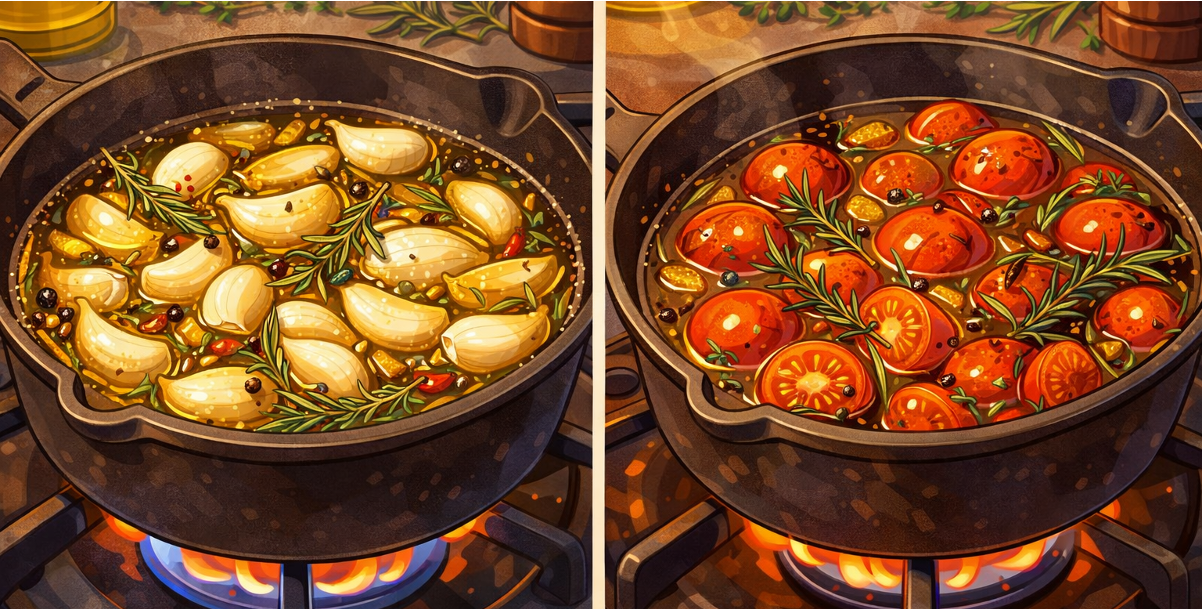
Confit in olive oil is a gentle cooking method that focuses on low heat, patience, and flavour. Instead of frying or roasting, ingredients cook slowly while fully submerged in oil. This approach softens food gradually and allows aromas to develop without sharpness or burning.
Although the technique sounds refined, it comes from practical home cooking. It values simplicity over speed and shows how time can transform even the most basic ingredients.
Confit in Olive Oil and Its Original Purpose
The confit method began as a way to preserve food before refrigeration. Cooks slowly cooked meat or vegetables in fat, then stored them covered to protect them from air.
In Mediterranean regions, olive oil replaced animal fat. It preserved food just as well while adding a cleaner, lighter flavour. Over time, cooks began to appreciate the texture and taste as much as the practicality, and the method became a culinary technique rather than a necessity.
Olive Oil Confit Relies on Gentle Heat
Low temperature is the most important rule when making olive oil confit. The oil should never bubble or sizzle.
Garlic cooked this way turns sweet and creamy instead of sharp. Tomatoes soften without collapsing. Fish stays moist and delicate. Because the heat stays low, flavours remain calm and rounded rather than aggressive.
This slow process allows ingredients to relax instead of tighten.
Why This Method Creates Such Tender Texture
One of the biggest strengths of confit cooking is texture. Slow heat breaks down fibres gradually, which keeps food soft but structured.
Vegetables hold their shape while becoming tender. Fish flakes easily without drying out. Even firmer ingredients soften without losing character. This balance makes the food satisfying without feeling heavy.
Simple Ingredients Work Best
This technique shines when ingredients are kept simple. Olive oil carries flavour well, so there is no need to overload dishes with seasoning.
Garlic, onions, mushrooms, peppers, tomatoes, and fish all respond beautifully. Herbs such as thyme or bay leaf add background aroma rather than dominance. With fewer elements involved, each ingredient stays clear and recognisable.
How Olive Oil Confit Is Used in Everyday Cooking
Confit dishes rarely stand alone. Instead, they become versatile components.
Soft garlic spreads easily on bread. Tomatoes lift pasta or salads. Fish can be flaked into grains or vegetables. Even the oil itself becomes infused and useful for dressings or cooking.
This flexibility makes the method practical as well as flavourful.
Why the Result Feels Rich but Balanced
Despite being cooked in oil, confit food does not taste greasy. Gentle heat prevents the oil from becoming heavy.
Because ingredients absorb flavour rather than fat, the final dish feels comforting instead of overwhelming. This balance suits lighter meals and warm climates especially well.
What This Technique Teaches About Cooking
Confit shows that patience often matters more than complexity. By controlling heat and respecting ingredients, cooks achieve depth without force.
That lesson applies far beyond olive oil confit and explains why traditional methods continue to influence modern kitchens.


