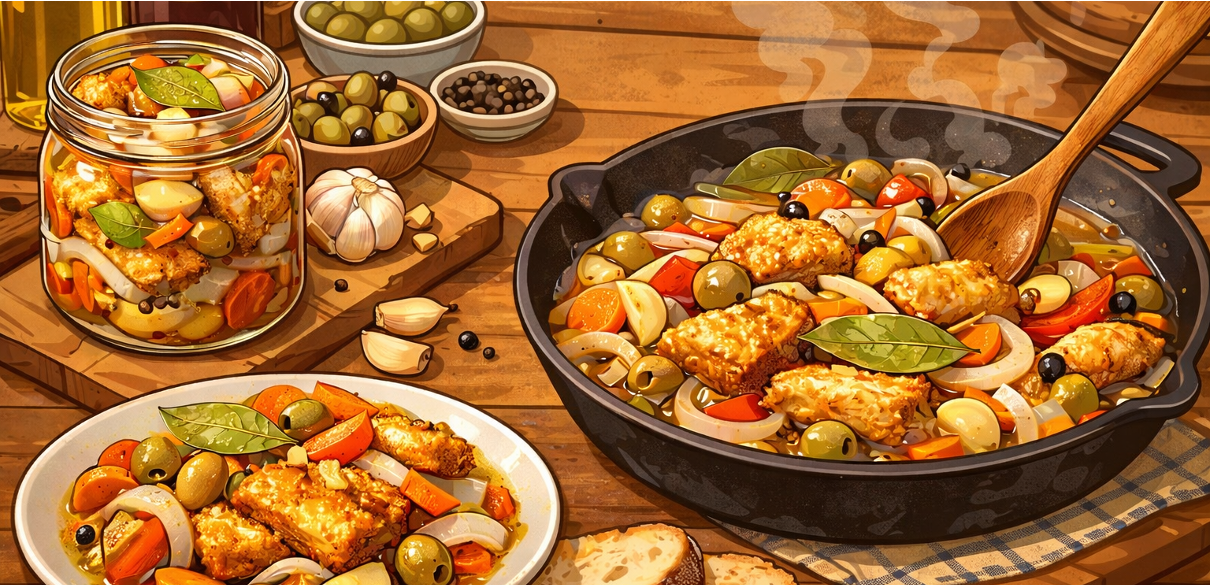
The escabeche technique is one of those traditional cooking methods that feels both old-fashioned and surprisingly modern. It uses vinegar, oil, and gentle spices to preserve food while building flavour at the same time. Although it began as a practical solution, today it is valued for the bright, balanced taste it creates.
Rather than relying on heat or heavy seasoning, escabeche focuses on contrast. Acidity, fat, and time work together to transform simple ingredients into something deeply satisfying.
Escabeche Technique and Its Historical Roots
The escabeche technique has deep roots in Mediterranean cooking, particularly in Spain. Before refrigeration, cooks needed reliable ways to keep food safe for longer periods.
They lightly fried fish or meat, then submerged it in a warm mixture of vinegar, olive oil, garlic, onions, and spices. As the food cooled, it absorbed flavour while the acidity slowed spoilage. Over time, what began as preservation became a culinary tradition.
This method spread across regions and cultures, each adding small variations.
The Vinegar Preservation Method That Builds Flavour
Unlike pickling, the vinegar preservation method used in escabeche does not overpower the food. Vinegar adds sharpness, but oil softens that edge, creating balance.
For example, fried sardines placed in escabeche become firm yet tender. The vinegar brightens the fish, while olive oil rounds the flavour. Garlic and bay leaf add aroma without taking control.
Because the food rests in the marinade, flavour deepens naturally instead of hitting all at once.
Why Escabeche Technique Is About Time, Not Speed
One of the most important ideas behind escabeche is patience. Although the dish can be eaten warm, it improves after resting.
As hours pass, the marinade penetrates the food evenly. The texture becomes smoother, and flavours blend into something calm and rounded. This slow transformation explains why escabeche often tastes better the next day.
Time does the work that extra seasoning never could.
The Vinegar Preservation Method Works Beyond Fish
While fish is the most common ingredient, the vinegar preservation method works beautifully with vegetables and meats too.
Chicken thighs cooked in escabeche stay juicy while gaining brightness. Mushrooms absorb the marinade quickly and become deeply savoury. Even vegetables like carrots or aubergines benefit from the balance of acidity and oil.
This flexibility makes escabeche technique useful far beyond traditional recipes.
How Escabeche Is Served in Everyday Cooking
Escabeche dishes are often served at room temperature or slightly chilled. This allows flavours to shine without being dulled by heat.
In Spain, escabeche frequently appears as a tapa or part of a shared meal. It pairs well with bread, salads, or simple sides. Because it keeps well, cooks often prepare it ahead of time.
That convenience adds to its lasting appeal.
Why Escabeche Technique Feels Light Yet Satisfying
Despite its rich flavour, escabeche never feels heavy. Vinegar keeps the dish lively, while oil provides comfort.
The result feels refreshing rather than filling. This balance suits warm weather and relaxed meals, where food should support conversation instead of demanding attention.
That lightness explains why escabeche remains popular even today.
What Escabeche Teaches About Traditional Cooking
Escabeche technique shows how traditional cooking values balance over excess. Instead of adding more ingredients, it uses contrast wisely.
By combining acidity, fat, and time, cooks create depth without complexity. That lesson applies to many styles of cooking, not just Spanish food.