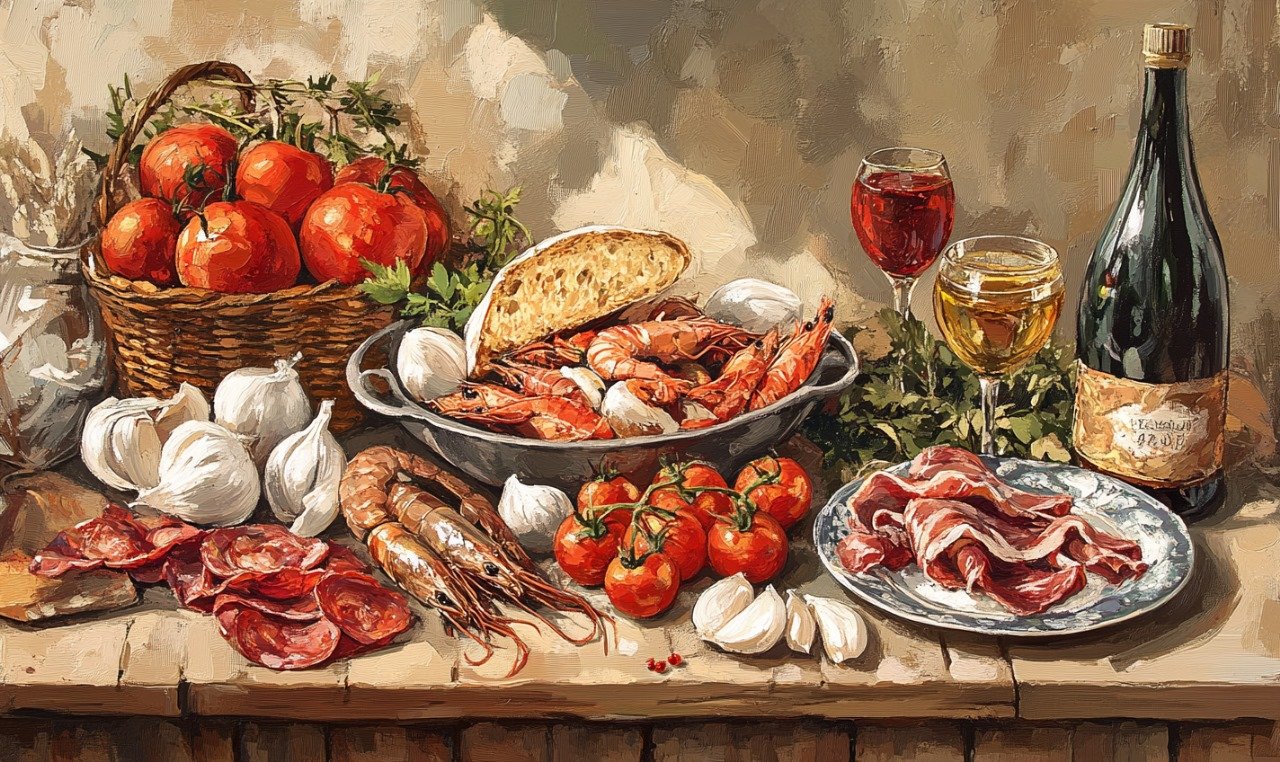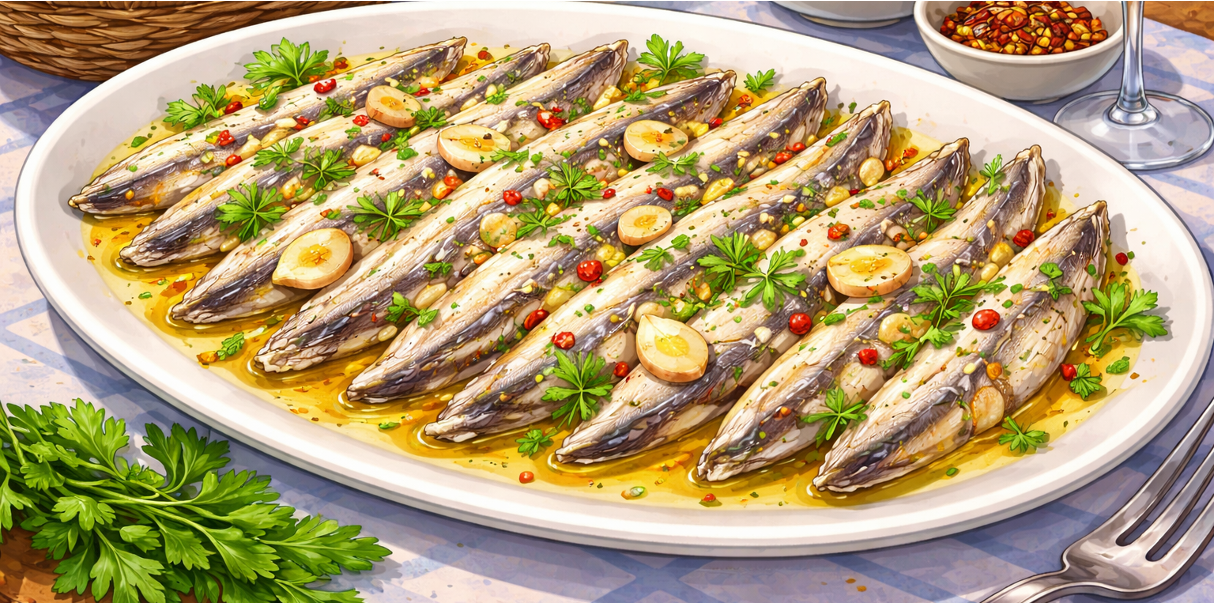
Boquerones en vinagre is one of Spain’s most loved tapas, especially along the coast. At first glance, it looks simple: pale anchovies, olive oil, and a hint of garlic. Yet behind this modest appearance lies a dish that reflects Spanish ideas about freshness, balance, and respect for ingredients.
Unlike heavily cooked seafood, this dish relies on acidity and time rather than heat. That gentle approach gives it a clean, refreshing taste that feels light but deeply satisfying.
Boquerones en Vinagre and Its Place in Spanish Food Culture
Boquerones en vinagre holds a special place in everyday Spanish eating. People often enjoy it as a tapa with bread, olives, or a cold drink, especially in warm weather.
In Spain, anchovies appear in many forms, but this version celebrates their freshness most clearly. Families prepare it at home, bars serve it as a staple, and recipes often pass down through generations. The dish fits naturally into relaxed meals where food supports conversation rather than stealing attention.
Marinated Anchovies Rely on Vinegar, Not Heat
Marinated anchovies differ from fried or grilled fish because they are never cooked over heat. Instead, vinegar transforms the raw fish.
Fresh anchovies are cleaned carefully, then soaked in vinegar. Over time, the acidity firms the flesh and turns it opaque. This process changes both texture and flavour, giving the fish a gentle bite and a clean, slightly tangy taste.
Because heat is not involved, freshness matters more than anything else.
Why Boquerones en Vinagre Taste So Clean and Light
One reason boquerones en vinagre feels so refreshing is its balance. The vinegar sharpens the fish, while olive oil softens that sharpness.
Garlic adds aroma rather than strength, and parsley brings a touch of freshness. Nothing dominates. Each ingredient supports the anchovies instead of masking them.
This balance explains why the dish feels satisfying without being heavy, even when eaten in generous portions.
Marinated Anchovies and the Importance of Texture
Texture plays a quiet but important role in marinated anchovies. The fish should feel firm but tender, never mushy or rubbery.
When prepared correctly, the anchovies hold their shape while melting slightly in the mouth. Olive oil coats them gently, creating a smooth finish that contrasts with the mild acidity of the vinegar.
That careful texture makes the dish enjoyable to eat slowly, bite by bite.
How Boquerones en Vinagre Are Usually Served
Boquerones en vinagre are typically served chilled, arranged neatly on a plate. Olive oil is added just before serving, often along with sliced garlic and chopped parsley.
People usually eat them with crusty bread, which soaks up the oil and vinegar. Some enjoy them alongside olives or roasted peppers, creating a simple but complete tapa spread.
Serving the dish cold enhances its freshness and makes it ideal for warm days.
Why This Dish Feels Traditional but Timeless
Although boquerones en vinagre has deep roots in Spanish tradition, it never feels outdated. Its simplicity suits modern tastes that value lighter, cleaner food.
The dish proves that you do not need complex techniques to create something memorable. Good ingredients, patience, and balance do the work.
That timeless quality explains why it remains popular across generations.
What Boquerones en Vinagre Teach About Spanish Cooking
This dish shows how Spanish cooking values restraint. Instead of adding more, it focuses on doing less, but doing it well.
By letting vinegar, oil, and time transform anchovies, the recipe highlights natural flavour rather than forcing it. That lesson applies far beyond tapas.