
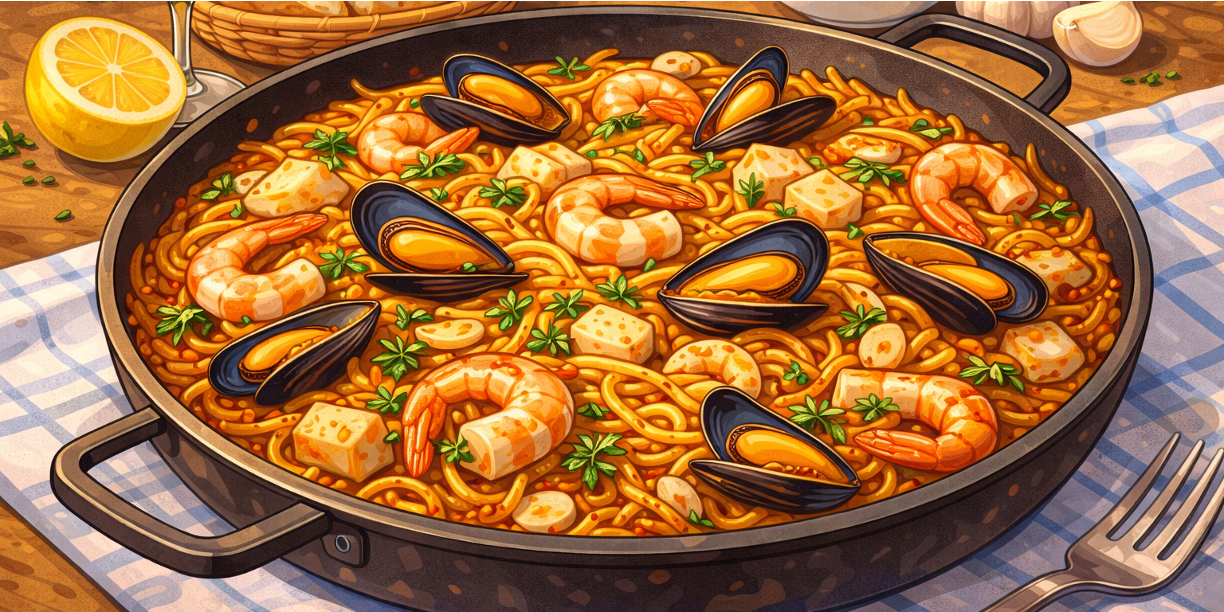
Fideuà comes from Spain’s Mediterranean coast and offers comfort without heaviness. At first glance, it may remind you of paella. However, instead of rice, this dish uses short noodles cooked in seafood stock. Because of this change, the texture feels lighter while the flavour remains deep and satisfying.
Although it looks rustic, fideuà feels carefully balanced. Each ingredient plays a clear role, which makes the dish approachable even for people new to Spanish food.
Fideuà and Its Origins Along the Valencian Coast
Fideuà began in fishing towns around Valencia, especially near Gandía. Fishermen often cooked meals directly on their boats, using whatever ingredients they had available.
According to local stories, rice once ran out, so cooks used noodles instead. As a result, a new dish took shape. The noodles absorbed the seafood stock beautifully, and the meal quickly became popular. Over time, families passed it down, and restaurants embraced it as a regional speciality.
The Spanish Noodle Paella Offers a Different Experience
Many people describe fideuà as a Spanish noodle paella. While the comparison helps, it does not tell the full story.
Unlike rice, noodles soften and curl as they cook. Because of this, each bite feels looser and more layered. The dish still delivers richness, yet it avoids the dense feel that rice can sometimes create. As a result, people often find it easier to eat generous portions without feeling weighed down.
How Fideuà Is Cooked in Traditional Kitchens
Cooks prepare fideuà in a wide, shallow pan, similar to paella. First, they toast the noodles briefly in olive oil. This step adds flavour and helps the noodles hold their shape later.
Next, they add seafood stock and let the dish cook without stirring. Meanwhile, the noodles absorb the liquid evenly. Towards the end, the base may turn lightly crisp, which adds texture without overpowering the softer noodles above.
Because of this method, the dish develops depth without constant attention.
Why Stock Matters More Than Anything Else
In fideuà, stock carries the entire dish. Since noodles taste neutral on their own, they rely on the liquid around them.
Cooks often simmer fish bones, shells, garlic, onions, and sometimes tomatoes to build flavour. As the noodles cook, they pull that savoury taste inside. Therefore, the dish tastes rich even though it uses only a few ingredients.
Good stock makes the difference between an ordinary plate and a memorable one.
How the Spanish Noodle Paella Is Served
People usually serve fideuà with allioli, a garlic mayonnaise common in eastern Spain. Instead of mixing it in, they add it at the table.
This approach allows everyone to adjust the flavour to taste. The creamy allioli softens the savoury noodles and adds freshness. As a result, each bite feels balanced rather than heavy.
Why Fideuà Feels Comforting but Not Heavy
Despite its bold flavour, fideuà feels surprisingly light. The noodles absorb stock instead of sitting in sauce, which keeps the dish clean and focused.
Moreover, seafood adds richness without overwhelming the plate. Because of this balance, fideuà works well for long meals shared with others, especially in warm weather.
What Fideuà Shows About Spanish Cooking
Fideuà shows how Spanish cooking values technique over complexity. By changing one ingredient, cooks create a completely different experience.
Overall, the dish proves that simple ideas, handled with care, often create the most satisfying food.


