
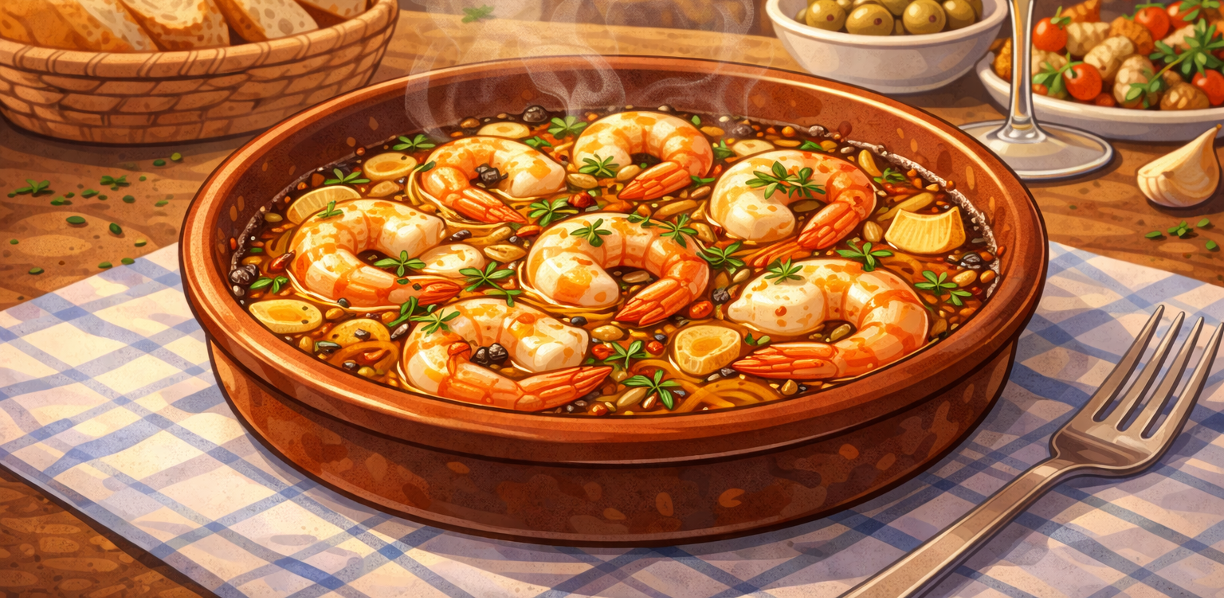
Few Spanish dishes feel as immediate and seductive as gambas al ajillo. Served sizzling in earthenware, bubbling with olive oil, garlic, and chili, it arrives at the table alive—aromatic, urgent, and impossible to ignore. The beauty of the dish is the way gambas is elevated by careful technique and restraint, especially when it comes to controlling the perfect gambas heat. Yet despite its dramatic presentation, gambas al ajillo is not about excess. It is about precision.
Understanding gambas al ajillo simplicity means understanding how Spanish cooking turns a handful of ingredients into something unforgettable through timing, heat, and restraint.
Why Gambas al Ajillo Exists
Gambas al ajillo belongs to Spain’s tapas culture, where food must cook quickly, taste boldly, and encourage conversation. The dish developed as a way to showcase excellent shrimp with minimal interference.
Garlic, olive oil, and chili were pantry staples. The shrimp cooked fast and pleased everyone. Together, they formed a dish that rewarded attention but punished carelessness.
The first time I tried to multitask while cooking gambas al ajillo, I overcooked the shrimp in seconds. The lesson came fast: this dish demands presence.
Shrimp Are the Star, Not the Oil
Although the dish swims in olive oil, gambas al ajillo is not an oil dish—it is a shrimp dish.
Spanish cooks choose fresh, sweet shrimp and keep them whole or lightly peeled. The oil supports flavor, but the shrimp define success. Overcooked shrimp turn rubbery and lose sweetness, and no amount of garlic can fix that.
This is why the cooking time remains brutally short.
Why Garlic Is Treated Gently
Garlic gives gambas al ajillo its name, but it must never dominate. Spanish cooks slice garlic thinly and cook it slowly in oil until fragrant, not brown.
Burnt garlic turns bitter instantly and ruins the dish. Properly cooked garlic perfumes the oil and disappears into the background.
I learned to watch garlic instead of the clock. When it smells sweet and nutty, it’s ready. One second later, it may not be.
Heat Control Is Everything
Gambas al ajillo relies on contrast between gentle and intense heat.
Garlic begins over low to medium heat. Shrimp hit the pan when the oil is hot but not smoking. The cooking window lasts less than a minute per side.
This sequence keeps flavors clean. Garlic blooms without burning. Shrimp cook through without tightening.
Heat is the main ingredient here.
Why Chili Adds Balance, Not Fire
Dried chili or chili flakes add warmth rather than aggression. They balance sweetness and fat.
Spanish cooking rarely chases heat for its own sake. Chili sharpens focus and keeps olive oil from feeling heavy.
Too much chili overwhelms the shrimp. Too little makes the dish flat.
Oil as Sauce and Memory
The olive oil in gambas al ajillo becomes sauce, seasoning, and memory all at once. It absorbs garlic, shrimp juices, and chili, turning into something greater than its parts.
Bread matters here. Without bread, half the dish disappears uneaten.
I always judge gambas al ajillo by the oil left behind. If I want to mop it up slowly, the dish worked.
Why Gambas al Ajillo Is Served Immediately
This dish waits for no one. Gambas al ajillo arrives straight from heat to table.
Cooling dulls aroma. Waiting tightens shrimp. Timing matters as much as seasoning.
In Spain, servers warn you: cuidado, está caliente. Be careful—it’s hot. That warning is part of the ritual.
What Gambas al Ajillo Teaches
Gambas al ajillo teaches respect for ingredients and limits. It shows how little room for error simplicity allows.
Once I stopped adding extras and focused on timing, the dish improved dramatically. Fewer decisions led to better results.
Spanish cooking often works this way: clarity replaces complication.
Classic Gambas al Ajillo Recipe
Ingredients
- 300 g large raw shrimp (gambas), peeled and deveined
- 6–8 garlic cloves, thinly sliced
- ½ cup good-quality Spanish olive oil
- ½ tsp dried chili flakes or 1 dried chili
- Salt, to taste
- Optional: chopped parsley
- Crusty bread, for serving
Method
- Pat shrimp dry and lightly season with salt.
- Heat olive oil in a small pan or earthenware dish over low-medium heat.
- Add garlic slices and chili. Cook gently until fragrant, never browned.
- Increase heat slightly and add shrimp in a single layer.
- Cook 30–45 seconds per side until just opaque.
- Remove from heat immediately.
- Taste and adjust salt. Add parsley if using.
- Serve at once, bubbling hot, with bread.
Tip
If garlic browns, start over. Gambas al ajillo allows no forgiveness.
Why Gambas al Ajillo Endures
Gambas al ajillo survives because it respects ingredients instead of disguising them. It relies on heat, timing, and confidence rather than tricks.
When done well, it tastes inevitable—as if no other version could exist.
And that is the mark of a dish that understands itself.


