
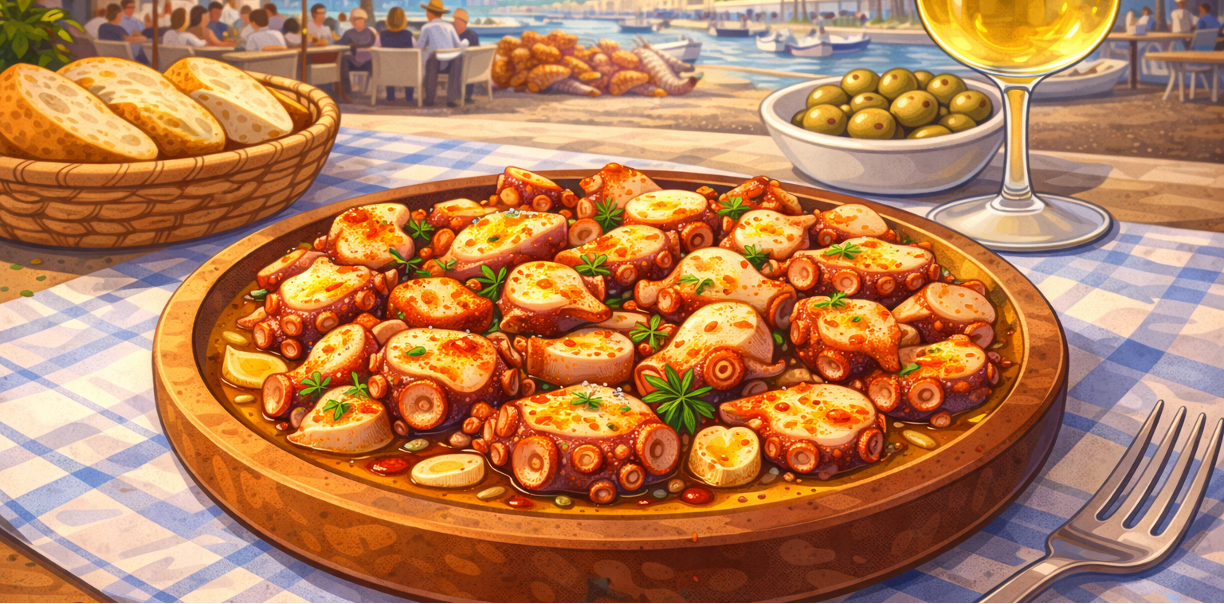
Few dishes look as simple as pulpo a la gallega, and few are as misunderstood. At first glance, it appears almost bare: octopus, olive oil, paprika, salt, and potatoes. Yet behind that simplicity sits deep technique and cultural memory. Pulpo cooking in Galicia is not about creativity or embellishment. It is about control, timing, and restraint.
Understanding pulpo a la gallegais cooking means understanding how Spanish cuisine achieves depth without complication.
Why Pulpo a la Gallega Exists
Pulpo a la gallega—also known as pulpo a feira—comes from northwestern Spain, where octopus fishing shaped coastal life. For centuries, octopus traveled inland to markets and fairs, preserved through drying and later rehydrated before cooking.
As a result, the dish developed around practicality rather than luxury. Ingredients remained minimal. Technique did the work.
When I first tasted pulpo a la gallega in Galicia, the lack of sauce surprised me. Then the texture and balance explained everything.
The Central Challenge: Texture
Octopus can turn rubbery in seconds. That reality defines how pulpo a la gallega cooking works.
Instead of fast heat or aggressive seasoning, Galician cooks focus on gentle transformation. The goal is tender flesh with a slight resistance—not softness, not chewiness.
Achieving that texture requires patience and precision rather than force.
Why Octopus Is Traditionally “Scared”
One of the most famous steps in pulpo a la gallegais cooking involves dipping the octopus into boiling water several times before submerging it fully. This process, often called “scaring” the octopus, tightens the skin and helps it cook evenly.
Whether the science matters less than the result. The flesh firms gently. The exterior stays intact. Texture improves.
I once skipped this step out of curiosity. The octopus cooked, but it lacked structure. Tradition existed for a reason.
Water, Not Flavor, Does the Cooking
Pulpo a la gallega cooking uses plain water—no salt, no aromatics, no acid. That choice feels counterintuitive.
However, octopus carries its own salinity and character. Adding seasoning early interferes with texture. Water allows the protein to relax gradually.
Seasoning comes later, where it belongs.
Timing Matters More Than Temperature
Galician cooks rarely rush octopus. Instead, they maintain a steady simmer and cook until tenderness develops naturally.
Fork tenderness—not time—signals readiness. Overcooking collapses texture. Undercooking resists the bite.
Learning to trust feel instead of the clock changed how I approached octopus entirely.
Why Potatoes Matter
Pulpo a la gallegais cooking always includes potatoes. They are not filler. They are balance.
Boiled potatoes absorb olive oil and paprika while softening octopus richness. They slow the palate and ground the dish.
Without potatoes, pulpo would feel sharp. With them, it feels complete.
Paprika and Olive Oil: Added at the End
Spanish paprika—often pimentón de la Vera—never cooks directly in this dish. Heat would turn it bitter.
Instead, paprika meets warm octopus and potatoes off the heat. Olive oil follows generously, carrying aroma and binding elements together.
That timing preserves clarity rather than muddling flavor.
Why Pulpo a la Gallega Avoids Sauce
Pulpo a la gallega cooking rejects sauce deliberately. Sauce would hide texture and distract from balance.
Every component remains visible. Nothing blends into something else.
This clarity reflects Galician culinary philosophy: ingredients speak for themselves when treated correctly.
Serving and Ritual Matter
Traditionally, pulpo a la gallega is served on wooden plates. That detail is not decorative. Wood absorbs excess moisture and heat, preserving texture.
The dish arrives warm, not hot. It invites slow eating and conversation.
That pacing matters as much as seasoning.
What Pulpo a la Gallega Teaches
Pulpo a la gallegais cooking teaches patience and trust. It shows how minimal ingredients demand maximum attention.
Once I stopped trying to “improve” the dish and focused on executing it cleanly, everything clicked. Flavor appeared without effort. Balance replaced adjustment.
Pulpo a la gallega does not impress through complexity. It impresses through discipline.
And when done well, it proves that restraint—handled correctly—can be more powerful than abundance.


