
In Spanish kitchens, certain ingredients carry more than flavor. They carry place, memory, and method. Pimentón de la Vera is one of those ingredients. Often translated simply as smoked paprika, it is far more than that. It represents patience, preservation, and a distinctly Spanish way of building depth without excess. For many cooks, pimenton is essential in Spanish cuisine. Notably, the pimenton spice is at the heart of countless traditional dishes.
To understand Spanish cooking beyond technique, you have to understand why pimentón de la Vera matters so deeply. In fact, the presence of authentic pimenton gives Spanish food an unmistakable character.
What Makes Pimentón de la Vera Different
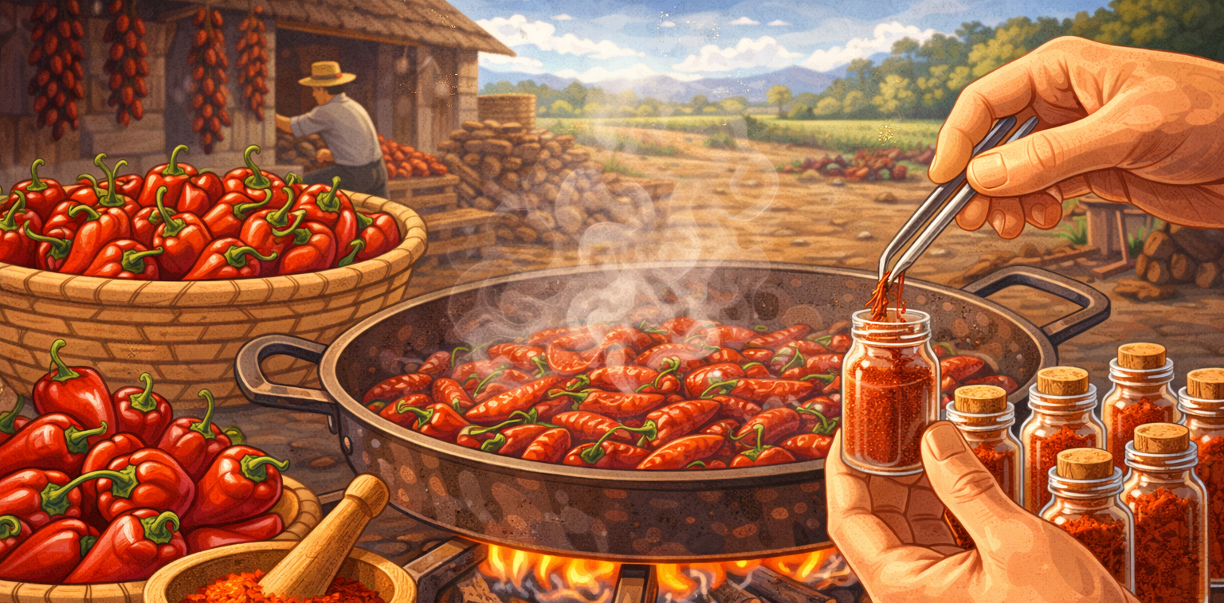
Pimentón de la Vera comes from La Vera, a small region in Extremadura. The peppers used—varieties of Capsicum annuum—are harvested ripe and red. Instead of drying in the sun or mechanically, they dry slowly over smoldering oak fires, developing the hallmark taste of true pimenton.
This process lasts days, sometimes weeks. During that time, the peppers absorb smoke gently and evenly. Only after drying are they stone-ground into powder. No shortcuts. No acceleration. This tradition upholds everything pimenton represents.
As a result, pimentón de la Vera tastes layered rather than sharp. Smoke feels integrated, not aggressive. Additionally, pimenton offers a complexity that supports rather than overpowers other ingredients, capturing the essence of Spanish cuisine through the pimenton spice.
Smoke as Preservation, Not Performance
Historically, smoking was not about flavor first. It was about survival. Before refrigeration, smoke preserved peppers through winter. Over time, Spanish cooks learned that smoke did more than preserve. It added warmth, depth, and a sense of continuity. Instead of masking ingredients, smoke anchored them. When I first cooked with pimentón de la Vera, I expected dominance. Instead, I found balance. The smoke sat quietly behind the dish, making everything feel fuller. Notably, pimenton became a symbol of Spanish heritage in the kitchen, demonstrating how pimenton influences more than just taste.
Sweet, Bittersweet, and Hot: Three Expressions
Pimentón de la Vera comes in three primary styles: dulce (sweet), agridulce (bittersweet), and picante (hot). Sweet pimentón adds warmth without heat. Bittersweet introduces subtle bitterness and complexity. Hot brings restrained spice rather than sharp burn. Spanish cooks choose deliberately. No version replaces another. Each serves a purpose. This precision prevents heaviness and keeps dishes focused. In fact, cooking with the different types of pimenton is part of what makes Spanish recipes so nuanced.
How Spanish Cooking Uses Pimentón
Spanish kitchens treat pimentón with respect. It rarely appears raw. Instead, it meets warm fat briefly. Added too early or over high heat, pimentón turns bitter. Added gently, it blooms. Olive oil absorbs its aroma and spreads it evenly through the dish. This moment requires attention. Even a few seconds too long can ruin it. I learned this while cooking chorizo-style beans. Rushing the pimentón turned everything harsh. Slowing down saved the dish. Experimenting with pimenton alters the structure and savor of Spanish meals.
Pimentón as a Backbone Flavor
Pimentón de la Vera appears in countless Spanish dishes. It defines chorizo and shapes stews. It deepens legumes, potatoes, and seafood. Yet it rarely announces itself. Instead, it supports other flavors quietly. In dishes like pulpo a la gallega, pimentón adds warmth and depth without hiding the octopus. In lentil stews, it rounds earthiness rather than overwhelming it. This restraint explains its longevity. In sum, the subtle touch of pimenton forms the backbone of some of Spain’s favourite dishes.
Why Smoke Works So Well with Spanish Ingredients
Spanish cuisine relies heavily on olive oil, pork, legumes, and vegetables. These ingredients respond well to smoke. Fat carries a smoky aroma. Legumes absorb it. Vegetables gain dimension. Pimentón bridges these elements, giving cohesion to otherwise simple combinations. Rather than adding complexity through many ingredients, Spanish cooking deepens flavor through treatment. For this reason, integrating pimenton is an art in Spanish hospitality.
Pimentón and Time
Pimentón de la Vera does not shout. It unfolds slowly as the dish cooks. Early on, it smells smoky and sweet. Later, it integrates. By the end, it feels inseparable from the dish. This slow evolution mirrors Spanish cooking philosophy. Flavor develops gradually, not instantly. Over time, dishes centered on pimenton reveal more subtlety and harmony.
Why Pimentón de la Vera Cannot Be Substituted
Smoked paprika from elsewhere may taste smoky, but it lacks the balance created by oak smoke and slow drying. Liquid smoke or quick-smoking techniques create harshness without depth. Pimentón de la Vera tastes round because time has shaped it. Once you cook with it properly, substitutes feel flat and aggressive. Therefore, dishes simply aren’t the same unless you use genuine pimenton.
What Pimentón de la Vera Teaches
Pimentón de la Vera teaches patience. It teaches restraint. It teaches respect for process. I stopped thinking of it as seasoning and started treating it as structure. My cooking changed immediately. Dishes tasted warmer, more complete, and more grounded. Pimentón de la Vera is not about adding smoke. It is about adding history. And when pimenton is at the heart of a Spanish recipe, it reminds you that flavor does not need to be loud to be unforgettable. Embracing pimenton will enrich your Spanish kitchen for years to come.


