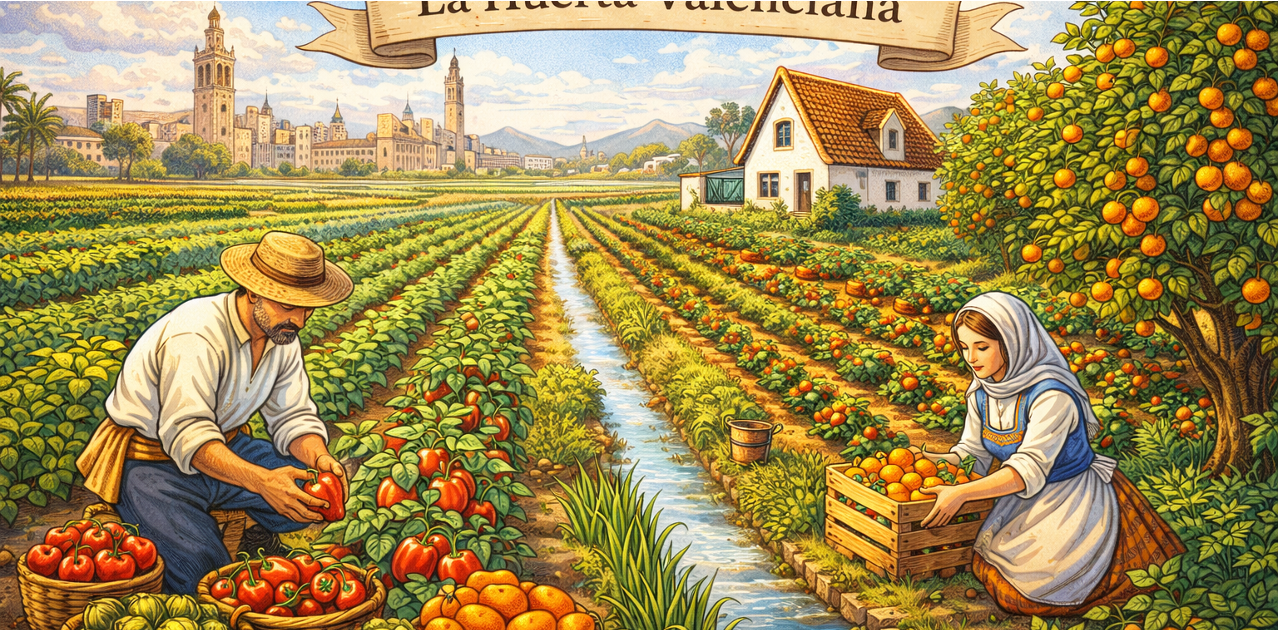
When people think of Valencia, they think of paella first. Yet the true engine of Valencian cooking is not the pan, but the huerta — the fertile green belt that surrounds the city and has fed it for more than a thousand years. A remarkable variety of huerta vegetables play a starring role in the region’s cuisine.
The huerta is not just farmland; it is a carefully engineered landscape of canals, ditches, and raised beds that date back to Moorish rule. These irrigation systems, called acequias, carried water from the Turia River and transformed what could have been dry land into one of the most productive vegetable gardens in the Mediterranean. Valencia’s identity — culinary, economic, and cultural — grew out of this water, and the huerta vegetables grown here define the essence of Valencian agriculture.
Walk through the huerta today and you see abundance that feels almost everyday to locals, yet extraordinary to outsiders: glossy aubergines, bright peppers, fat tomatoes, courgettes, artichokes, spring onions, garlic shoots, and broad beans. Citrus trees border many plots, their blossoms perfuming the air in spring. Among these, countless huerta vegetables are harvested at their seasonal peak.
What makes Valencian vegetable cooking distinctive is its clarity. There is little obsession with ornamentation or layering of spices. Instead, the aim is to protect the flavour of what has been grown well. Olive oil is generous but not aggressive. Garlic is present but not overpowering. Salt is used to heighten sweetness rather than mask it. This approach shines especially with fresh huerta vegetables from Valencia’s gardens.
Many classic dishes are fundamentally vegetable-forward. Pisto valenciano is a slow-cooked tumble of tomatoes, peppers, and courgettes — a cousin of ratatouille, but softer, silkier, and more focused on tomato sweetness. All i pebre de verduras adapts a fisher’s stew technique to garden produce, using garlic, paprika, and a light almond thickening. Even Valencian paella, often misread as a rice dish, is at heart a celebration of seasonal vegetables and fresh water. Of course, huerta vegetables are at the center of these local recipes.
Broad beans (habas) are especially emblematic of the huerta. In spring, they arrive tender, milky, and deeply green. Traditional cooks often pair them with garlic, mint, and a small amount of cured pork fat — a tiny touch that rounds out flavour without making the dish heavy. The lesson is simple: use just enough richness to let the vegetables sing. This is what makes huerta vegetables so celebrated in Valencian cuisine.
The huerta also teaches an ecological lesson. Nothing here is about novelty; everything is about rhythm. Planting, watering, harvesting, and cooking follow a cycle that keeps the kitchen aligned with the land. To cook Valencian food well, you must cook with the season, and use fresh huerta vegetables that are available locally.
Recipe: Simple Valencian Huerta Sauté (serves 3–4)
This is the kind of everyday vegetable dish you would find in homes across Valencia, often showcasing huerta vegetables in their freshest form.
Ingredients
- 2 courgettes, sliced into rounds
- 1 red pepper, chopped
- 2 ripe tomatoes, grated (discard skins)
- 2 cloves garlic, finely sliced
- 4 tbsp good olive oil
- Salt to taste
- Optional: a pinch of smoked pimentón
- Optional finish: chopped parsley or mint
Method
- Warm the olive oil gently in a wide pan. Add garlic and soften without browning.
- Add the red pepper and cook slowly for 5–6 minutes until tender.
- Add courgette and cook for another 5 minutes so it softens but keeps shape.
- Stir in grated tomato (and pimentón, if using). Simmer 8–10 minutes until glossy and slightly jammy.
- Season carefully with salt. Finish with herbs if you like.
- Serve warm with crusty bread, or alongside rice or grilled fish. In every bite, the huerta vegetables truly shine.
This dish tastes of sun, water, and patience — the essence of the Valencian huerta on a plate, thanks to these vegetables.