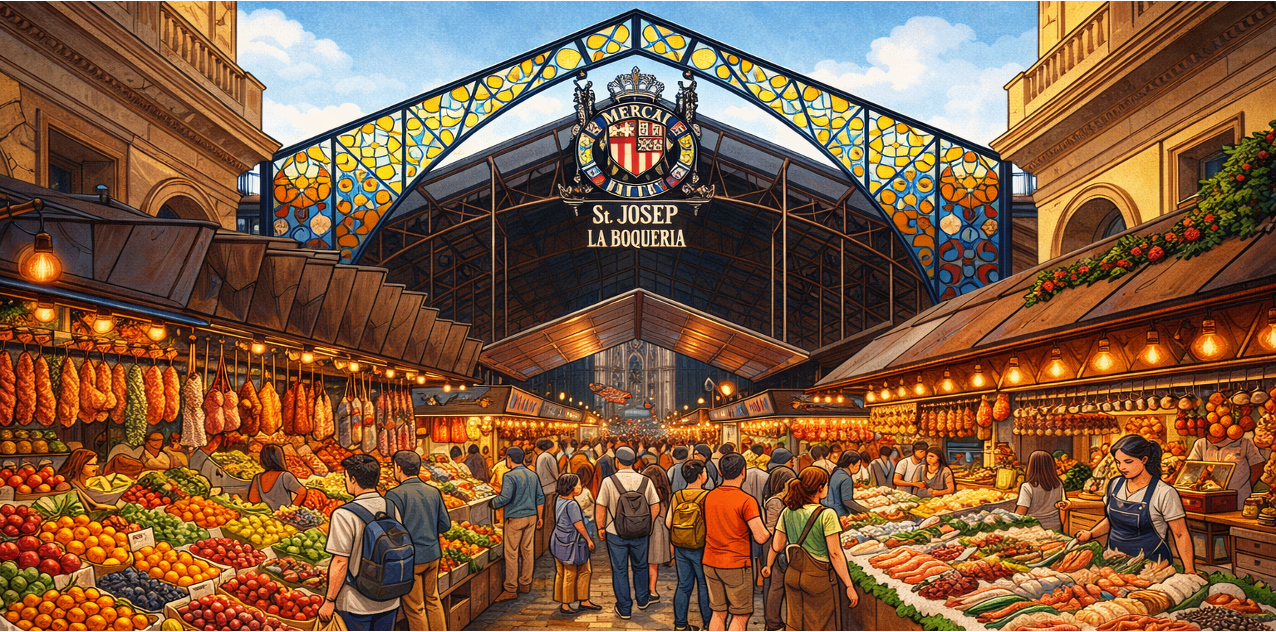
To understand Spain through food, you do not begin in a restaurant — you begin in a mercado. Spanish market culture is at the heart of daily life here. Spanish markets are not merely places of transaction; they are theatres of daily life, where taste, memory, language, and community intersect. They are noisy, generous, argumentative, intimate, and endlessly instructive. A walk through a market is a crash course in Spanish cooking philosophy.
At the heart of every mercado is relationship. Spaniards rarely shop anonymously. You greet the stallholder. You ask questions. You taste. You negotiate. You trust. “¿Está dulce hoy?” — Is it sweet today? — is a question you hear constantly at fruit stalls, because flavour changes with season, weather, and harvest. The market teaches cooks to think less in recipes and more in ingredients: what is good today becomes tonight’s meal.
Markets also structure Spanish eating habits. Most households historically shopped little and often, buying fresh fish in the morning, vegetables at midday, and bread in the afternoon. This rhythm keeps cooking responsive rather than rigid. Menus grow out of what is beautiful on the stall that day, not from what is pre-planned in a notebook.
Equally important is seasonality. Spanish markets make season visible. In spring you see broad beans and tender garlic shoots; in summer, mountains of tomatoes, peppers, and peaches; in autumn, wild mushrooms and quince; in winter, citrus and hearty greens. To cook like a Spaniard is to surrender to this cycle.
Three markets, in particular, capture this culture in different ways.
Mercat de la Boqueria — Barcelona
La Boqueria is perhaps the most famous market in Spain — and one of the most theatrical. Beneath its iron roof, colour erupts everywhere: crimson tuna, glossy aubergines, neon juices, and towers of jamón. But beyond the spectacle lies a working market with deep roots in Catalan food culture.
Here you learn about Mediterranean abundance. Fish stalls display everything from sardines to razor clams; olive sellers offer dozens of varieties; charcuterie counters showcase fuet, butifarra, and long hams from Teruel. Many locals still come for their daily shop, weaving through tourists with surgical precision.
La Boqueria also shows how markets evolve. Alongside traditional vendors are tiny counter kitchens serving oysters, grilled prawns, or quick bowls of paella — a living bridge between market and restaurant.
Mercado Central de Valencia — Valencia
If La Boqueria is theatrical, Mercado Central de Valencia is monumental. Housed in a breathtaking modernist building of stained glass and iron, it feels like a cathedral to produce.
This market reflects the city’s agricultural identity — the huerta that surrounds Valencia. Stalls overflow with tomatoes, artichokes, courgettes, peppers, and, above all, citrus. You can almost taste paella in the air.
What makes this market special is its clarity. You see exactly where Valencian cooking comes from: rice, vegetables, olive oil, and seafood. Butchers sell rabbit and chicken for traditional paella; fishmongers display prawns and cuttlefish; vegetable sellers champion freshness over variety. The message is simple: great cooking begins with great ingredients.
Mercado de San Miguel — Madrid
Mercado de San Miguel is less of a traditional market and more of a historic food hall — but no less important to understanding modern Spain. Under a beautiful glass pavilion, you find wine bars, tapas counters, oyster stations, and pastry stalls.
This market reveals how Spanish food culture adapts to contemporary life. It is social rather than domestic: people come to drink vermouth, nibble jamón, and move from stall to stall. It is about conversation, grazing, and celebration.
Yet tradition remains central. You can taste acorn-fed jamón, artisan cheeses, classic gildas (anchovy, olive, and piparra), and top-quality seafood. San Miguel shows how markets can be both heritage and nightlife.