
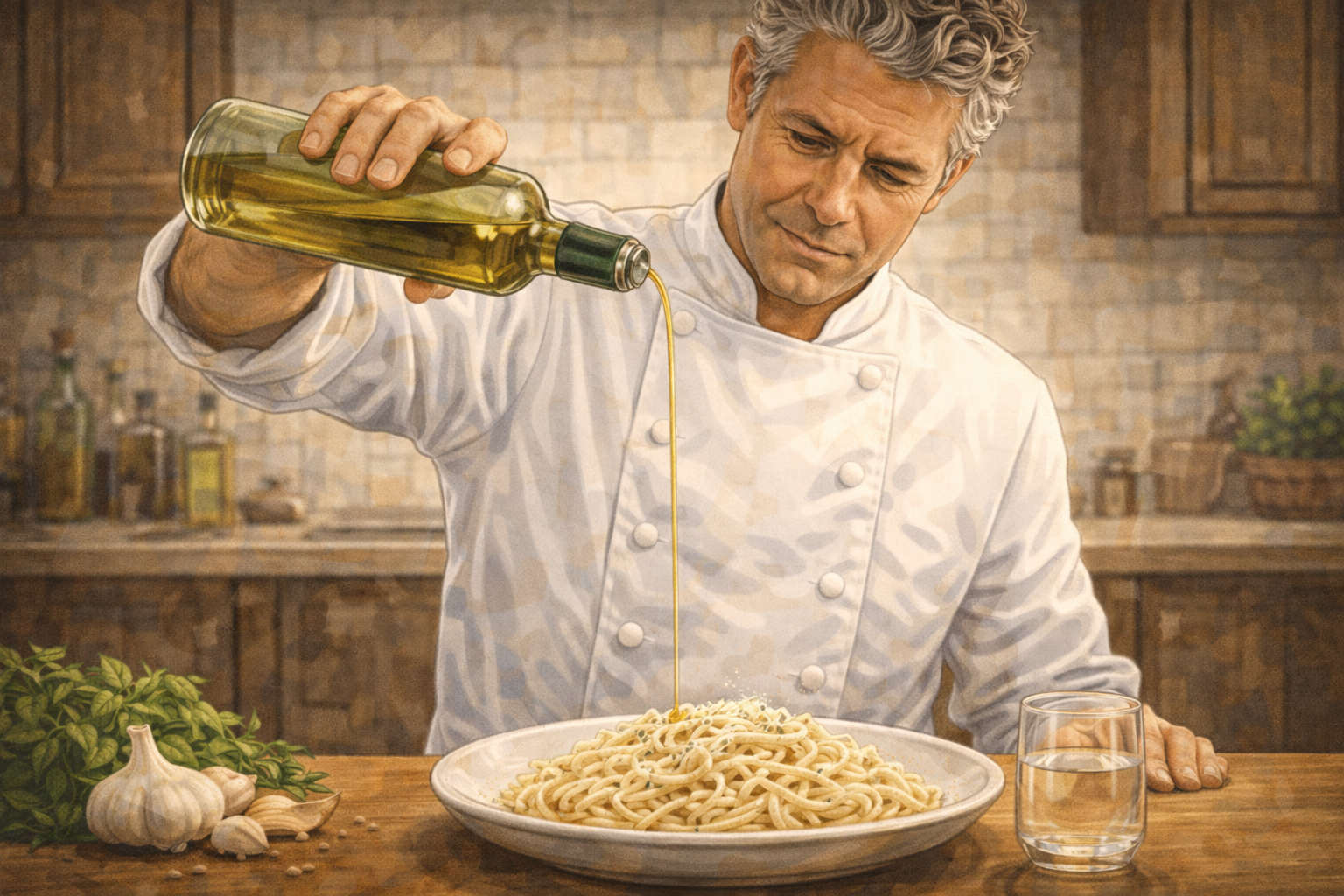
If you’ve ever tasted a dish that felt flat even though it was well cooked, the missing piece may have been oil added at the end. Understanding why finishing oil matters can quietly transform everyday cooking. It’s not about making food greasy. It’s about aroma, balance, and how flavour reaches your senses.
Finishing oil is the oil drizzled over a dish just before serving, not the oil used for cooking. That small step often separates good food from memorable food.
Why Finishing Oil Matters for Flavour and Aroma
One major reason why finishing oil matters is aroma. When oil is heated for cooking, some of its delicate flavours fade. Finishing oil, added off heat, keeps those flavours alive.
For example, a drizzle of olive oil over hot soup releases a fresh, fruity aroma that hits your nose before the first bite. That smell prepares your palate and makes the food taste richer, even though nothing else changed.
This is why chefs often finish pasta, vegetables, or grilled meat with oil instead of mixing everything in earlier.
The Importance of Finishing Oil for Texture and Mouthfeel
The importance of finishing oil also shows up in texture. Oil coats food lightly, giving it a smoother, silkier mouthfeel. This doesn’t mean the dish becomes oily. It simply feels more complete.
Think of roasted vegetables. They may be perfectly cooked, but a light drizzle of oil at the end adds softness and shine. Without it, the vegetables can feel dry on the tongue, even if they’re flavourful.
That final touch helps ingredients come together instead of tasting separate.
Why Finishing Oil Matters More Than Extra Seasoning
Many people reach for more salt when food tastes dull. Often, what the dish really needs is finishing oil. Oil carries flavour across the tongue, helping salt, herbs, and spices register more clearly.
A bowl of lentils, for example, may taste bland even after seasoning. Add a small spoon of olive oil or chili oil at the end, and suddenly everything tastes brighter and fuller.
This is why finishing oil matters more than piling on extra spices or salt.
Different Oils Create Different Final Flavours
Not all finishing oils taste the same, and that’s part of the magic. Olive oil adds fruitiness, nuttiness, or peppery notes depending on the variety. Sesame oil adds warmth and depth. Chilli oil brings heat and aroma.
Using finishing oil allows you to adjust flavour without changing the dish itself. A simple tomato soup can feel Italian with olive oil or Asian-inspired with sesame oil.
That flexibility is another reason the importance of finishing oil is often underestimated in home cooking.
Why Finishing Oil Matters in Simple Dishes Most
Finishing oil shines most in simple food. Pasta, grilled vegetables, eggs, beans, and soups benefit immediately from a final drizzle.
In complex dishes with many sauces, finishing oil still helps, but its effect is clearest when ingredients are few. That’s why traditional cuisines often rely on finishing oil instead of heavy sauces.
Simple food leaves more room for oil to speak.
How to Use Finishing Oil Without Overdoing It
Finishing oil should be used lightly. A teaspoon or two is usually enough. The goal is not shine alone, but aroma and balance.
Add it just before serving, while the food is still warm. Heat helps release aroma, but direct cooking dulls it. This timing is exactly why finishing oil matters so much.
A Small Step That Makes Food Feel Complete
Once you understand the importance of finishing oil, cooking starts to feel easier. Instead of fixing food with more ingredients, you learn to finish it gently.
That final drizzle is often the difference between “good” and “wow.”


