Starch is rarely celebrated in cooking. It has no aroma to announce itself, no color to catch the eye, and no distinct flavor of its own. Yet in Italian cooking, understanding the role of starch quietly determines whether a sauce feels thin or cohesive, greasy or silky, unfinished or complete. It is not added for show. It is released, guided, and controlled.
Once you understand the role of starch, sauces stop feeling like accidents. They become something you can shape with intention.
Starch Is Structure, Not Just Thickness
Most people associate starch with thickening. While that is true, it only tells part of the story. In Italian cooking, starch is valued less for how thick it makes a sauce and more for how it binds.
Starch allows fat and water to coexist. It keeps oil from separating and liquid from running away. Instead of floating on the surface or pooling at the bottom of a plate, the sauce holds together.
I noticed this the first time a sauce suddenly “came together” without adding anything new. The texture shifted. The sauce stopped sliding and started clinging. That moment was starch doing its quiet work.
Pasta Water: The Most Overlooked Ingredient
Pasta water is the primary source of starch in Italian sauces. As pasta cooks, it releases starch into the water, turning it cloudy and slightly viscous. That cloudiness is not waste—it is opportunity.
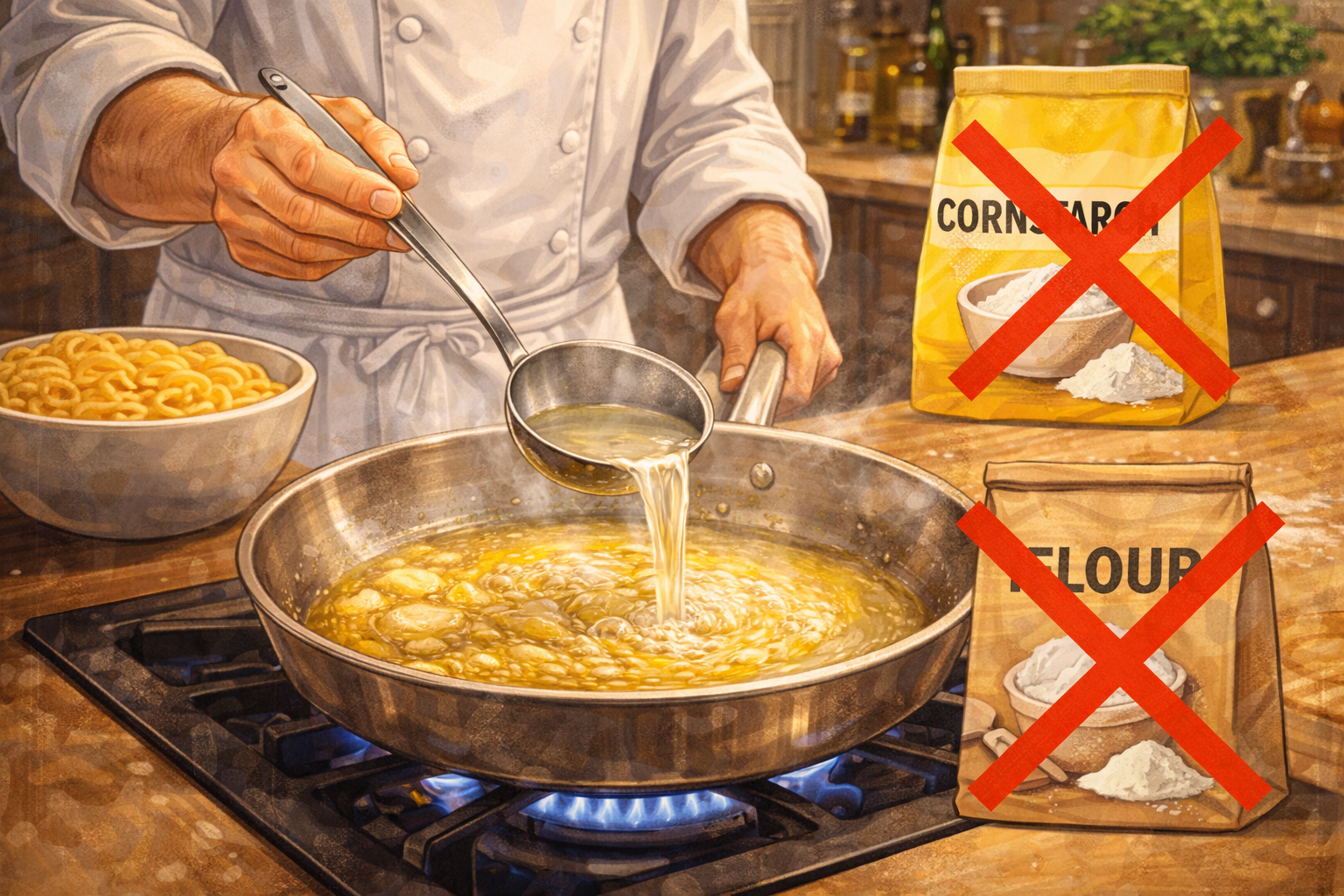
When added gradually to a sauce, pasta water creates cohesion. It thickens gently, emulsifies fat, and helps sauce adhere to pasta. This is why Italian sauces feel silky rather than oily.
Once I stopped pouring pasta water down the sink and started treating it like an ingredient, my sauces changed completely. They felt calmer, more controlled, and more intentional.
Why Italian Cooking Avoids Heavy Thickeners
Italian cooking rarely relies on flour, cornstarch, or roux to thicken sauces. These methods work, but they often mute flavor and add heaviness.
Instead, Italian cooks trust starch already present in the dish—whether from pasta, rice, or vegetables. This keeps flavors clear and textures light.
I once thickened a sauce with flour out of habit. It looked right, but it tasted dull. The same sauce thickened with pasta water tasted alive. That difference was clarity versus coverage.
Starch and Emulsification Belong Together
Starch plays a critical role in emulsification in Italian Cooking. When oil and water meet, they naturally want to separate. Starch acts as a mediator.
With gentle heat and constant movement, starch coats fat droplets and holds them in suspension. This is why tossing pasta in sauce matters so much. Stirring and shaking encourage starch to do its job.
Without starch, oil floats. With starch, sauce becomes silk.
Risotto Shows Starch at Its Purest
Risotto offers the clearest example of starch’s power. Arborio and Carnaroli rice release surface starch when stirred, thickening broth gradually.
No cream is needed. Texture comes from motion, time, and attention.
This same principle—releasing starch through technique rather than adding it—runs through Italian cooking at every level.
Timing Is Everything
Starch responds to timing. Added too quickly, it becomes gluey. Added too late, it fails to bind.
Italian cooks add pasta water a little at a time, watching how the sauce responds. They taste, adjust, and wait. Starch rewards patience.
Once you begin paying attention to this rhythm, cooking becomes less frantic and more responsive.
Why Starch Makes Food Feel Complete
Starch creates mouthfeel. It gives sauces weight without heaviness and richness without excess fat.
When I stopped fixing thin sauces with more oil or cheese and started adjusting starch instead, my cooking became quieter and more balanced.
Starch does not demand attention. It supports everything else. And in Italian cooking, that quiet support is what makes a sauce feel finished, intentional, and deeply satisfying.