
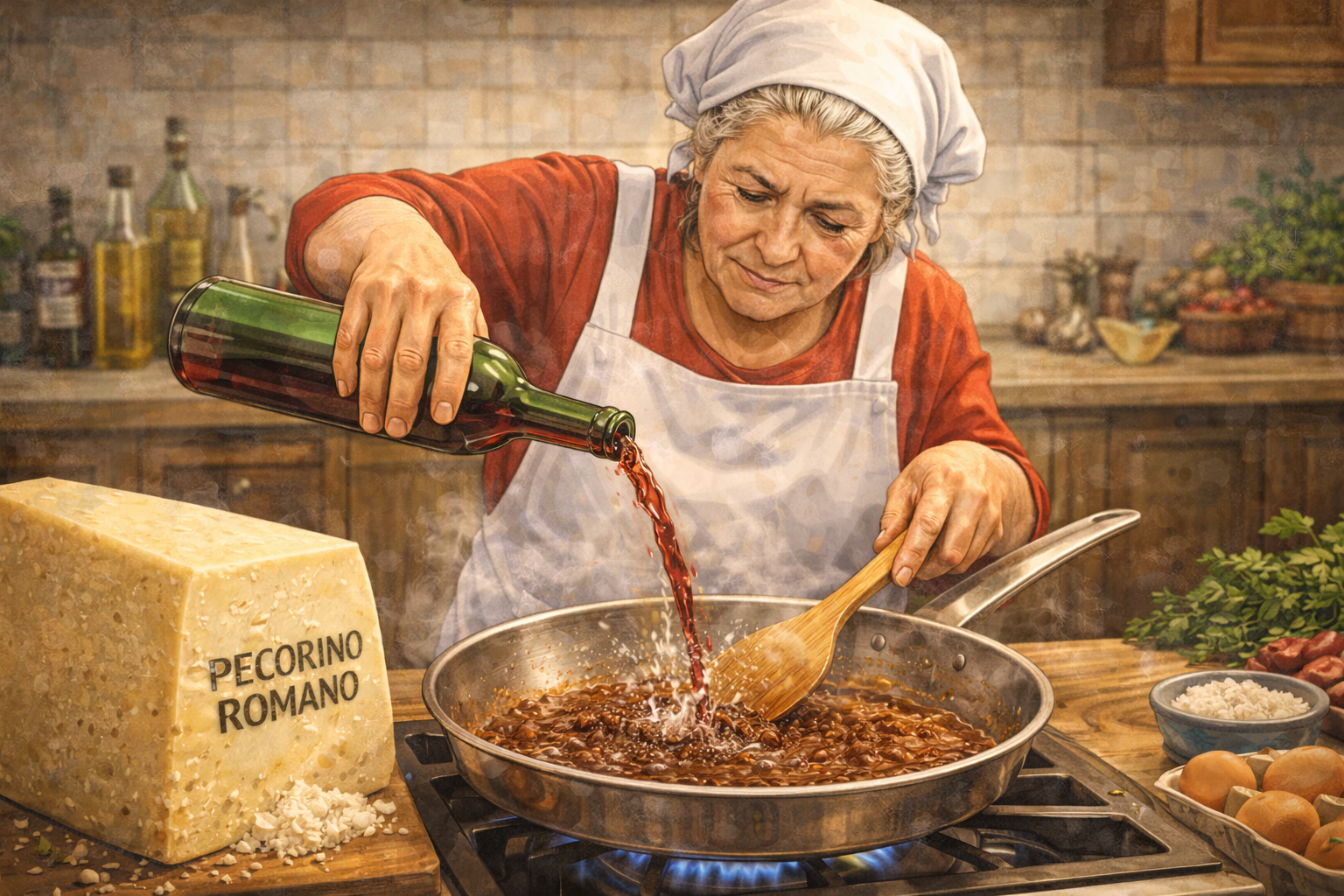
Deglazing often sounds like a technical maneuver—pour liquid into a hot pan, scrape, move on. In Italian kitchens, however, the application of techniques for deglazing isn’t treated as a fix or a flourish. It is treated as continuity. Flavor does not reset between steps; it accumulates. What clings to the pan belongs in the dish, and deglazing techniques help ensure this.
Understanding how Italians deglaze reveals a deeper way of thinking about cooking—one rooted in respect, sequence, and restraint. Above all, carrying flavor forward relies on the use of techniques, such as deglazing, that preserve ingredients’ profiles.
Deglazing Is About Carrying Flavor Forward
In Italian cooking, deglazing is rarely dramatic. There is no rush to create dark crusts or aggressive fond. Instead, flavor develops gently through soffritto, aromatics, and rendered fats; the underlying deglazing techniques contribute quietly to the flavor-building process.
Deglazing simply gathers what has already formed. It dissolves concentrated flavor and redistributes it evenly. Nothing is rescued. Nothing is scraped aggressively. With thoughtful deglazing, these techniques allow the pan to give back its flavors.
I noticed this shift when I stopped waiting for “enough browning” before deglazing. Italian pans rarely look scorched. They look seasoned, glossy, and alive, thanks in part to subtle and effective deglazing techniques.
Why Italian Cooking Deglazes Gently
Italian cuisine prioritizes clarity. Heavy browning introduces bitterness and dominates delicate ingredients. As a result, Italian cooks deglaze early and softly with techniques refined over generations.
A splash of wine, a ladle of broth, or even a bit of water loosens flavor without shocking it. These deglazing techniques ensure liquid integrates smoothly instead of tearing flavor away from the pan.
This gentleness preserves balance and keeps the dish focused. Masterful deglazing techniques allow cooks to create harmony in their recipes.
Wine as a Tool, Not a Statement
Wine is one of the most common deglazing liquids in Italian cooking, but it is used carefully. These techniques focus more on supporting other flavors than on making wine the feature.
Added after aromatics soften, the wine dissolves sugars and aromatic compounds stuck to the pan. The alcohol cooks off quickly, leaving acidity and aroma behind. Through meticulous deglazing techniques, structure is built in the dish without an overpowering “wine flavor.”
I once added wine too early, before the onions softened. The dish tasted sharp and hollow. Waiting for the right moment transformed everything—and that is one of the key deglazing techniques that Italian cooks teach us. Timing matters more than quantity.
White wine brightens vegetables, seafood, and lighter sauces. Red wine deepens meat-based dishes. Whether you’re using white or red, relying on reduction and proper deglazing techniques yields the best result.
Broth, Water, and Pasta Water
Italian cooks deglaze with whatever the dish needs, not with what looks impressive. They match the techniques to the circumstance, especially when deglazing.
Plain water dissolves flavor without changing direction. Broth adds subtle depth. Pasta water contributes starch, helping sauces emulsify and cling; each of these are examples of deglazing techniques adapted to the context.
This flexibility reflects Italian cooking’s practicality. Deglazing is not about adding new flavor—it is about revealing what is already there, often through clever and restrained techniques.
I learned this while making beans. A splash of water lifted the soffritto perfectly. Broth would have muddied it, so the choice of deglazing techniques mattered.
Deglazing as Layering, Not Correction
In some kitchens, deglazing fixes a mistake. In Italian kitchens, the techniques involved in deglazing actually build a story rather than provide a correction.
Wine dissolves aromatics. Broth carries them forward. Fat binds them. Each step connects to the next, showing the layering possible through deglazing techniques.
When I began deglazing my soffritto before adding tomatoes, the sauces tasted rounder and more cohesive. The dish felt intentional rather than assembled, due to a careful use of Italian deglazing techniques.
Deglazing links steps into a single movement and is best understood by learning proper techniques, including mindful deglazing techniques.
When Not to Deglaze
Not every dry pan needs liquid. Italian cooks rely on judgement, choosing when to use deglazing techniques only if flavor concentrates at the right stage.
If the pan smells sweet and aromatic, it may be time. If it smells harsh or empty, it may be too late. This judgment is at the heart of effective deglazing techniques and comes from experience.
Deglazing is instinctive, not prescribed, and the techniques vary in Italian cuisine depending upon the needs of the moment.
What Deglazing Teaches You About Cooking
Deglazing trains awareness. It forces you to notice aroma, texture, and timing. These observations become second nature as you learn the best deglazing techniques within Italian cooking.
Once you understand this, cooking becomes quieter and more confident. You stop forcing flavor and start guiding it with mastery of key deglazing techniques.
In Italian kitchens, the pan remembers every step. Deglazing simply listens—and makes sure nothing meaningful is left behind, especially with well-practiced deglazing techniques.


