
Why Pasta Shape Matters More Than You Think
Why pasta shape matters is often overlooked in everyday cooking. Pasta is usually treated as a neutral base, yet in Italian cuisine, shape plays a crucial role in how a dish tastes and feels. Each pasta shape is designed to interact with sauce in a specific way. When the pairing is wrong, even a well-made sauce can feel unbalanced.
Because of this, understanding why pasta shape matters helps you cook with more intention. It explains why certain combinations feel natural while others fall flat.
How Pasta Shape Affects Sauce
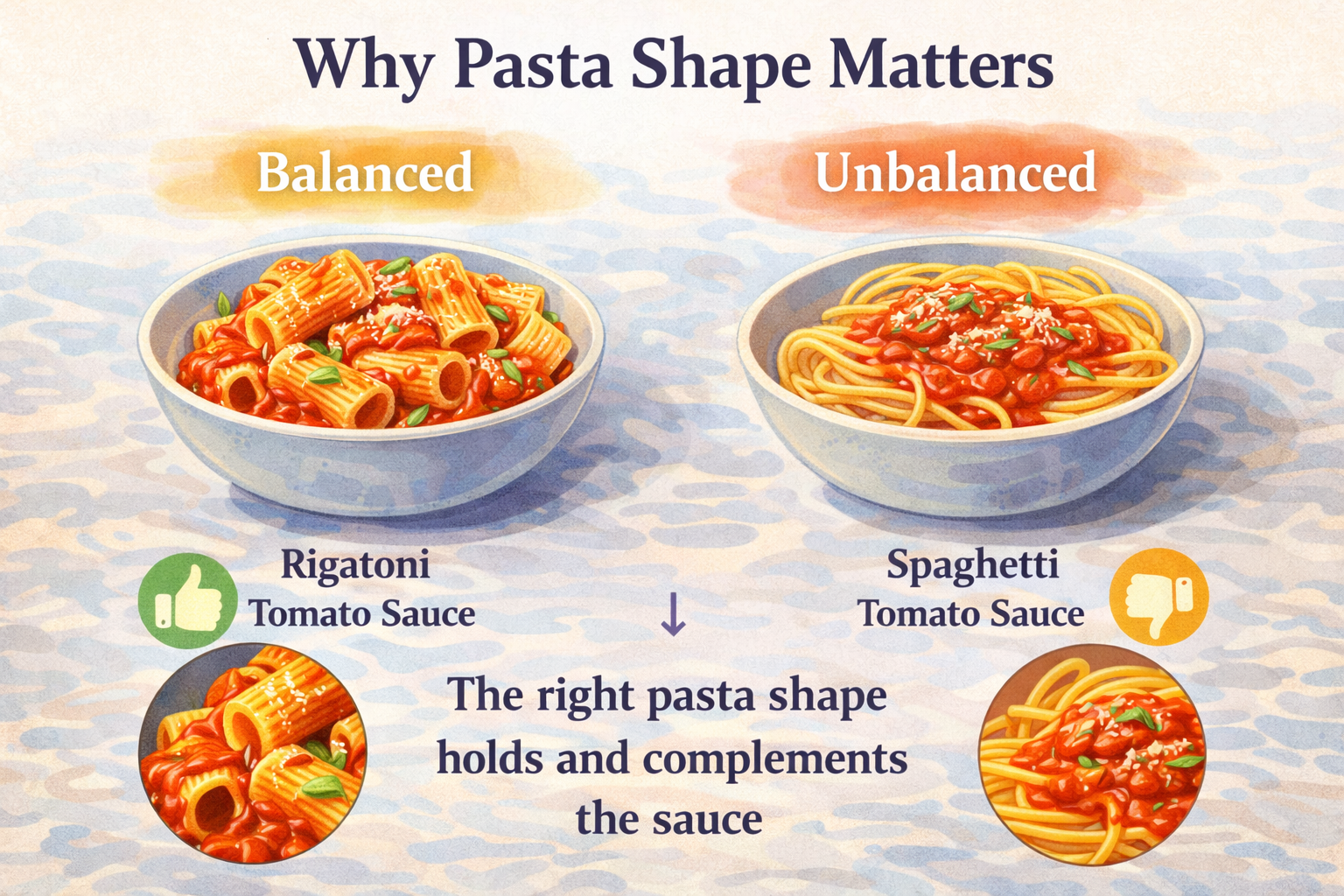
One major reason why pasta shape matters is how it carries sauce. Smooth shapes allow sauce to coat evenly, while ridged or hollow shapes trap sauce inside. Meanwhile, long strands wrap around oil-based sauces, and short shapes catch chunky ingredients more effectively.
As a result, pasta and sauce work as a single system. Italian pasta shapes developed alongside regional sauces, ensuring flavour reaches every bite. When the match is right, the dish feels cohesive rather than messy.
Texture and Mouthfeel in Pasta Dishes
Another reason why pasta shape matters lies in texture. Thick pasta offers resistance and chew, while thinner shapes feel lighter and more delicate. Additionally, ridges increase friction, helping sauce cling to the surface. Hollow shapes, on the other hand, add contrast by holding pockets of flavour.
Because texture affects satisfaction, the wrong shape can disrupt balance. For example, pairing a heavy meat sauce with delicate pasta can feel overwhelming. Choosing the right shape creates harmony between bite and richness.
Pasta Shape and Cooking Technique
Equally important is how pasta shape responds to cooking. Some shapes hold up well to long cooking and vigorous tossing, whereas others require gentle handling. Fresh pasta behaves differently from dried pasta, and shape determines how much heat and movement it can tolerate.
Therefore, sturdy shapes suit baked dishes and thick sauces, while long strands are best finished gently in the pan. Selecting the right shape protects both the pasta and the sauce.
Regional Logic Behind Pasta Shapes
Italian regions developed pasta shapes based on local ingredients and needs. This history shows why pasta shape matters beyond appearance. In areas rich in olive oil and vegetables, long strands became common. In contrast, regions with hearty meat sauces favoured thicker or ridged shapes.
Pasta shapes are practical solutions rather than decoration. They reflect climate, agriculture, and daily cooking habits, making Italian food feel purposeful rather than random.
Common Mistakes When Choosing Pasta
A common mistake is treating all pasta as interchangeable. This ignores why pasta shape matters in the first place. Using spaghetti for chunky sauces often leads to sauce slipping off. Similarly, delicate pasta paired with heavy sauces can feel clumsy.
Another issue is overloading pasta with sauce. Ideally, the shape should carry flavour naturally without drowning. When balance is lost, the dish feels heavy instead of refined.
How the Right Shape Improves Cooking
Once you understand why pasta shape matters, cooking becomes more intuitive. Instead of following rules, you begin matching thickness, texture, and structure to the sauce at hand.
As a result, flavour improves without adding ingredients. Even simple dishes feel more professional, because pasta becomes an active element rather than a background filler.
Pasta as Design, Not Decoration
Ultimately, pasta shapes are tools. Their purpose is to guide sauce, texture, and flavour. Why pasta shape matters comes down to respect for design and intention.
When pasta is chosen thoughtfully, everything works better. Sauce clings, texture feels right, and each bite delivers balance. That is why pasta shape is never just a detail—it is the foundation of the dish.


