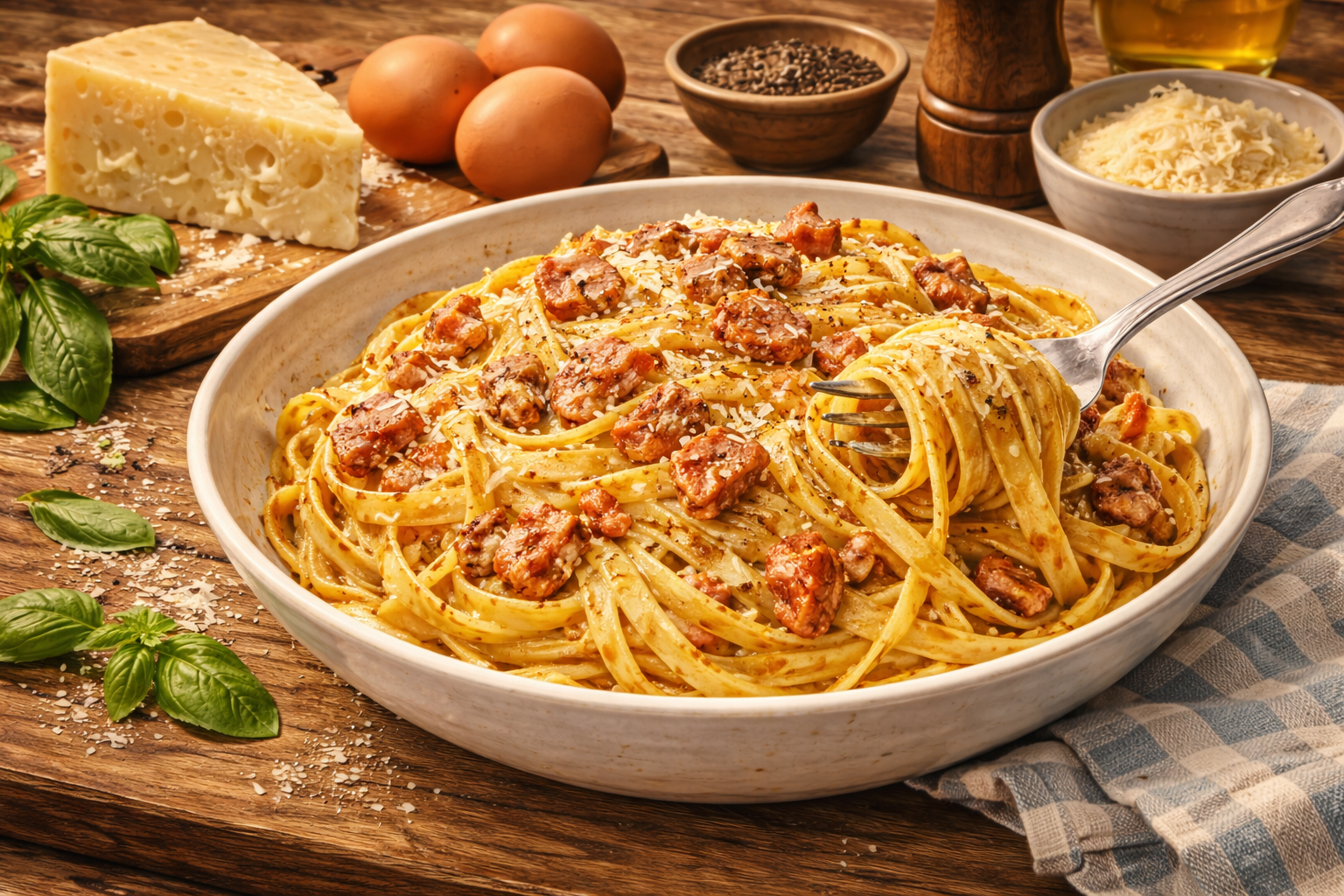
Authentic carbonara is one of the most misunderstood dishes in the world. It contains no cream, no garlic, no onion, and no mushrooms. Instead, it relies on eggs, cheese, and rendered pork fat — a brilliant example of Roman ingenuity.
The foundation is guanciale, whose rich fat coats the pasta and carries flavour. As it renders, it becomes crisp at the edges, releasing savoury depth into the pan.
The creamy texture of carbonara comes from egg yolks and finely grated Pecorino Romano. When combined with hot pasta and a splash of starchy cooking water, they form a silky emulsion — not a sauce in the traditional sense, but a coating that clings beautifully to each strand.
Technique is crucial. The pan must be off the heat when the eggs are added; otherwise they scramble. The goal is glossy, smooth, and cohesive — never dry, never clumpy.
Spaghetti is the classic choice, though rigatoni or tonnarelli are also traditional. Freshly cracked black pepper is essential, providing warmth and contrast.
Carbonara is quick to make but unforgiving if rushed. It rewards confidence, timing, and restraint.
Recipe — Spaghetti alla Carbonara (serves 4)
Ingredients
- 320g spaghetti
- 150g guanciale, diced
- 4 egg yolks + 1 whole egg
- 100g Pecorino Romano, grated
- Freshly cracked black pepper
- Salt (for pasta water only)
Method
- Cook spaghetti in well-salted water.
- Render guanciale slowly in a pan until crisp; keep the fat.
- Whisk eggs with Pecorino and black pepper.
- Add pasta to the guanciale with a little cooking water.
- Remove from heat, stir in egg mixture, adding more water if needed to create a glossy sauce.
- Serve immediately with extra Pecorino.